
Why Pre-Installation Checks Matter for Healthcare Auditorium Partitions
When planning a movable partition for a healthcare auditorium, the presence of floor-mounted data ports introduces a specific coordination challenge. The term healthcare auditorium partition pre installation seal checks refers to the structured review of the partition layout, the floor conditions around data ports, and the sealing strategy before any panel is installed. These checks are not about assuming performance; they are about confirming that the partition system, the building services, and the project documentation align.
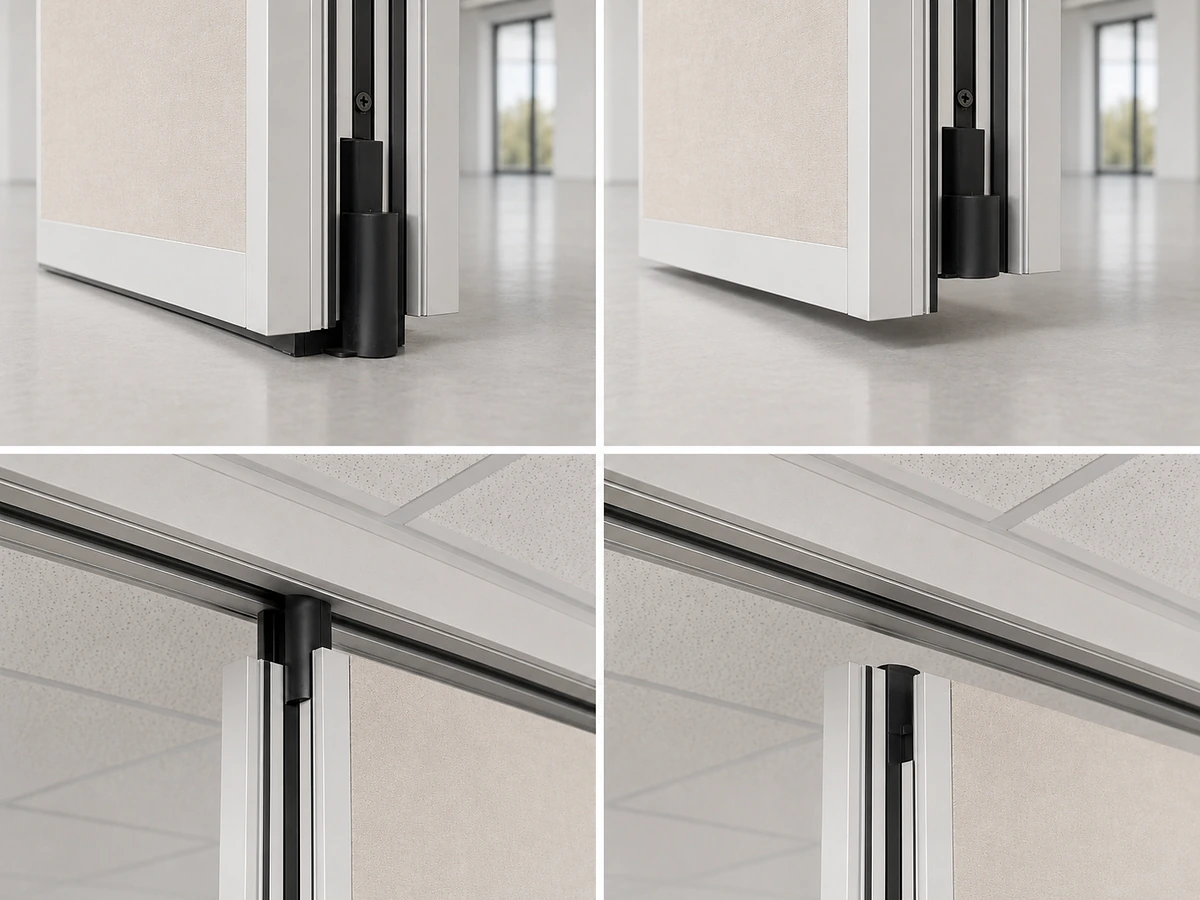
EBUNGE movable partitions are top-hung and move without a continuous floor running track or floor hardware along the partition line. The suitability of each route and parking arrangement depends on the approved layout, circulation, ceiling interfaces and operating sequence. The pre-installation review must confirm how the partition will be sealed at the floor when data ports are present, without relying on a floor track to hide or bridge those interruptions.
This article provides a commercial investigation framework for project teams—contractors, architects, interior designers, and building owners—who need to evaluate these checks. It focuses on what information is required, how to coordinate with EBUNGE, and where project-specific evidence is necessary.
Understanding the System: Top-Hung, Clear-Floor Operation
EBUNGE movable wall panels are individually movable and suspended from a top track. They cross the opening without a floor track, which means the floor remains clear along the partition line. This is a key advantage in spaces like healthcare auditoriums where floor-mounted data ports are common.
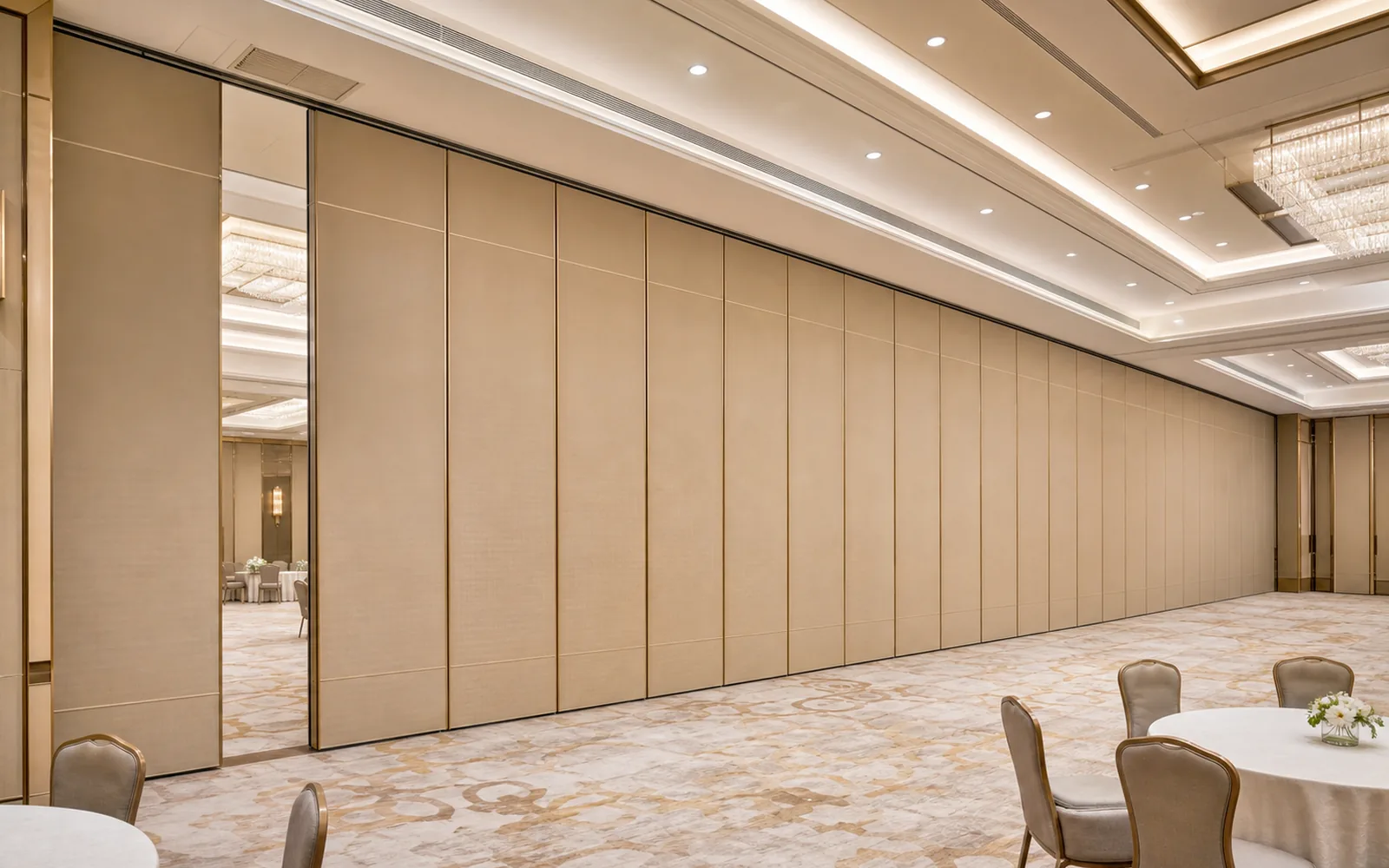
However, the absence of a floor track does not eliminate the need for a floor seal. The partition must still seal against the floor to control sound and light. The challenge is that floor-mounted data ports create discontinuities in the floor surface. The pre-installation check must determine how the partition’s bottom seal will accommodate these discontinuities.
It is important to note that the partition’s movement path requires a continuous connected overhead route. The exact route, junction arrangement, continuous overhead path and parking position must be confirmed from the coordinated project drawings.
Key Pre-Installation Checks for Seals at Floor-Mounted Data Ports
Several checks are essential before installation. These checks are not about predicting performance but about ensuring that the design is feasible and that all parties understand the requirements.
1. Floor Surface and Data Port Locations
Share the opening dimensions, room layout and intended operating sequence for review.
The exact location, height, and profile of floor-mounted data ports must be documented. The partition’s bottom seal must be able to conform to the floor surface, and any protrusions must be reviewed. If data ports are flush with the floor, the seal may bridge them. If they are raised, the seal may need to be adjusted or the data ports relocated.
This review requires accurate as-built drawings or detailed floor plans. The project team must confirm that the data ports do not interfere with the partition’s movement or its sealing line.
2. Partition Layout and Movement Route
The partition’s layout must be reviewed to ensure that the panels can move from the parking position to the closed position without obstruction. This includes checking that the top track route is continuous and that the stacking area is planned. The presence of floor-mounted data ports should not affect the movement route, but they may affect the sealing at the closed position.
EBUNGE offers customized parking styles based on the customer layout. The pre-installation check must confirm that the parking area is designed to accommodate the panels without interfering with data ports or other floor services.
3. Sealing Strategy at the Floor
The sealing strategy must be defined. This includes the type of bottom seal, how it is deployed, and how it interacts with floor-mounted data ports. The seal must be able to create a continuous barrier when the partition is closed, even if the floor is not perfectly flat.
It is important to note that the seal’s effectiveness depends on the floor surface and the data port details. The project team must confirm that the seal can accommodate any gaps or irregularities without compromising its function.
4. Ceiling and Overhead Interface
The top track is suspended from the ceiling structure. The pre-installation check must verify that the ceiling can support the track and that the track route is clear of obstructions such as HVAC ducts, lighting, or sprinkler heads. This is particularly important in healthcare auditoriums where ceiling services are often dense.
5. Documentation and Drawings
The partition layout must be coordinated with these drawings to ensure that the track route, stacking area, and sealing line do not conflict with other building elements.
Coordinating with Project Documentation
Pre-installation checks are only as good as the documentation they rely on. The project team must provide accurate and up-to-date drawings to EBUNGE for review. This includes floor plans, reflected ceiling plans, and sections showing the partition location.
EBUNGE’s technical documents page offers guidance on track routes, stacking, ceiling interfaces, and finish selection. However, each project is unique, and the documentation must be reviewed in the context of the specific layout.
For healthcare auditorium applications, the presence of floor-mounted data ports must be clearly indicated on the drawings. The project team should also provide details on the data port type, manufacturer, and installation method, as this affects the sealing strategy.
Acoustic Considerations: Conceptual Understanding
Visible references can support layout discussion but do not verify hidden construction or performance.
In real-world installations, the actual performance depends on many factors, including the quality of installation, the sealing at all edges, and the presence of flanking paths. Floor-mounted data ports can create potential flanking paths if not properly sealed. The pre-installation check must ensure that the seal at the floor is continuous and that any penetrations are addressed.
Application Examples: Healthcare Auditoriums and Beyond
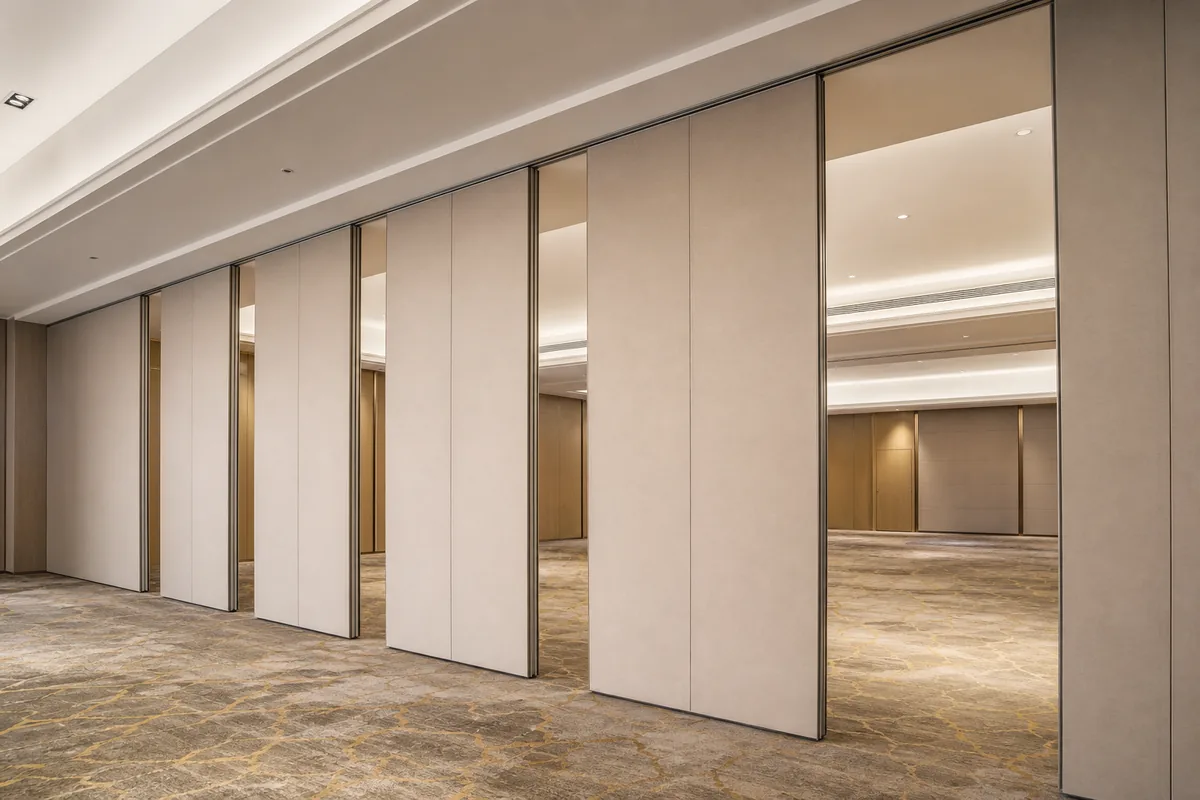
Healthcare auditoriums are a common application for movable partitions, but they are not the only one. EBUNGE movable partitions can be considered wherever flexible spatial division is required, such as conference centers, hotels, schools, and offices. The pre-installation checks described here are applicable to any space where floor-mounted services may interfere with the partition’s sealing line.
In a healthcare auditorium, the partition may be used to divide the space for different events, such as lectures, training sessions, or presentations. The presence of floor-mounted data ports is typical for audiovisual equipment.
Review the ceiling interface, panel route and stacking position together.
Other applications may include hospital training rooms, medical conference facilities, or multi-purpose healthcare spaces. The same principles apply: the partition must be coordinated with the floor services to ensure a proper seal.
Common Pitfalls and How to Avoid Them
Several common pitfalls can occur during pre-installation planning. Cost and maintenance requirements depend on the selected configuration, finish and project conditions and require project-specific confirmation.
1. Assuming Floor Data Ports Are Flush
Not all floor data ports are flush with the floor. Some may be raised or recessed. The project team must verify the actual profile and not assume a standard condition.
2. Overlooking the Parking Area
The parking area must be planned to accommodate the panels without interfering with floor services. If the parking area is near data ports, the panels may obstruct access when parked.
3. Ignoring the Ceiling Structure
The ceiling must be able to carry the load, and the track route must be clear.
4. Not Coordinating with MEP Drawings
MEP drawings show the location of data ports, electrical outlets, and other services. These must be coordinated with the partition layout to avoid conflicts.
5. Assuming Seal Performance
The seal’s effectiveness depends on the installation and the surrounding conditions.
Project-Specific Confirmation: What to Ask EBUNGE
When planning a healthcare auditorium partition, it is essential to discuss the following with EBUNGE:
- The exact layout of the space, including the location of floor-mounted data ports.
- The proposed movement route and stacking area.
- The type of bottom seal and how it will interact with the floor surface.
- The exact overhead route and support arrangement must be confirmed by the responsible project team from coordinated drawings.
FAQ
What are the main pre-installation checks for healthcare auditorium partition seals at floor-mounted data ports?
The main checks include reviewing the floor surface and data port locations, confirming the partition layout and movement route, defining the sealing strategy, verifying the ceiling interface, and coordinating all project documentation.
How do floor-mounted data ports affect the partition’s bottom seal?
Floor-mounted data ports create discontinuities in the floor surface. The bottom seal must be able to accommodate these discontinuities to maintain a continuous barrier when the partition is closed. The exact profile of the data ports must be known to determine the appropriate sealing approach.
Can EBUNGE movable partitions be used in spaces with floor-mounted data ports?
Yes, EBUNGE movable partitions are top-hung and do not require a floor track, so they can be used in spaces with floor-mounted data ports. However, the sealing at the floor must be carefully coordinated to ensure a proper seal around the data ports.
What documentation is required for pre-installation review?
Accurate floor plans, reflected ceiling plans, sections, and details of the data ports are required. MEP drawings showing the location of services are also essential for coordination.
How can I confirm acoustic performance for my project?
Conclusion and Next Steps
Pre-installation checks for healthcare auditorium partition seals at floor-mounted data ports are a critical step in ensuring a successful installation. By reviewing the floor conditions, coordinating with project documentation, and confirming the sealing strategy, project teams can avoid common pitfalls and ensure that the partition meets the project’s requirements.
Remember that each project is unique. The information provided here is a starting point, but project-specific confirmation is essential. Our team can provide the guidance you need to move forward with confidence.
Contact EBUNGE today to start the conversation about your healthcare auditorium partition project.
Continue Exploring
More Acoustic Partition Guides
- Newer guideHow to Compare Medical Office Partition Seals for Wall-Mounted Sharps Disposal Recesses
- Earlier guideWhat Drawings Specify Hospital Training Room Partition Seals at Wall-Mounted Gas Outlets
- Related guideHow to Coordinate Office Meeting Suite Partition Seals with Wall-Mounted Video Bar Swing Paths
- Related guideHow to Coordinate Hotel Banquet Partition Seals with Ceiling-Mounted Rigging Point Access Panels