
When planning a flexible community hall, the interaction between movable partitions and floor-mounted power distribution wells is a critical detailing point. The phrase community hall partition seals at power distribution wells refers to the junction where a movable wall must seal against a recessed or flush floor box that supplies power, data, or AV services. Because EBUNGE movable partitions are top-hung and move without a continuous floor track, the floor surface along the partition line is typically clear—except where such wells are introduced. This article explains why interface detailing is essential, what project information is required, and how to coordinate effectively without assuming hidden performance.
The Role of the Floor in Movable Partition Systems
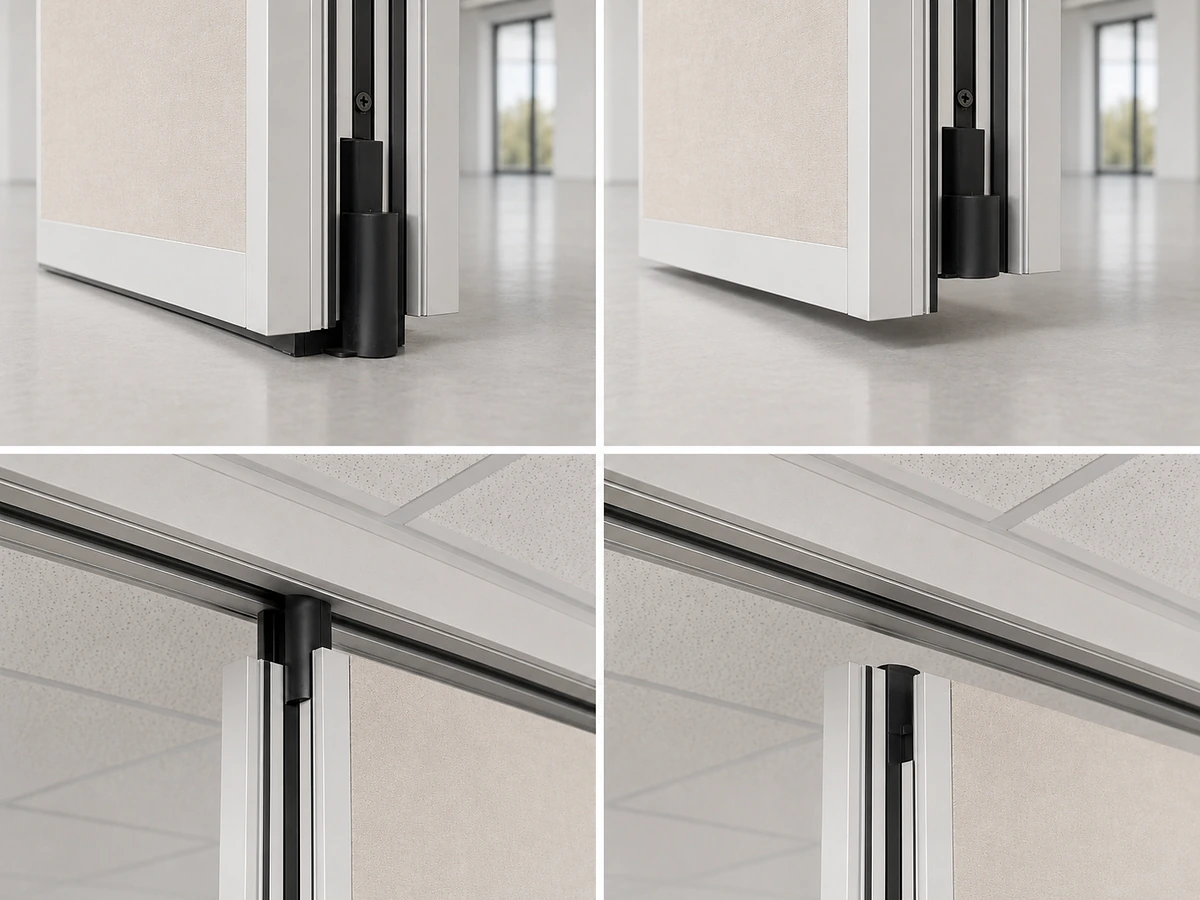
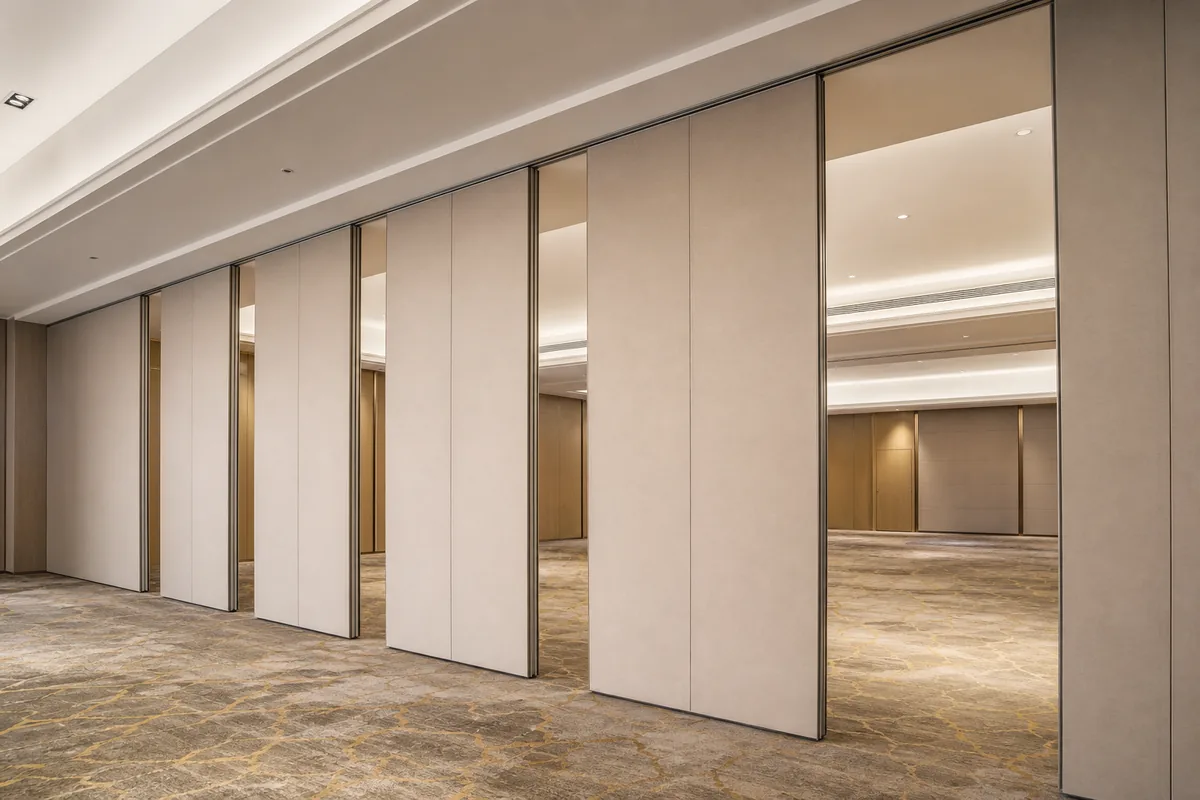
EBUNGE movable partition panels are individually movable and suspended from a top track. They cross the opening without a floor track, which means the finished floor can be continuous and unobstructed. The suitability of each route and parking arrangement depends on the approved layout, circulation, ceiling interfaces and operating sequence. However, any interruption in the floor surface—such as a power distribution well—creates a potential gap that must be addressed for the partition to function as intended.
Why a Clear Floor Matters

A clear floor allows the partition to be positioned precisely and to form a continuous barrier across the opening. When a floor-mounted well is present, the partition must either bridge over it or seal around it. Visible references can support layout discussion but do not verify hidden construction or performance. Because EBUNGE panels are top-hung, they do not rely on floor guides for alignment, but the floor profile still influences the bottom seal’s effectiveness.
The Interface Problem
Floor-mounted power distribution wells are often installed to provide flexible access to electricity and data in community halls. Their presence creates a recess or protrusion in the floor. If the partition is required to seal along that line, the bottom edge of the panel must accommodate the well’s geometry.
Acoustic Considerations: Seals and Flanking Paths
Share the opening dimensions, room layout and intended operating sequence for review.
These ratings are determined in laboratory conditions and do not directly translate to a simple decibel count in the field. The actual performance depends on installation quality and the integrity of all seals.
Seals and Their Function
Perimeter seals are designed to close the gaps between the partition and the surrounding structure—walls, ceiling, and floor. At the floor, a bottom seal typically drops to contact the finished floor surface. If a power well interrupts that surface, the seal may not achieve full contact, creating a potential flanking path for sound.
Interface Detailing as a Sound Control Measure
Proper interface detailing ensures that the bottom seal can adapt to the well’s presence. This might involve coordinating the well’s cover plate to be flush with the floor, or designing a custom transition piece. The goal is to maintain a continuous sealing surface.
Why Interface Detailing Is Critical for Community Halls
Community halls are often multi-purpose spaces used for events, meetings, performances, and gatherings. The ability to divide the space into smaller rooms or open it up entirely is a key benefit of movable partitions. When floor-mounted power wells are present, they are typically located to serve specific areas, such as stages, presentation zones, or seating areas. If a partition line crosses a well, the detailing becomes essential to maintain the hall’s flexibility.
Impact on Flexibility and Layout
If the partition cannot seal properly at the well, the room division may be compromised, limiting the types of activities that can occur simultaneously. For example, a training session in one half and a quiet study area in the other might be affected by sound leakage. Proper detailing ensures that the partition can be used effectively regardless of the well’s location.
Coordination with Other Trades
Interface detailing requires coordination between the partition supplier, the electrical engineer, the architect, and the general contractor. The location and design of power wells must be communicated early in the design process. EBUNGE’s project documentation can help review straight, turning, and stacking routes, but the integration with floor wells is a collaborative effort.
Project Documentation: What Needs to Be Reviewed
For any project involving movable partitions and floor-mounted power wells, a thorough review of project documentation is essential. This includes architectural drawings, electrical layouts, and partition shop drawings. The goal is to identify all potential conflicts and develop solutions before installation begins.
Key Information Required
- Floor well locations and dimensions: Exact positions, sizes, and depths of all power distribution wells along the partition line.
- Partition layout and stacking plan: How the partition panels will move, turn, and park, and where they will rest when not in use.
- The exact route, junction arrangement, continuous overhead path and parking position must be confirmed from the coordinated project drawings.
- Finish and seal specifications: The type of bottom seal and how it interfaces with the floor and any recessed wells.
Reviewing Straight, Turning, and Stacking Routes
EBUNGE reviews the proposed layout to ensure that the partition can move along straight, turning, and stacking routes without obstruction. Floor-mounted wells that are not flush with the floor could impede the movement of panels, especially if they are located in the path of a turning panel.
Finish Options and Their Interface Implications
Review the ceiling interface, panel route and stacking position together.
EBUNGE offers a range of finish options for movable partition panels, including laminate, melamine, fabric, leather, glass, and other approved surfaces. The choice of finish does not directly affect the interface with floor wells, but it can influence the overall aesthetic and maintenance requirements. For example, a glass panel might require different handling during installation, but the sealing at the bottom remains similar.
Customization and Project-Specific Solutions
Each project is unique, and the interface detailing at power wells may require custom solutions. EBUNGE can discuss pass-door requirements and project documentation to help develop a tailored approach. It is important to involve the partition supplier early to ensure that all constraints are addressed.
Common Questions About Partition Seals and Power Wells
Can a movable partition seal effectively over a floor-mounted power well?
Yes, but only if the interface is properly detailed. The well’s cover must be flush with the floor, or a custom transition must be designed to allow the bottom seal to make continuous contact. The specific solution depends on the well’s design and the partition’s seal type.
Do EBUNGE partitions require a floor track to operate?
No, EBUNGE movable partitions are top-hung and move without a continuous floor track. This is a key advantage, but it also means that any floor obstruction, such as a power well, must be carefully coordinated to avoid gaps.
What information does EBUNGE need to review the interface with power wells?
EBUNGE requires detailed drawings showing the location and dimensions of all floor-mounted wells, the partition layout, and the ceiling track route. This information allows the team to assess potential conflicts and recommend solutions.
How does the presence of a power well affect acoustic performance?
Project-specific testing or consultation is recommended to confirm performance.
Can the partition be designed to avoid crossing a power well?
Best Practices for Project Teams
To ensure a successful outcome, project teams should follow these best practices:
- Engage EBUNGE early: Involve the partition supplier during the design phase to review layouts and identify potential conflicts.
- Coordinate with electrical engineers: Ensure that power well locations are clearly marked on all drawings and that they are designed to be flush with the finished floor.
- Request mock-ups: If possible, create a mock-up of the interface to test the seal’s effectiveness before full installation.
- Document all decisions: Keep a record of all interface details and approvals to avoid misunderstandings during construction.
Conclusion and Next Steps
By understanding the role of the floor, the importance of seals, and the need for project-specific coordination, you can avoid common pitfalls. EBUNGE’s movable partitions offer flexibility and clear-floor convenience, but their success depends on thorough planning and collaboration.
If you are planning a community hall or any flexible space with movable partitions and floor-mounted utilities, contact our team to discuss your project. We can review your layout, provide guidance on interface detailing, and help you achieve a solution that meets your specific requirements. Contact EBUNGE today to start the conversation.
Continue Exploring
More Acoustic Partition Guides
- Newer guideWhy Healthcare Training Room Partition Seals Need Detailing at Floor-Mounted Oxygen Outlet Wells
- Earlier guideWhat Pre-Installation Checks Matter for Sports Hall Partition Seals at Floor-Mounted Gymnastics Anchor Points
- Related guideHow to Coordinate Hotel Banquet Partition Seals with Ceiling-Mounted Rigging Point Access Panels
- Related guideWhat Pre-Installation Checks Matter for University Lecture Hall Partition Seals at Floor-Mounted Lectern Wells