
Quick project answer
Review focus: movable partition tender spec.
A movable partition tender spec redline is the markup pass that happens before suppliers price the package. It is not a cosmetic edit. It is the point where the project team checks whether the drawings, specification clauses and pricing schedule describe the same system. The suitability of each route and parking arrangement depends on the approved layout, circulation, ceiling interfaces and operating sequence. The goal is not to add more words. The goal is to remove ambiguity, expose missing project information and separate maintained product facts from project-specific requirements that still need review.
Use the redline to align three documents: the architectural layout, the specification section and the pricing schedule. If those three disagree, pricing will drift. The sections below set out a practical, evidence-bounded approach.
Why Redline Before Pricing, Not After
Project review term: movable partition tender spec.
Pricing a movable partition package before redlining is risky because the quotation may be built on a different interpretation of the opening, the parking position or the finish schedule. A later correction can force re-pricing, delay the bid comparison and weaken the tender’s credibility with the owner.
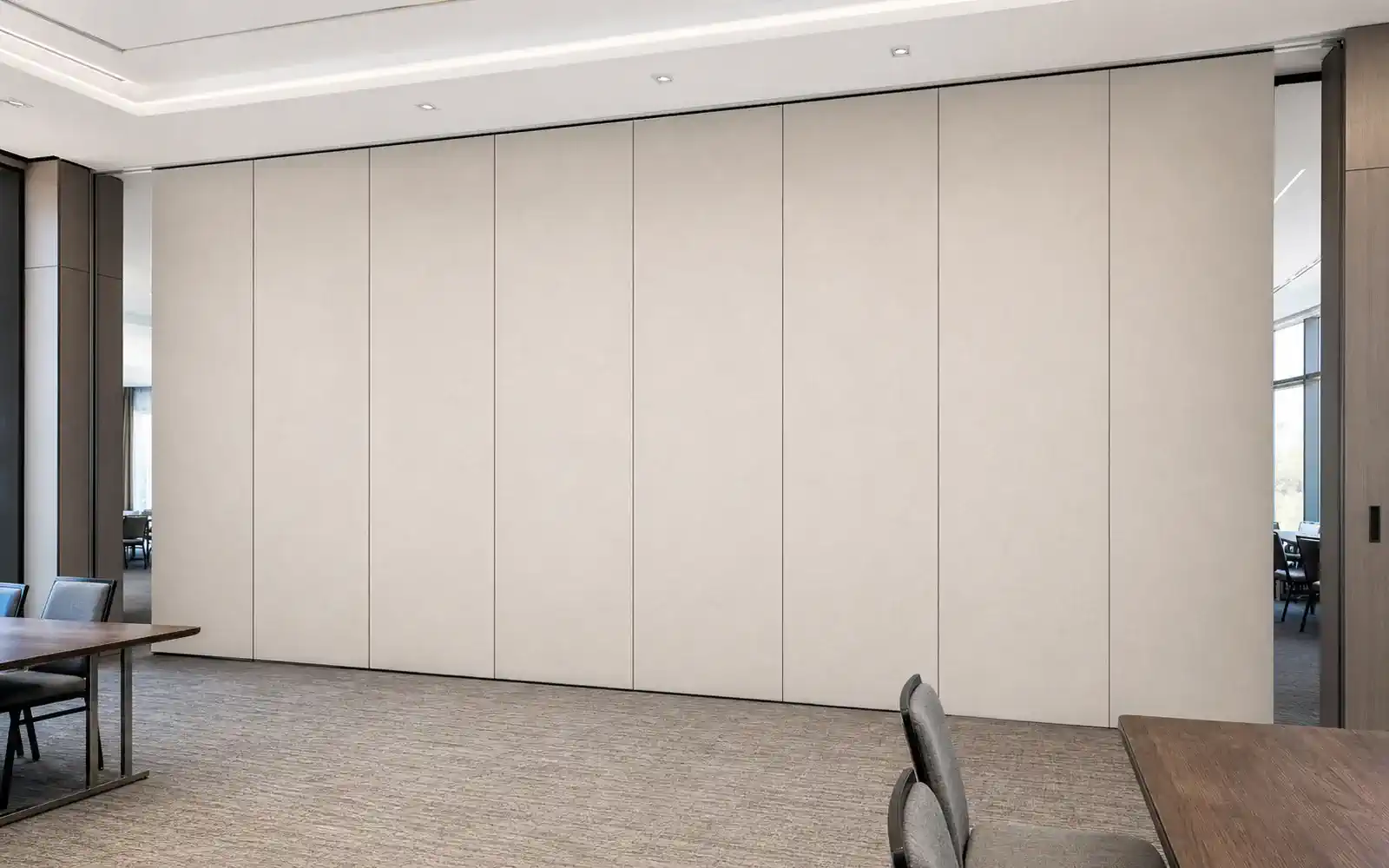
Redlining before pricing also gives the design team a chance to confirm whether the proposed movement route is continuous and supported overhead. EBUNGE movable partition panels are individually movable, suspended from a top track, cross the opening without a floor track and park at a planned stacking position. That maintained fact is a useful starting point, but every project still needs its own support, acoustic and dimensional review.
What a Redline Should Actually Mark
Coordination scope: movable partition tender spec.
A redline is most useful when it marks decisions, not just errors. Mark the items that change price, coordination or installation planning. Avoid marking stylistic preferences that have no procurement consequence.
Route and parking decisions
Mark the straight, turning and stacking routes on the layout. Confirm that each proposed movement path has a continuous connected overhead route. The exact route, junction arrangement, continuous overhead path and parking position must be confirmed from the coordinated project drawings. Parking style is customized to the customer layout and project requirements and may support compact stacking when the coordinated design permits it.
Opening and interface decisions
Mark the opening width, height and adjacent construction. Check how the partition meets walls, columns, ceilings and finishes. Where a pass-door is required, note it for discussion with the supplier. Pass-door requirements and project documentation can be discussed as part of the tender review.
Finish and evidence decisions

Confirmed finish options include laminate, melamine, fabric, leather, glass and other approved surfaces. If the specification implies a performance outcome, mark it for project-specific evidence.
Evidence Boundaries That Belong in the Redline
Checklist focus: movable partition tender spec.
Good redlines separate what is known from what must be confirmed. This prevents the tender from carrying unsupported claims into pricing.
| Spec statement | Redline action | Why it matters |
|---|---|---|
| Generic acoustic wording | Mark for project-specific acoustic review | STC and Rw are rating concepts; they are not a simple count of decibels |
| Finish schedule | Confirm approved surface and project requirement | A finish example is not evidence of performance |
| Movement route | Verify continuous connected overhead route | Untracked gaps cannot be assumed |
| Parking position | Confirm stacking location and layout coordination | Parking is customized to the project |
Use this table as a checklist, not as a substitute for drawing review. Each row should end with a named owner and a required confirmation.
A Numbered Redline Process for Project Teams
- Collect the current architectural layout, specification section and pricing schedule.
- Mark every opening, turning point and parking position on the layout.
- Check that each movement route has a continuous connected overhead route.
- List all finish requirements and separate approved surfaces from assumed performance.
- Note pass-door requirements and any documentation the supplier should review.
- Issue the redlined package to the supplier before requesting a final price.
- Compare returned quotations against the redline, not against the original ambiguous text.
This process keeps the tender review focused on coordination. It also gives distributors and construction teams a clear record of what was confirmed and what remains open.
Common Redline Mistakes to Avoid
One common mistake is treating a visible finish or drawing shape as proof of hidden performance. Visible references can support layout discussion but do not verify hidden construction or performance.
Another mistake is leaving comparative or absolute wording in the specification without matching evidence. Panel handling and the operating sequence must be confirmed for the selected layout and project conditions.
A third mistake is ignoring the parking position until after pricing. Parking affects layout coordination and should be reviewed with the same care as the opening itself.
How to Coordinate the Redline Across Disciplines
Redlining is a coordination task. Architects, contractors, interior designers, owners and renovation teams each see different risks. A short review meeting before pricing can resolve most of them.
Questions to ask the design team
Ask whether the layout shows every intended room configuration. Ask whether the parking position conflicts with other services. Ask whether the finish schedule is final or indicative.
Questions to ask the supplier
Ask which items require project-specific support, acoustic and dimensional confirmation. Ask what documentation is needed for a meaningful review. Ask how pass-door requirements should be described in the tender.

Keep the answers in writing. A written record reduces the chance that pricing is based on a verbal assumption.
FAQ: Movable Partition Tender Spec Redline
What is a movable partition tender spec redline?
It is a markup pass that checks the layout, specification and pricing schedule before suppliers price the package. It identifies missing project information and unsupported performance language.
Does every movable partition need a floor track?
No. EBUNGE movable partition panels are top-hung and cross the opening without a floor track.
Can I specify acoustic performance in the redline?
Provide the current layout, opening dimensions, ceiling information, intended room use, and relevant project drawings for review. The exact overhead route and support arrangement must be confirmed by the responsible project team from coordinated drawings.
Which finishes can be discussed?
Confirmed finish options include laminate, melamine, fabric, leather, glass and other approved surfaces. Finish selection should be coordinated with the project requirement.
How should parking be shown on the tender drawings?
Show the planned stacking position and the route to it. Parking style is customized to the customer layout and project requirements and may support compact stacking when the coordinated design permits it.
When should the supplier review the redline?
Before final pricing. Early review allows the supplier to identify documentation needs and project-specific confirmations while the bid is still flexible.
Conclusion and Next Step
A movable partition tender spec redline is a practical risk-control step. It keeps pricing tied to the drawings, separates maintained product facts from project-specific requirements and gives every discipline a clear list of what still needs confirmation. Review the movable partition wall product context, check relevant project references for layout patterns, and then contact EBUNGE to discuss pass-door requirements, project documentation and the redline items that affect your tender.
Related decision stage and product context
This guide concerns specification questions before pricing. Use the movable partition wall overview to identify the product scope, and keep the later submittal review checklist as a separate approval step rather than treating a tender redline as an approved shop drawing.
Continue Exploring
More Cost and Planning Guides
- Newer guideScore Movable Partition Tender Returns When Bidders Omit
- Earlier guideBenchmark Movable Partition Tender Returns Against Your Own
- Related guideReview a Movable Partition Tender for Unclear Interface Ownership
- Related guideCompare Movable Partition Tender Returns When Bidders Bundle