
html body.single-post main#content.site-main{box-sizing:border-box!important;width:calc(100% – 32px)!important;max-width:900px!important;margin-left:auto!important;margin-right:auto!important;padding-left:0!important;padding-right:0!important}
Quick answer: movable partition tender
Review focus: movable partition tender.
Movable partition tender award benchmarking is the discipline of comparing a current tender package with earlier award information while keeping every conclusion tied to visible evidence. For overseas contractors, architects, interior designers, owners and renovation teams, the goal is not to guess a final price or performance outcome. The suitability of each route and parking arrangement depends on the approved layout, circulation, ceiling interfaces and operating sequence.
Why Prior Award Data Is Useful but Limited
Project review term: movable partition tender.
Prior award data can show how a similar package was structured, which items were priced separately, and where clarifications were requested. It cannot prove that a new project will behave the same way. Room geometry, support conditions, stacking position, finish selection and pass-door requirements can all change the comparison basis.
Treat earlier awards as a reference library, not a prediction tool. The useful output is a list of differences that require project-specific confirmation, not a single benchmark number.
Start With the Maintained Product Facts
Coordination scope: movable partition tender.
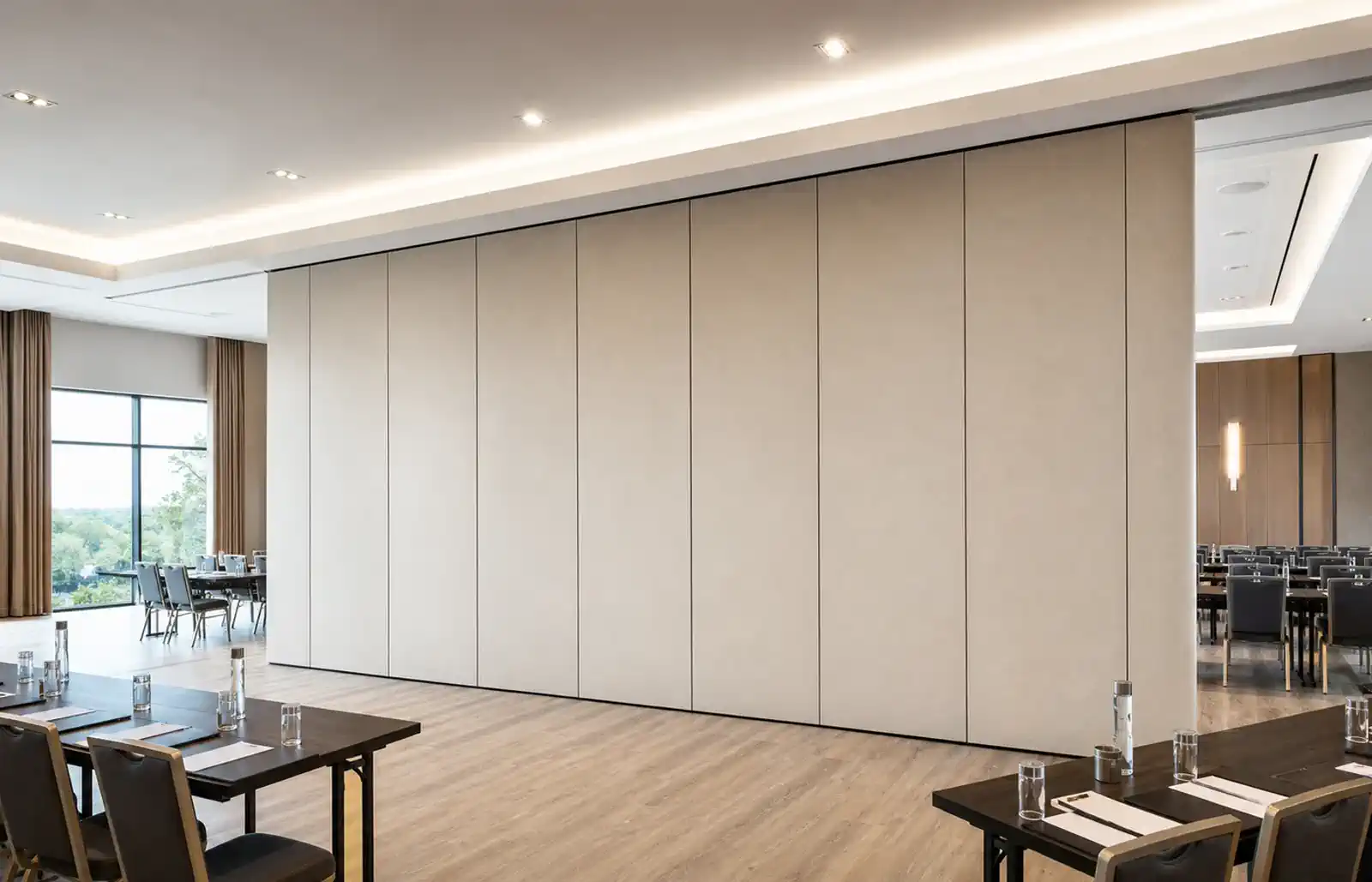
EBUNGE movable wall panels are individually movable, suspended from a top track, cross the opening without a floor track, and park at a planned stacking position. Straight, turning and stacking routes are reviewed from the layout. Confirmed finish options include laminate, melamine, fabric, leather, glass and other approved surfaces. Pass-door requirements and project documentation can be discussed.
These facts define the comparison boundary. Any tender line that assumes a different movement principle, a different route or an unconfirmed finish should be flagged rather than averaged into the benchmark.
A Step-by-Step Benchmarking Process
- Normalise the scope. List every included item: panels, top track, stacking arrangement, finish, pass doors, documentation and site review.
- Map the routes. Mark straight, turning and stacking paths on the current layout and compare them with the prior award drawing set.
- Align finish descriptions. Match laminate, melamine, fabric, leather, glass and other approved surfaces by description, not by appearance alone.
- Separate confirmed from assumed. Mark any line that depends on support, acoustic or dimensional information not yet reviewed.
- Document open questions. Record what the project team must confirm before the comparison can be considered complete.

Build a Like-for-Like Comparison Table
A compact table keeps the review honest. Use it to show where the current tender and the prior award genuinely align, and where they do not.
| Comparison item | What to check | Evidence status |
|---|---|---|
| Movement principle | Top-hung panels, no continuous floor track along the partition line | Confirm against maintained product facts |
| Route review | Straight, turning and stacking paths shown on layout | Requires project-specific drawing review |
| Finish | Laminate, melamine, fabric, leather, glass or other approved surface | Confirm by specification description |
| Pass doors | Location, swing and coordination with panel modules | Discuss with the project team |
| Documentation | Drawings, schedules and clarification records | Confirm the required document set |
Evidence Notes for Acoustic and Support Questions
If a tender includes an acoustic target, ask for the exact test basis, the mounting condition and the project-specific confirmation path.
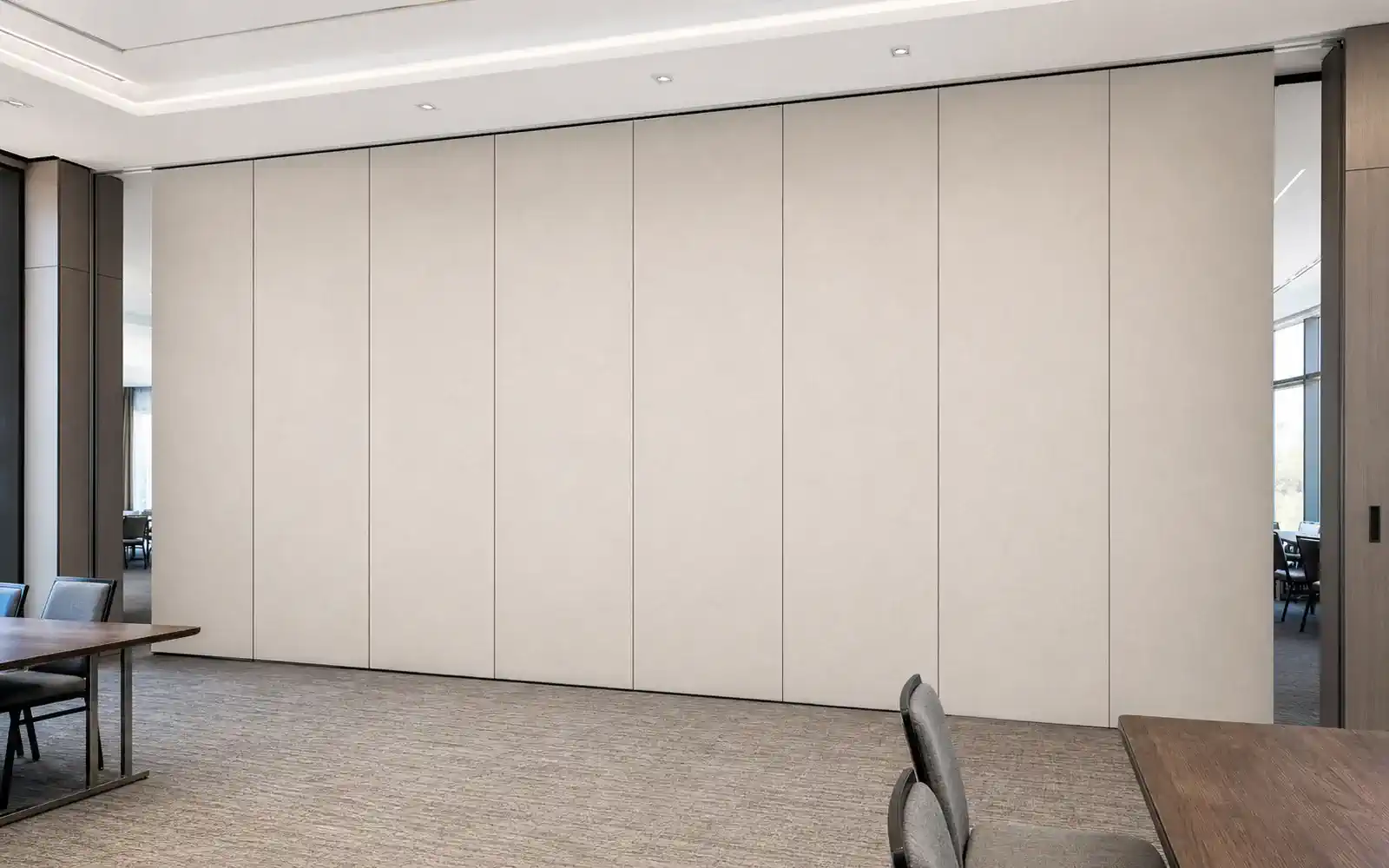
Evidence note: do not infer acoustic, structural, fire, durability or commercial performance from a finish sample, a photograph or a prior award line. Each claim needs matching project evidence.
Support conditions are equally important. The exact route, junction arrangement, continuous overhead path and parking position must be confirmed from the coordinated project drawings. A prior award may have used a different support arrangement, so the comparison should stop at the point where the current structure has not been reviewed.
Common Benchmarking Mistakes to Avoid
Treating a prior price as a current price
Scope, finish, route complexity and documentation requirements can differ. A prior award figure is only meaningful when the comparison basis is aligned.
Assuming hidden performance from a visible finish
A laminate or glass surface does not confirm acoustic, fire or durability performance. Those attributes require their own evidence.
Ignoring the stacking position
Parking style is customized to the customer layout and project requirements and may support compact stacking when the coordinated design permits it. The stacking position affects the route review and should be shown on the layout.
How to Coordinate Procurement and Tender Review
The commercial reviewer checks scope inclusions and exclusions. The technical reviewer checks routes, support and dimensional fit. Both should sign off on the list of open questions before the tender is finalised.
Use the movable partition wall product context as the maintained reference for what the system is and how it moves. Use the projects section to understand typical application settings, while remembering that named venues are examples only. Movable partitions can be considered wherever flexible spatial division, combination or reconfiguration is required.
Frequently Asked Questions
What information is required to benchmark a movable partition tender?
You need the current layout, route drawings, finish specification, pass-door requirements, support review status and the prior award scope description. Without these, the comparison is incomplete.
Can prior award data predict the current project cost?
No. Prior award data can inform scope structure and clarification topics, but it cannot predict a current cost without a like-for-like scope and project-specific review.
Does a movable partition need a floor track?
EBUNGE movable wall panels are top-hung and cross the opening without a continuous floor running track or floor hardware along the partition line.
How should acoustic ratings be compared?
Compare the test basis, mounting condition and project-specific confirmation path.
What finish options can be compared in a tender?
Confirmed finish options include laminate, melamine, fabric, leather, glass and other approved surfaces. Match them by specification description rather than appearance alone.
When should the project team request a drawing review?
Request a drawing review as soon as the layout, route or stacking position changes. Straight, turning and stacking routes are reviewed from the layout, so early review reduces later clarification work.
Conclusion and Next Step
Benchmarking a movable partition tender against prior award data is a structured comparison exercise, not a promise of performance or price. Keep every line tied to maintained product facts, visible evidence limits and project-specific drawing review. Confirm support, acoustic and dimensional requirements with the project team before treating any comparison as final.
To discuss pass-door requirements, project documentation or a layout review, contact EBUNGE and share the current drawings for a project-specific conversation.
Continue Exploring
More Cost and Planning Guides
- Earlier guideRead a Movable Partition Tender Pricing Schedule for Hidden
- Related guideReview a Movable Partition Tender for Ambiguous Stacking Pocket
- Related guideReading a Movable Partition Tender for Hidden Interface Assumptions
- Related guideReview a Movable Partition Tender for Unclear Interface Ownership