
html body.single-post main#content.site-main{box-sizing:border-box!important;width:calc(100% – 32px)!important;max-width:900px!important;margin-left:auto!important;margin-right:auto!important;padding-left:0!important;padding-right:0!important}
Quick answer: movable partition tender
Review focus: movable partition tender.
A movable partition tender stacking pocket dimension review is not a formality. The suitability of each route and parking arrangement depends on the approved layout, circulation, ceiling interfaces and operating sequence. When the stacking pocket is described only as ‘to suit’ or ‘by others’, the tender leaves a gap that contractors, architects and owners must close before pricing or fabrication. This guide sets out an evidence-bounded review process for overseas project teams.
Why Stacking Pocket Ambiguity Creates Tender Risk
Project review term: movable partition tender.
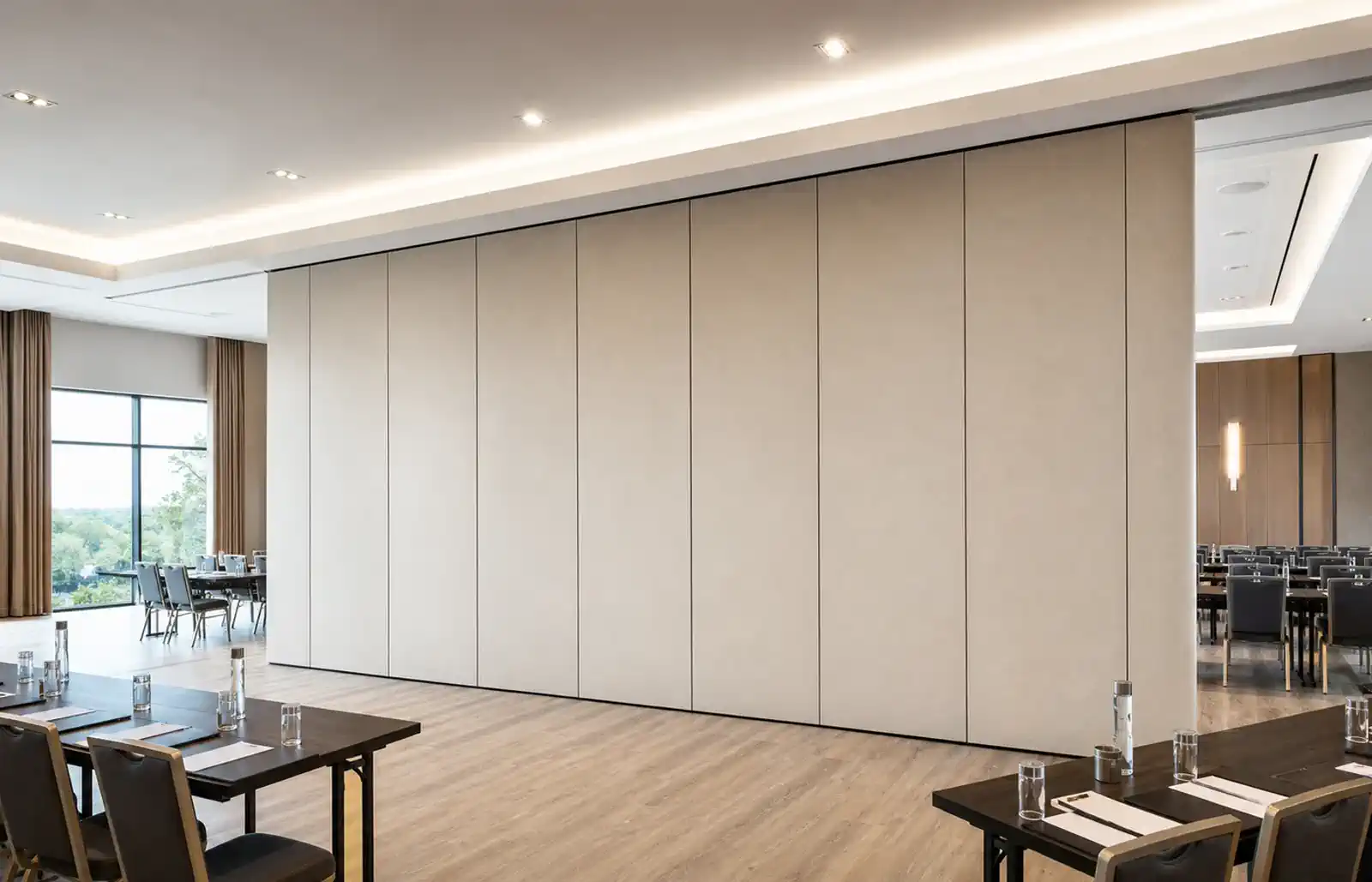
Movable wall panels are individually movable and suspended from a top track. They cross the opening without a floor track and park at a planned stacking position. That parking position needs a defined volume, a continuous overhead route and a support strategy. If the tender does not state these clearly, each bidder may assume a different pocket depth, width or relationship to adjacent construction.
The risk is not only dimensional. An ambiguous pocket can shift responsibility between trades, delay coordination and create rework if the opening or ceiling zone is already fixed. The review should therefore separate what is drawn, what is specified and what is still open.
Start With the Movement Route, Not the Pocket Alone
Coordination scope: movable partition tender.
Straight, turning and stacking routes are reviewed from the layout. A pocket is the end point of that route, so reviewing it in isolation can hide a conflict. Ask for a plan that shows the full travel path from the closed position to the parked position.
Questions to put to the design team
- Does the route remain continuous and connected overhead for the whole movement path?
- Are turning points shown where the layout changes direction?
- Is the stacking position dimensioned on plan and in section?
- Does the pocket align with the structural opening rather than a nominal grid line?
The exact route, junction arrangement, continuous overhead path and parking position must be confirmed from the coordinated project drawings. Do not assume panels can travel across a break in the overhead route.
Separate Drawn Dimensions From Assumed Dimensions
Checklist focus: movable partition tender.
Tender documents often mix confirmed dimensions with allowances. A useful review marks each pocket dimension as confirmed, provisional or missing. This prevents a bidder from treating an allowance as a fixed constraint.

| Information type | What it tells you | Review action |
|---|---|---|
| Dimensioned pocket on plan and section | A defined parking volume exists | Check coordination with adjacent structure and finishes |
| ‘To suit’ or ‘by others’ note | Responsibility is not yet fixed | Request a named responsible party and a dated confirmation |
| Nominal grid reference only | Exact position may still move | Ask for a coordinated setting-out drawing |
| No pocket shown | Parking strategy is unresolved | Request a layout review before pricing |
This table is a review aid, not a substitute for project-specific engineering. Confirm support, acoustic and dimensional requirements with the responsible design team.
Coordinate the Pocket With Adjacent Trades
Review focus: movable partition tender.
A tender that does not show these interfaces leaves bidders to guess. The review should identify every trade that touches the pocket envelope.
Interface checklist
- Confirm the ceiling void and any services that pass through the parking zone.
- Confirm the finished face of adjacent walls and how the pocket closes.
- Confirm whether the pocket is formed by others or included in the partition scope.
- Confirm the sequence: pocket readiness before panel delivery and installation.
Each item should have a named owner. Where ownership is unclear, the tender response should state the assumption rather than absorb it silently.
Review Finish and Pass-Door Requirements Together
Confirmed finish options include laminate, melamine, fabric, leather, glass and other approved surfaces. Finish choices can affect edge details and pocket clearances, so they should be reviewed alongside the parking strategy rather than after it.
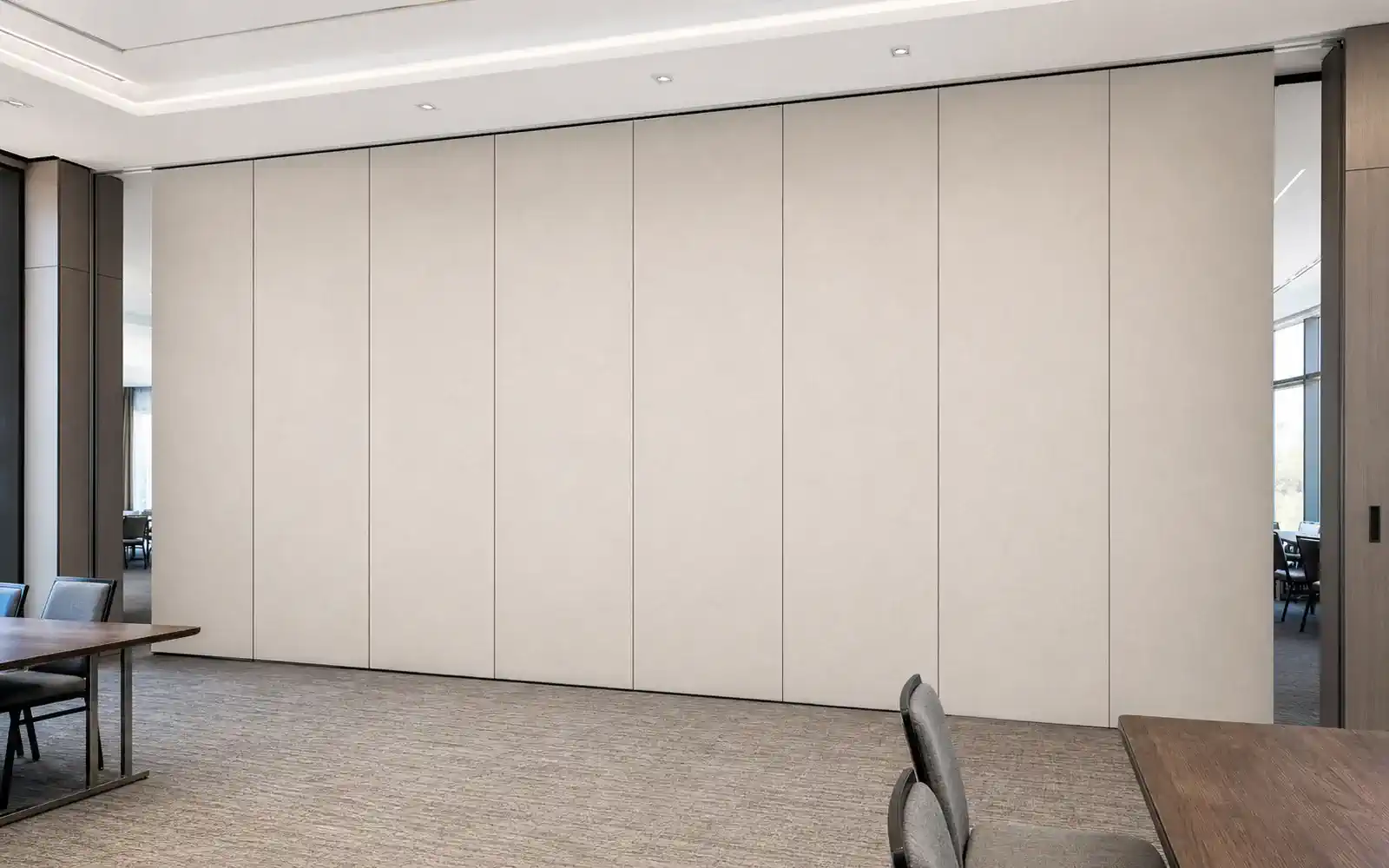
Pass-door requirements also belong in this review. A pass door changes the panel layout and may influence how the stack is arranged. If the tender includes a pass door, ask how it interacts with the parked position and the movement route.
Evidence note: a finish sample or a drawing does not by itself confirm acoustic performance, structural capacity, cleaning compatibility or a application reference. Those claims require matching project evidence.
Use a Structured Tender Review Sequence
A repeatable sequence helps teams compare bids on the same basis. It also creates a clear record of what was confirmed and what remained open at tender stage.
- Mark the full movement route and the proposed stacking position on the layout.
- List every pocket dimension as confirmed, provisional or missing.
- Identify interfaces with ceilings, services, structure and adjacent finishes.
- Record finish and pass-door requirements that affect the parking zone.
- Issue a clarification request listing open items and required confirmations.
- Compare bidder responses against the same clarified baseline.
This sequence does not replace professional judgment. It simply makes assumptions visible before they become variations.
What to Ask Bidders to Confirm in Writing
Written confirmations reduce the chance of a post-award dispute. Ask each bidder to state the basis of their pocket dimensions, the support assumptions they have made and any conditions attached to their proposal.
Confirmation points
- The assumed pocket dimensions and the drawing revision they are based on.
- The assumed overhead route and any points requiring further review.
- The finish and pass-door scope included in the price.
- Any exclusions or by-others items affecting the pocket.
- The project-specific support, acoustic and dimensional requirements still to be confirmed.
Where a bidder cannot confirm a point, that gap should be recorded rather than treated as resolved.
Frequently Asked Questions
What makes a stacking pocket dimension ambiguous in a tender?
It is ambiguous when the pocket is described as ‘to suit’, ‘by others’ or shown only as a nominal reference without a coordinated plan and section. The review should mark such dimensions as open until a responsible party confirms them.
Can the review be done from the tender drawings alone?
Drawings are the starting point, but they may not show every interface. The review should also identify services, structure and adjacent finishes that affect the pocket, and request confirmation where the drawings are silent.
Does an ambiguous pocket always mean the tender should be rejected?
No. It means the tender should be clarified before comparison. A structured clarification request can turn an open item into a confirmed assumption, provided the responsible party responds in writing.
How should finish choices be handled during the review?
Finish options include laminate, melamine, fabric, leather, glass and other approved surfaces. Because finishes can affect edge details and clearances, they should be reviewed together with the parking strategy and pass-door requirements.
What should be confirmed before pricing a movable partition tender?
Confirm the movement route, the stacking position, the pocket dimensions, the support strategy and the interface responsibilities. Also confirm finish and pass-door scope. Project-specific support, acoustic and dimensional requirements should be verified with the responsible design team.
Can a movable partition travel across a gap in the overhead route?
Do not assume this. Every proposed movement path requires a continuous connected overhead route and project-specific support review. A gap in the route should be treated as an open design question.
Conclusion: Turn Ambiguity Into a Written Baseline
A movable partition tender stacking pocket dimension review succeeds when it converts vague notes into a written baseline. Confirm the route, the parking position, the pocket dimensions and the interface owners. Record what is still open.
For product context, review the movable partition wall range. For application examples, see the projects section. To discuss pass-door requirements and project documentation, contact the team with your layout and tender questions.
Continue Exploring
More Cost and Planning Guides
- Earlier guideReading a Movable Partition Tender for Hidden Interface Assumptions
- Related guideReview a Movable Partition Tender for Unclear Interface Ownership
- Related guideCompare Movable Partition Tender Returns When Bidders Bundle
- Related guideReview Movable Partition Wall Tender Addenda for Scope Creep