
html body.single-post main#content.site-main{box-sizing:border-box!important;width:calc(100% – 32px)!important;max-width:900px!important;margin-left:auto!important;margin-right:auto!important;padding-left:0!important;padding-right:0!important}
Quick answer: bid clarification deadline
Review focus: bid clarification deadline.
Partition tender bid clarification deadline planning is the discipline of giving every bidder a fair, documented window to resolve ambiguities before pricing is locked. In a movable partition package, the highest-risk ambiguities are rarely about the finish colour. They concern the movement route, the parking position, the pass-door arrangement, and the acoustic expectation. If those items are clarified too late, bidders either pad their price or qualify their offer so heavily that comparison becomes meaningless. A deadline that is set deliberately, published clearly, and tied to the drawing set protects both the buyer and the bidder.
Why Clarification Deadlines Matter More for Movable Partitions
Project review term: bid clarification deadline.
Movable partitions are configured around a layout. Panels are individually movable, suspended from a top track, cross the opening without a floor track, and park at a planned stacking position. That means the tender is not a simple product purchase; it is a small coordination exercise. The exact route, junction arrangement, continuous overhead path and parking position must be confirmed from the coordinated project drawings.
When clarification closes too early, bidders guess. When it closes too late, the evaluation team is forced to compare offers built on different assumptions. A well-placed deadline keeps all bidders working from the same information set.
Map the Clarification Window to Your Procurement Stages
Coordination scope: bid clarification deadline.
Treat the clarification deadline as a milestone inside the wider tender programme, not as an isolated date. Work backwards from the award date and identify when technical review, commercial review, and approval must finish.
- Issue the tender pack. Include drawings, room schedule, finish schedule, and the clarification procedure.
- Open the question window. State the exact date and time, including time zone, when questions close.
- Publish consolidated answers. Circulate responses to all bidders at the same time so no one gains an advantage.
- Allow a short review period. Give bidders time to adjust their offers after answers are issued.
- Close the bid. Only then begin formal evaluation.
Each stage should have an owner. If the same person issues the tender, answers the questions, and evaluates the bids, the deadline becomes a formality rather than a control.
What Bidders Actually Need to Clarify
Checklist focus: bid clarification deadline.
Layout and movement route questions
Ask bidders to confirm how they interpret the straight, turning, and stacking routes shown on the layout. If a route is unclear, the clarification response should reference the drawing revision and describe the intended path. Do not accept a verbal assurance that the panels will simply work.
Parking and stacking position questions
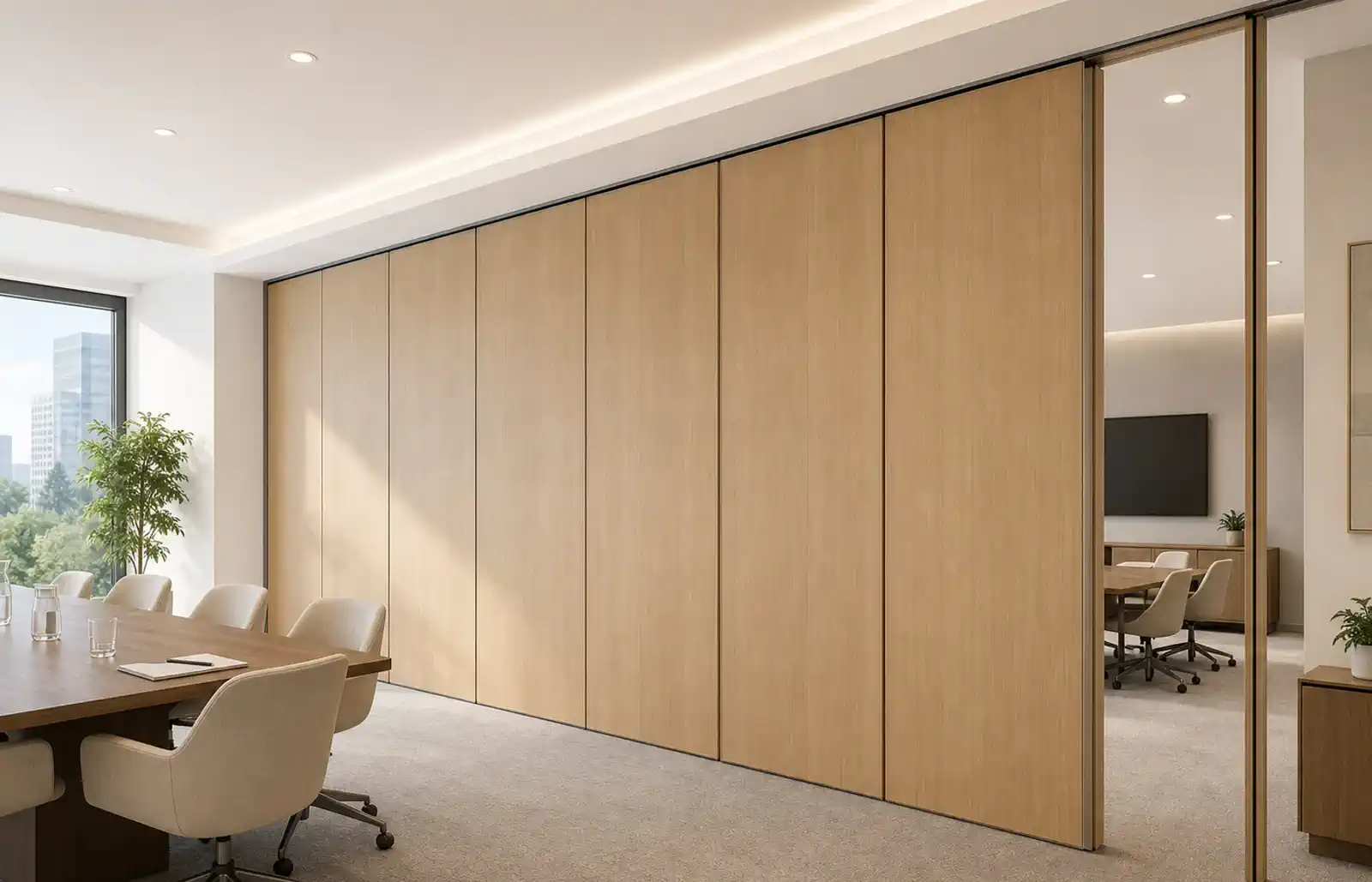
Parking style is customized to the customer layout and project requirements. Bidders may need to confirm where panels will rest when the opening is clear, and whether the coordinated design supports compact stacking. These are project-specific questions, not catalogue questions.
Pass-door and access questions
Pass-door requirements can be discussed as part of the tender. If a pass door is expected, clarify its position, swing, and relationship to the panel run before bids close. Leaving it to post-award negotiation weakens your commercial position.
Finish and surface questions
Confirmed finish options include laminate, melamine, fabric, leather, glass, and other approved surfaces. Clarify which finishes are required in which rooms, and whether any finish requires a sample approval step before fabrication.
Build a Clarification Deadline Checklist
Review focus: bid clarification deadline.
Use a short checklist to confirm the deadline is workable before you publish it. This is not a substitute for project-specific review, but it prevents the most common scheduling errors.
- Is the deadline expressed as a date and time with a stated time zone?
- Is the submission channel for questions clearly named?
- Is there a named technical contact for layout and route questions?
- Is there a named commercial contact for pricing and qualification questions?
- Is the consolidated answer date published alongside the question deadline?
- Does the schedule allow bidders to revise offers after answers are issued?
- Are drawing revisions controlled so all bidders work from the same version?
Keep Acoustic Language Evidence-Bounded
Project review term: bid clarification deadline.
The suitability of each route and parking arrangement depends on the approved layout, circulation, ceiling interfaces and operating sequence.
Visible references can support layout discussion but do not verify hidden construction or performance. Instead, require that any acoustic claim is tied to a specific configuration and supported by documentation that your team can review.
Evidence note: if a bidder cannot connect an acoustic statement to a defined configuration and a reviewable document, treat it as an open item for clarification rather than a confirmed performance attribute.
Common Deadline Mistakes and How to Avoid Them
| Mistake | Effect on the tender | Practical correction |
|---|---|---|
| Closing questions before drawings are frozen | Bidders price different layouts | Freeze the drawing revision first, then open the question window |
| Answering bidders individually | Unequal information and audit risk | Publish one consolidated response to all bidders |
| Leaving pass doors to post-award | Scope disputes and price adjustments | Clarify pass-door requirements during the question window |
| Accepting vague acoustic statements | Unfair comparison between offers | Require configuration-specific documentation or mark as unresolved |
None of these corrections require a performance claim. They simply keep the tender comparable.
Documenting Answers Without Creating New Risk
Every clarification answer becomes part of the tender record. Write answers that state what is confirmed, what remains subject to project-specific review, and what information the bidder must provide. Avoid language that implies a guarantee the project has not yet earned.
For example, instead of writing that a route is approved, write that the route shown on drawing revision X is the intended route, subject to confirmation of support and dimensional requirements during detailed design.
The tender answer should not become a substitute for engineering verification.

Frequently Asked Questions
How long should a bid clarification window be?
There is no universal duration. The window should be long enough for bidders to review the layout, raise route and parking questions, and receive consolidated answers before pricing. Base the length on the complexity of the drawing set and your internal review capacity, not on a fixed habit.
Should clarification deadlines differ for technical and commercial questions?
They can, but the difference must be published clearly. Technical questions often need more review time because they involve layout, route, and dimensional coordination. Commercial questions may close earlier. What matters is that every bidder sees the same rules.
Can bidders ask questions after the deadline?
You may accept late questions at your discretion, but doing so can disadvantage bidders who complied. If you accept a late question, publish the answer to all bidders and consider whether the bid deadline needs to move. Document the decision.
How do we handle acoustic claims in clarification answers?
Ask for configuration-specific documentation and keep the language conceptual. If documentation is missing, record the item as unresolved rather than accepting a verbal claim.
What if the layout changes after the clarification deadline?
A layout change after the deadline usually requires a formal addendum and a revised bid date. Issue the revised drawing, reopen a short clarification window if needed, and give bidders time to adjust. Do not ask bidders to absorb a changed scope without a documented process.
Does a clear floor track affect the clarification questions?
Yes. Because panels cross the opening without a floor track, bidders should confirm how the movement route and parking position relate to the layout. Any proposed route requires a continuous connected overhead route and project-specific support review.
Conclusion: Protect the Tender with a Disciplined Deadline
A bid clarification deadline is a procurement control, not an administrative formality. When it is tied to a frozen drawing revision, a published question channel, and a consolidated answer process, it keeps movable partition offers comparable and reduces post-award surprises.
To discuss pass-door requirements, project documentation, or layout review for your next tender, contact EBUNGE. You can also review the movable partition wall range or browse project references to see how flexible space is approached in practice.
Continue Exploring
More Cost and Planning Guides
- Newer guideBuild a Tender Clarification Question Bank for Partition Packages
- Earlier guideWhat to Check in a Movable Partition Tender Before Clarification Closes
- Related guideCheck a Movable Partition Tender for Inconsistent Unit Rates
- Related guideSpot Bidder Assumptions That Shift Partition Interface Risk