
html body.single-post main#content.site-main{box-sizing:border-box!important;width:calc(100% – 32px)!important;max-width:900px!important;margin-left:auto!important;margin-right:auto!important;padding-left:0!important;padding-right:0!important}
Quick project answer
Review focus: partition tender bidder assumption risk review.
A partition tender bidder assumption risk review is the discipline of reading every bid not as a price, but as a set of unstated beliefs about interfaces. Two bidders can quote the same opening and still assume different responsibilities for the head condition, the parking zone, the finish transitions and the route the panels travel. When those beliefs stay hidden, the risk does not disappear. It simply moves to whoever signs the contract.
This guide is written for overseas contractors, architects, interior designers, owners, renovation teams and distributors who must compare movable partition offers without inventing performance. It focuses on what you can see in drawings, what bidders must confirm in writing, and where a project-specific review is the only honest answer.
Why Bidder Assumptions Matter More Than Line Items
Project review term: partition tender bidder assumption risk review.
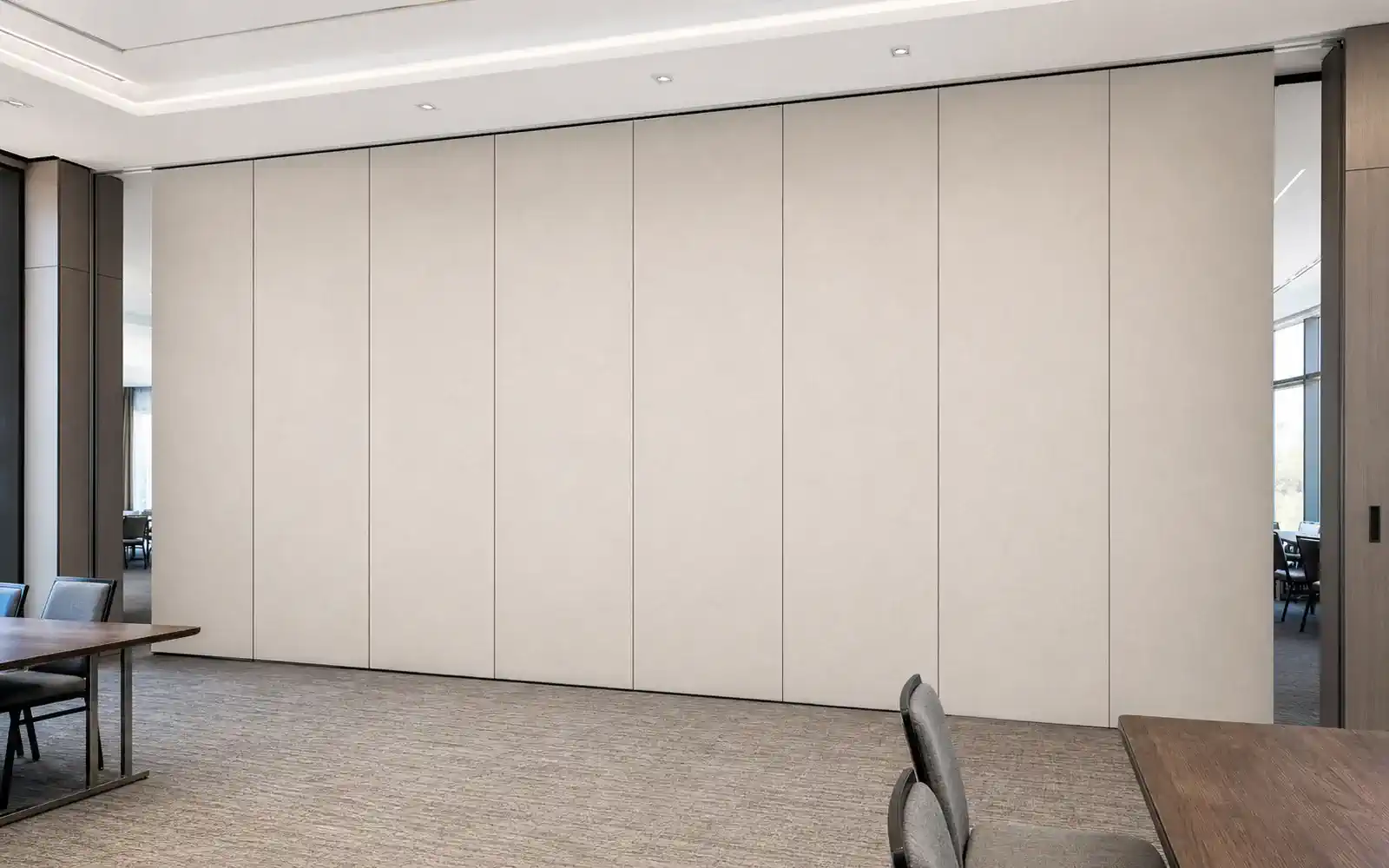
A movable partition is a system, not a product dropped into a room. EBUNGE movable wall panels are individually movable, suspended from a top track, cross the opening without a floor track, and park at a planned stacking position. That sentence already contains several interfaces: the overhead structure that carries the track, the opening geometry, the clear floor route, and the parking area.
A bidder who assumes the ceiling can accept the track, or that the parking bay is clear, is not necessarily wrong. The bidder is simply unverified. Your review should convert those assumptions into questions with named evidence.
Read the Bid Against the Movement Route
Coordination scope: partition tender bidder assumption risk review.
Start with the route, not the panel. Straight, turning and stacking routes should be reviewed from the layout. The exact route, junction arrangement, continuous overhead path and parking position must be confirmed from the coordinated project drawings.
Three route questions to ask every bidder
- Where does the track begin and end, and what supports it at each change of direction?
- Where do panels park, and does that position conflict with doors, services or circulation?
- Does the proposed route stay within the reviewed layout, or does it assume a field change?
These questions do not require you to design the system. They require the bidder to state the basis of the offer.
Interface Risk Hidden in Finish and Detail Language
Checklist focus: partition tender bidder assumption risk review.

Confirmed finish options include laminate, melamine, fabric, leather, glass and other approved surfaces. A bidder may list a finish without confirming the substrate, edge condition or transition to adjacent walls. That is an assumption about interface, not a finish choice.
Similarly, pass-door requirements and project documentation can be discussed, but they must be discussed against your drawings. A bidder who includes a pass door without showing its position relative to the parking stack has made a layout assumption you should surface early.
Evidence note
Do not infer acoustic, fire, durability, load or maintenance performance from a visible finish, photograph or drawing. STC and Rw are rating concepts used in project specifications; they are not a simple count of decibels, and any project claim needs matching evidence.
Build a Bidder Assumption Checklist
Use a short checklist to compare bids on the same terms. The goal is not to rank bidders by price, but to see who has stated their boundaries.
| Assumption area | What to look for | Evidence to request |
|---|---|---|
| Overhead support | Track attachment and direction changes | Project-specific support review |
| Floor condition | Clear route with no continuous floor track | Layout showing the movement path |
| Parking | Stacking position and clearance | Coordinated parking layout |
| Finish interfaces | Transitions and approved surfaces | Finish schedule and detail notes |
| Acoustic scope | Stated rating concept and boundary | Project-specific acoustic confirmation |
If a bidder cannot provide the evidence column, treat the row as open risk rather than a completed scope.
Questions That Expose Shifting Responsibility
Some bidder assumptions are commercial rather than technical. Watch for phrases that move responsibility to others without saying so directly.
- By others: support, blocking, finishing, access or final adjustment.
- To be confirmed on site: route, parking or opening dimensions.
- Standard detail: a detail that may not match your layout.
- Included where possible: a scope item with no defined boundary.
None of these phrases is automatically wrong. Each one should trigger a written clarification before award.
Coordinate Procurement and Tender Review Across Disciplines
Partition interface risk rarely belongs to one person. The suitability of each route and parking arrangement depends on the approved layout, circulation, ceiling interfaces and operating sequence.
Keep the review bounded. Ask them to confirm project-specific support, acoustic and dimensional requirements, and to state where those requirements remain open.
How to document the outcome
Record each assumption, the requested evidence, the bidder response and the residual risk owner. This record becomes part of the tender evaluation and reduces the chance that an unstated belief becomes a variation later.
FAQ: Partition Tender Bidder Assumption Risk Review
What is a partition tender bidder assumption risk review?
It is a structured comparison of bidder offers that identifies unstated assumptions about interfaces, routes, parking, finishes and support, then requests written evidence before award.
Which project information should be ready before reviewing bids?
Prepare the reviewed layout, opening dimensions, movement and parking routes, finish schedule and any acoustic or support requirements. Confirm project-specific support, acoustic and dimensional requirements with the responsible parties.
Can a bidder assume the ceiling will carry the track?
No bidder should assume it without a project-specific support review.
How should finish assumptions be handled?
Ask the bidder to confirm the approved surface, the transition to adjacent construction and any interface detail. A finish name alone does not confirm acoustic, fire or durability performance.
What does an acoustic rating like STC or Rw mean in a tender?
Provide the current layout, opening dimensions, ceiling information, intended room use, and relevant project drawings for review. The exact overhead route and support arrangement must be confirmed by the responsible project team from coordinated drawings.
When should we request a pass door clarification?
As soon as the layout includes one. Pass-door requirements and project documentation can be discussed, but position, swing and relationship to the parking stack should be confirmed against your drawings.
Conclusion: Award With Stated Boundaries
A clean tender is not one with no assumptions. It is one where every assumption is visible, owned and supported by evidence. Run the partition tender bidder assumption risk review before you compare final numbers, and keep the evidence record with the award decision.
To discuss your layout, route and documentation, contact EBUNGE and review the movable partition wall range. You can also see how flexible-space considerations are presented in our projects section. Confirm project-specific support, acoustic and dimensional requirements before finalizing any scope.
Continue Exploring
More Cost and Planning Guides
- Newer guideWhat to Check in a Movable Partition Tender Before Clarification Closes
- Earlier guideDetect Bid Shopping Signals in Movable Partition Tender Rounds
- Related guideBuild a Tender Clarification Question Bank for Partition Packages
- Related guideSet Bid Clarification Deadlines That Protect Your Partition