
html body.single-post main#content.site-main{box-sizing:border-box!important;width:calc(100% – 32px)!important;max-width:900px!important;margin-left:auto!important;margin-right:auto!important;padding-left:0!important;padding-right:0!important}
Quick answer: design stage
Review focus: design stage.
When a design moves from concept to coordinated drawings, movable partitions are often the last system to be documented properly. A structured partition coordination notes design stage handover gives the next team a clear record of what was decided, what was assumed and what still needs confirmation. For top-hung movable wall panels, that record matters because panels are individually movable, suspended from a top track, cross the opening without a floor track and park at a planned stacking position. Each of those facts creates a drawing dependency the next stage must inherit accurately.
Why the handover note matters more than the sketch
Sketches show intent; coordination notes show the conditions behind that intent. A single line on a plan may suggest a partition crosses an opening, but the next design stage needs to know how the panels travel, where they park and which interfaces have been reviewed. Without that record, assumptions get redrawn as facts.
The handover note should separate confirmed decisions from open items. Confirmed items can be carried forward. Open items must stay visible so nobody treats a provisional route or finish as approved. This discipline protects architects, contractors and owners from discovering mismatches after drawings are issued.
Evidence note: a drawing or finish sample shows appearance and intent only. It does not confirm support conditions, acoustic performance, dimensional fit or site readiness. Those require project-specific review.
What belongs in a partition coordination note
Think of the note as a transfer document, not a product brochure. It should describe the design conditions the next stage must respect, using language that can be checked against drawings. Avoid conclusions that the current evidence does not support.
Core content blocks
- Layout intent: the rooms or zones being divided and how flexibility is expected to be used.
- Movement routes: straight, turning and stacking routes reviewed from the layout, with any unresolved segments flagged.
- Parking position: the planned stacking location and the space reserved for it.
- Overhead continuity: confirmation that the proposed route follows a continuous connected overhead path, subject to project-specific support review.
- Finish direction: laminate, melamine, fabric, leather, glass or other approved surfaces, recorded as selections rather than performance claims.
- Pass-door needs: whether pass-door requirements exist and who will confirm them.
- Open items: every question that still needs a drawing review, site check or specialist response.
Keep each block short and reference the drawing or document where the detail lives. The note should point to evidence, not replace it.

A numbered process for handing notes to the next stage
- Freeze the current layout version. Record the drawing number and date so later readers know which layout the notes describe.
- Trace each movement route. Walk the straight, turning and stacking paths on the layout and mark any point that is unclear.
- Record the parking plan. Note where panels are expected to stack and whether that position is coordinated with adjacent uses.
- List finish selections and their status. Distinguish approved finishes from options still under discussion.
- Flag interface questions. The suitability of each route and parking arrangement depends on the approved layout, circulation, ceiling interfaces and operating sequence.
- Assign owners and review dates. Every open item needs a named person or discipline responsible for closing it.
- Issue with a cover summary. State what changed since the previous issue and what the next stage must not assume.
This sequence keeps the handover factual.
Route and parking checks that prevent redrawing
Movement is where coordination notes earn their value. Because panels are top-hung and cross the opening without a floor track, the overhead route becomes the critical line to review. A route that appears continuous on a small-scale plan may contain a gap, a change of direction or a parking area that conflicts with another service.
Questions to answer before issue
- Does every proposed route follow a continuous connected overhead path?
- Has the turning geometry been reviewed against the actual layout?
- Is the stacking position reachable along the reviewed route?
- Have support conditions been referred for project-specific review?
- Are pass-door requirements recorded where they affect the layout?
Where an answer is unknown, write “to be confirmed” rather than implying a solution. The next design stage can then request the missing information through the appropriate channel. Product context for the system is available on the movable partition wall page, while project-specific questions should be raised directly with the supplier.
Recording finishes without overstating performance
Finish notes are often where handover documents drift into unsupported claims. A fabric or leather surface may suit a hospitality or workplace interior, but the note should not imply cleaning compatibility, durability or acoustic benefit unless that has been confirmed for the project.
Use a simple status column: selected, approved, sample requested or open. Record laminate, melamine, fabric, leather, glass and other approved surfaces in the same way. If acoustic concepts are relevant, explain them generically.
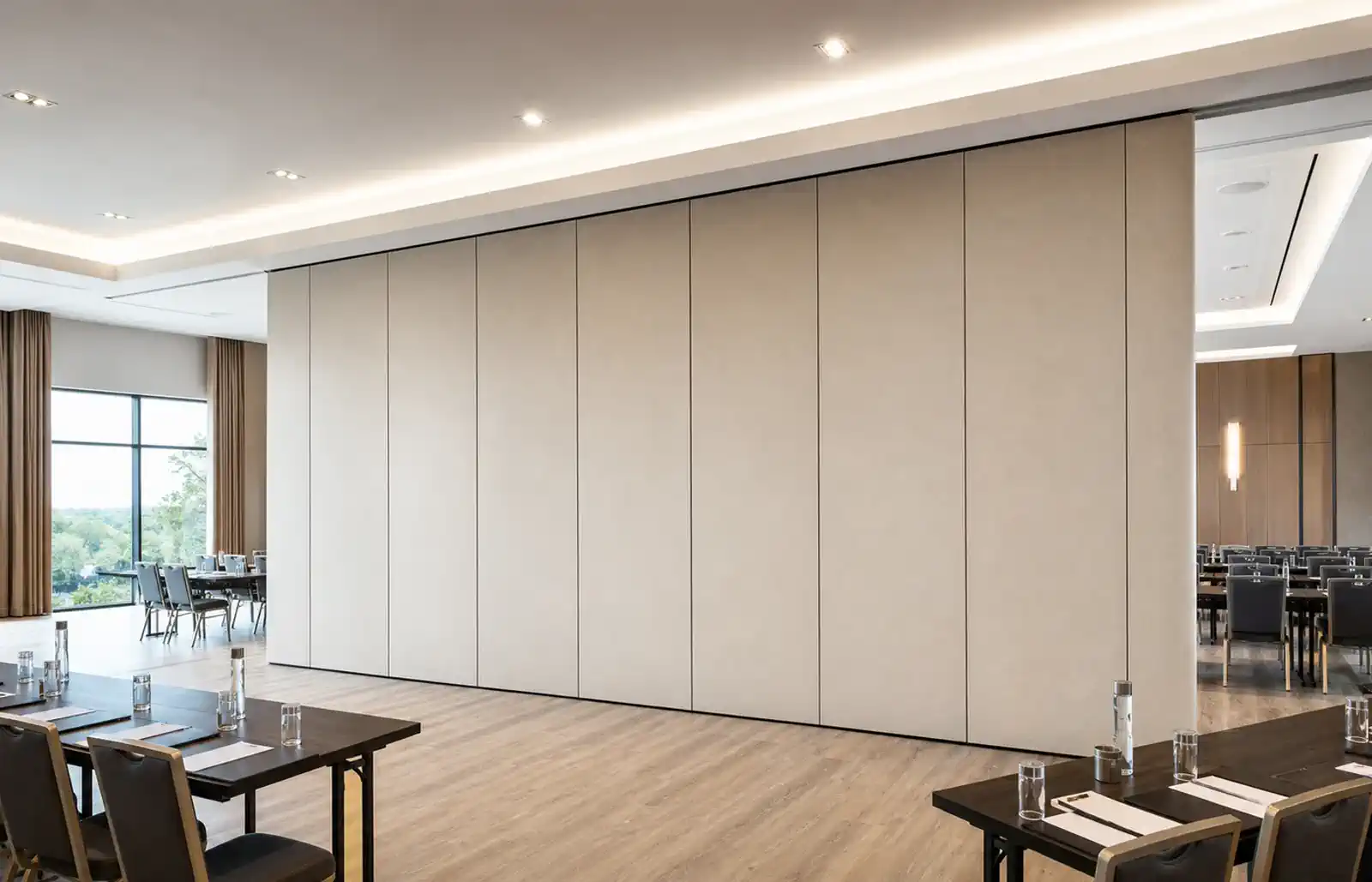
| Note item | What to record | What not to infer |
|---|---|---|
| Finish selection | Surface type and approval status | Cleaning, durability or acoustic results |
| Movement route | Straight, turning and stacking paths reviewed | That an untracked gap can be crossed |
| Parking position | Planned stacking location | That space or support is already sufficient |
| Acoustic intent | Concept and confirmation required | Guaranteed soundproofing |
Open items, evidence limits and review ownership
An honest handover note includes an evidence boundary. State which items are confirmed by maintained product information, which depend on project drawings and which require specialist review. This prevents the next stage from treating a planning assumption as a verified condition.
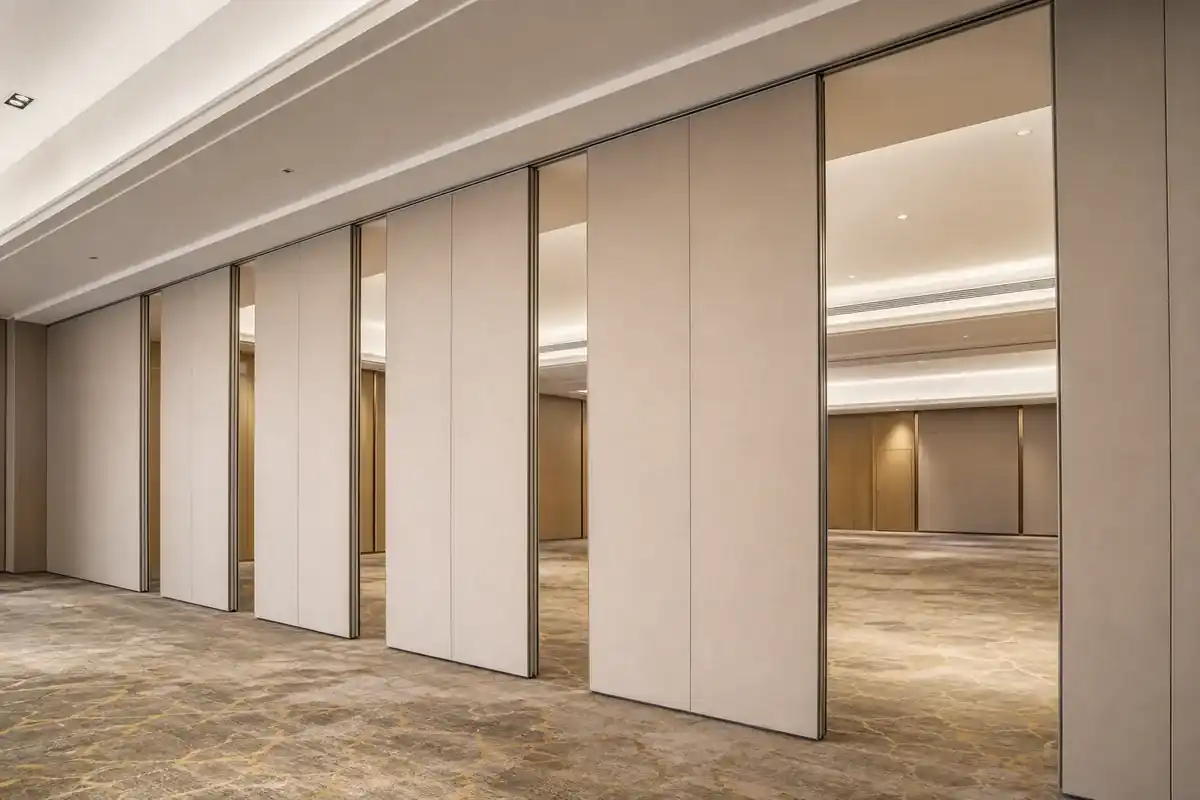
Assign each open item to a discipline and a review point. Typical categories include dimensional fit, overhead support, route continuity, finish approval and pass-door coordination. Where documentation is needed, discuss the project documentation requirements early rather than after drawings are issued. Reference examples of completed work through the projects section only as context, not as proof of performance for a new project.
Frequently asked questions
What is a partition coordination note?
It is a transfer document that records layout intent, movement routes, parking position, finish direction and open items so the next design stage can continue without guessing.
Should the note include acoustic targets?
Targets require project-specific evidence.
How detailed should route information be?
Record the straight, turning and stacking routes reviewed from the layout and flag any segment that is unresolved. Every proposed path needs a continuous connected overhead route and project-specific support review.
Can finish samples be treated as approved selections?
Only if the project record says so.
Who closes open coordination items?
The note should name the responsible discipline and review point for each item. The architect usually maintains the record, but closure depends on the relevant specialist or site confirmation.
When should pass-door requirements be discussed?
As early as the layout allows. Pass-door requirements and project documentation can be discussed with the supplier so they are reflected before the next stage advances.
Conclusion and next step
A good handover does not pretend every question is answered. It makes the answered questions traceable and the unanswered ones impossible to overlook. By recording layout intent, movement routes, parking, finishes and evidence limits, architects give the next design stage a reliable starting point for movable partition coordination.
Confirm project-specific support, acoustic and dimensional requirements before drawings are finalized. To discuss your layout, pass-door needs or documentation, contact the EBUNGE team.
Continue Exploring
More Installation and Maintenance Guides
- Newer guidePartition Track Datum Ceiling Grid Reconciliation
- Earlier guideHow to Plan Movable Partition Lifting Routes Before Panels Arrive
- Related guideHow to Structure a Handover File Index for Movable Partition Interfaces
- Related guideWhat Should a Handover File Index Prove About Partition Interfaces?