
html body.single-post main#content.site-main{box-sizing:border-box!important;width:calc(100% – 32px)!important;max-width:900px!important;margin-left:auto!important;margin-right:auto!important;padding-left:0!important;padding-right:0!important}
Quick answer: handover file index
Review focus: handover file index.
A partition handover file index interface proof is not a marketing summary. It is a navigation tool that tells the receiving team where each interface decision is recorded, which drawing or document governs it, and what still requires project-specific confirmation. For overseas contractors, architects, designers, owners and renovation teams, the index should make the evidence trail visible without implying performance that has not been demonstrated for the application reference.
This guide explains what the index should prove, how to structure it, and where the boundaries of visible evidence sit. It uses EBUNGE movable partition facts only as a reference point; every project still needs its own drawing review and confirmed requirements.
Why the Index Matters More Than the Folder
Project review term: handover file index.
A handover folder can contain hundreds of files and still fail its purpose if nobody can trace a decision. The index is the map. It should connect each interface topic to a controlled document, a revision status and an owner. Without that map, later maintenance, room reconfiguration or a change of facilities team becomes guesswork.
The suitability of each route and parking arrangement depends on the approved layout, circulation, ceiling interfaces and operating sequence. Instead, it should prove that the interface was considered, documented and reviewed by the responsible parties.
What Interface Proof Should Cover
Coordination scope: handover file index.
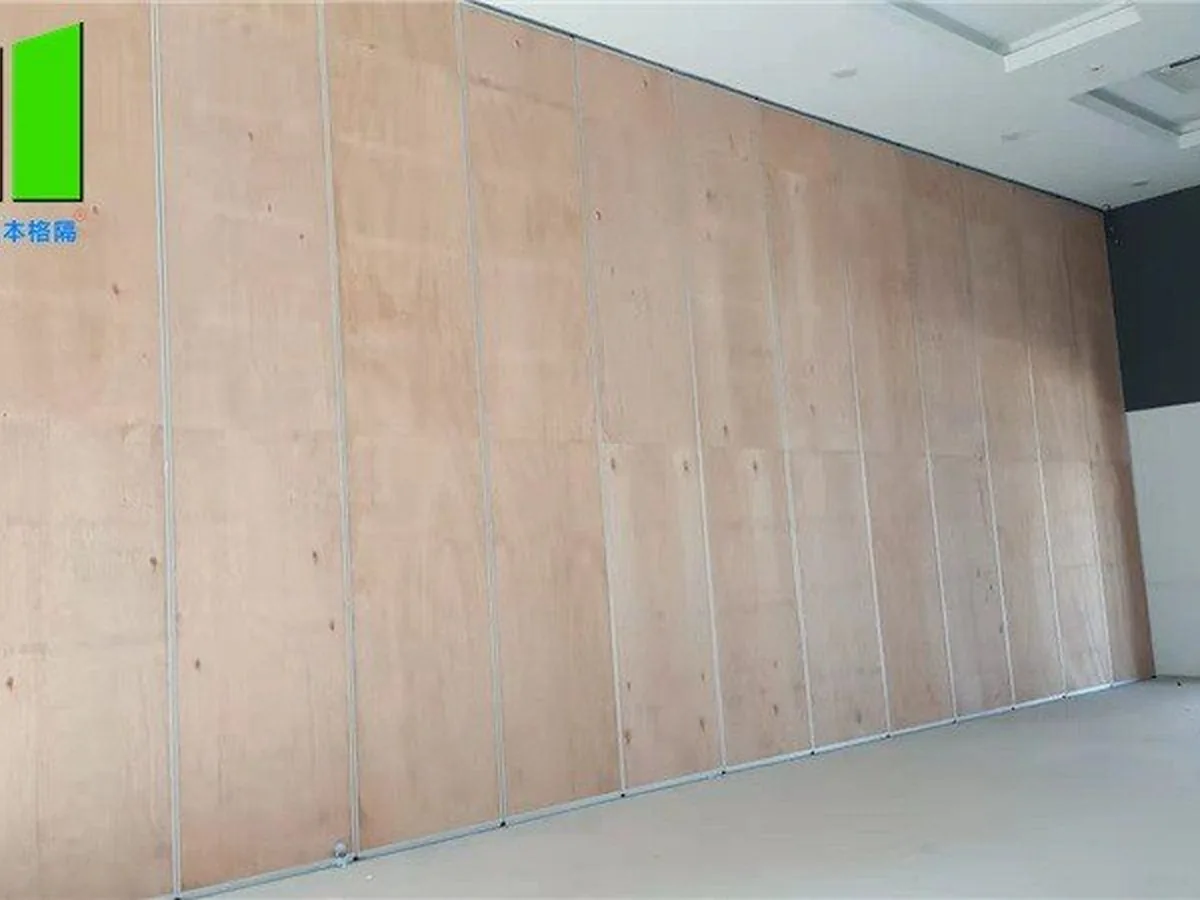
Movable wall panels are individually movable, suspended from a top track, cross the opening without a floor track, and park at a planned stacking position. Those maintained facts shape the interface topics the index must address.
Track, support and movement route
The index should reference the reviewed layout showing straight, turning and stacking routes. It should identify the continuous overhead route and the project-specific support review. The exact route, junction arrangement, continuous overhead path and parking position must be confirmed from the coordinated project drawings.
Parking and stacking position
Parking style is customized to the layout and project requirements. The index should point to the agreed stacking position, the clearance assumptions and any coordination with adjacent trades. These are drawing-level confirmations, not performance claims.
Finishes and visible surfaces
Confirmed finish options include laminate, melamine, fabric, leather, glass and other approved surfaces. The index should record the approved finish schedule and reference samples or approvals where they exist.
Pass doors and access
Where pass-door requirements apply, the index should reference the agreed configuration and any project documentation discussed with the supplier. It should not assume a standard arrangement without confirmation.
A Practical Index Structure
The following structure keeps the file usable. Adapt section names to local practice, but keep the logic of traceability.
- Project identification: project name, location, revision date and document owner.
- Reviewed layout drawings: plan views showing the opening, movement routes and stacking position.
- Interface register: a table listing each interface, the responsible party, the reference document and its status.
- Finish schedule: approved surfaces with references to samples or approval records.
- Pass-door record: agreed requirements and related correspondence where applicable.
- Open items and confirmations: unresolved questions, acoustic or dimensional requirements still to be confirmed, and the party responsible.
- Revision history: what changed, when, and who approved it.
Evidence Boundaries the Index Should State
An honest index distinguishes between what is documented and what is assumed. If acoustic requirements are part of the project, the index should reference the project-specific acoustic confirmation rather than infer performance from a finish or a drawing.
Evidence note: A visible panel shape, finish sample or layout drawing does not by itself prove acoustic performance, fire behaviour, durability, load capacity or maintenance outcomes. Those topics require matching project evidence and confirmation.
The index should also avoid promising service life or financial returns. Those are commercial and performance conclusions that sit outside the scope of a handover navigation document.
Interface Register Example
Panel handling and the operating sequence must be confirmed for the selected layout and project conditions. The example below is a format, not a claim about any real project.

| Interface topic | Reference document | Status | Owner |
|---|---|---|---|
| Overhead route and support review | Reviewed layout drawing | To confirm | Structural lead |
| Stacking position | Coordinated plan | Documented | Design lead |
| Finish schedule | Approved sample record | Documented | Interior designer |
| Pass-door requirements | Project correspondence | Open | Contractor |
| Acoustic requirement | Project specification | To confirm | Acoustic consultant |
Reviewing the Index Before Handover
Before sign-off, the receiving team should be able to answer three questions: where is each interface recorded, which revision is current, and what remains unconfirmed. If any answer is missing, the index is incomplete.
Reviewers should also check that the index does not overstate. Where acoustic or dimensional requirements matter, the index should direct readers to the project-specific confirmation rather than a generic claim.

For product context, see the movable partition wall overview. For examples of how project information is organised, review the project reference pages, remembering that each project has its own scope and evidence.
FAQ
What is the main purpose of a partition handover file index?
Its main purpose is traceability. It should show where each interface decision is recorded, which document is current, and what remains open, so the receiving team can verify the file without relying on memory.
Does the index need to include acoustic test results?
Only if the project file contains matching evidence for the specific configuration. Visible references can support layout discussion but do not verify hidden construction or performance.
How should movement routes be documented?
The index should reference reviewed layout drawings showing straight, turning and stacking routes. It should confirm that the overhead route is continuous and that support has been reviewed for the project.
Can the index confirm that panels will never need adjustment?
No. The index is a documentation tool, not a performance guarantee. It should record what was agreed and reviewed, and it should avoid promises about service life or future maintenance outcomes.
What should happen to open items at handover?
Open items should remain visible in the index with an owner and a status. They should not be hidden or treated as resolved without a documented confirmation.
Who should maintain the index after handover?
The responsible party should be named in the document. Typically this is the facilities or project team receiving the file, but the exact arrangement should be agreed during project planning.
Conclusion and Next Step
A well-built partition handover file index proves that interfaces were identified, referenced and reviewed. Keep the index honest, current and easy to navigate, and confirm project-specific support, acoustic and dimensional requirements with the responsible parties.
To discuss pass-door requirements, finish options or project documentation for your layout, contact the EBUNGE team with your drawings and open questions.
Continue Exploring
More Installation and Maintenance Guides
- Newer guideHow to Plan Movable Partition Lifting Routes Before Panels Arrive
- Earlier guideMovable Partition Renovation Phasing Paired Zone Handover
- Related guideHow to Set a Ceiling Interface Hold Point Before Partition Track Fixing
- Related guideWho Signs Off Partition Track Setting-Out Before Panels Arrive On Site?