
html body.single-post main#content.site-main{box-sizing:border-box!important;width:calc(100% – 32px)!important;max-width:900px!important;margin-left:auto!important;margin-right:auto!important;padding-left:0!important;padding-right:0!important}
Quick answer: movable partition tender unpriced interface
Review focus: movable partition tender unpriced interface.
When a movable partition tender unpriced interface scope is left open, the cheapest-looking return can become the most expensive decision. A bid may price the panels but remain silent on the overhead route, the parking position, the finish interfaces or the pass-door coordination. This article gives project teams a practical, evidence-bounded way to flag those gaps before award. The suitability of each route and parking arrangement depends on the approved layout, circulation, ceiling interfaces and operating sequence.
Why Interface Scope Goes Missing in Movable Partition Tenders
Project review term: movable partition tender unpriced interface.
Movable partition panels are individually movable, suspended from a top track, cross the opening without a floor track and park at a planned stacking position. That simple description hides a chain of interfaces. The top track must connect to structure. The route must be continuous. The parking zone must exist in the room layout. Finishes must meet adjacent walls and ceilings.
When a tender package is split across trades, each bidder may assume another party owns part of that chain. The result is an unpriced interface scope: work that is required for the system to function but appears in no priced line. Flagging it early is a commercial and technical control, not a criticism of any bidder.
A Six-Point Checklist for Flagging Unpriced Interface Scope
Coordination scope: movable partition tender unpriced interface.
Use this checklist during tender review. It is designed to surface missing scope, not to confirm performance. Every item still requires project-specific evidence.
- Overhead route: Is the full travel path shown as continuous and supported, including turning or stacking routes?
- Structural interface: Who confirms the supporting structure and connection strategy for the top track?
- Parking position: Is a stacking zone drawn, dimensioned and coordinated with doors, services or furniture?
- Finish interfaces: Are laminate, melamine, fabric, leather, glass or other approved surfaces matched to adjacent finishes?
- Pass-door scope: Is any pass-door requirement described, priced and coordinated with the panel layout?
- Documentation: Are shop drawings, layout reviews and project documentation included in the return?

If any answer is unclear, mark the line as unpriced or unallocated. Do not assume the missing item is included.
How to Read a Tender Return Without Inferring Hidden Performance
Checklist focus: movable partition tender unpriced interface.
A tender return is a commercial document, not a test report. A product photograph does not prove cleaning compatibility or durability.
Where acoustic terms appear, treat them conceptually.
Evidence Note: What a Tender Return Can and Cannot Show
Review focus: movable partition tender unpriced interface.
Visible evidence limit: A tender return can show priced line items, stated exclusions and attached drawings. The exact overhead route and support arrangement must be confirmed by the responsible project team from coordinated drawings. Those items require separate project-specific confirmation.
This boundary matters because unpriced interface scope often hides behind confident language. If a return claims a performance outcome without matching evidence, flag it for clarification rather than accepting it as priced scope.
Numbered Process: From Tender Review to Clarification
- Trace the intended movement route from the open position to the parking position.
- Mark every point where the partition meets another trade, element or finish.
- Compare each marked interface against the priced line items in the return.
- List missing or ambiguous items as unpriced interface scope.
- Send written clarification requests before comparing totals.
- Record the agreed allocation in the tender evaluation file.
This process keeps the comparison fair. A return that appears higher may simply include interface work that another return has left open.
Coordinating with the Wider Project Team
Unpriced interface scope is rarely solved by the partition supplier alone. The review should identify who owns each interface and when the information is needed.
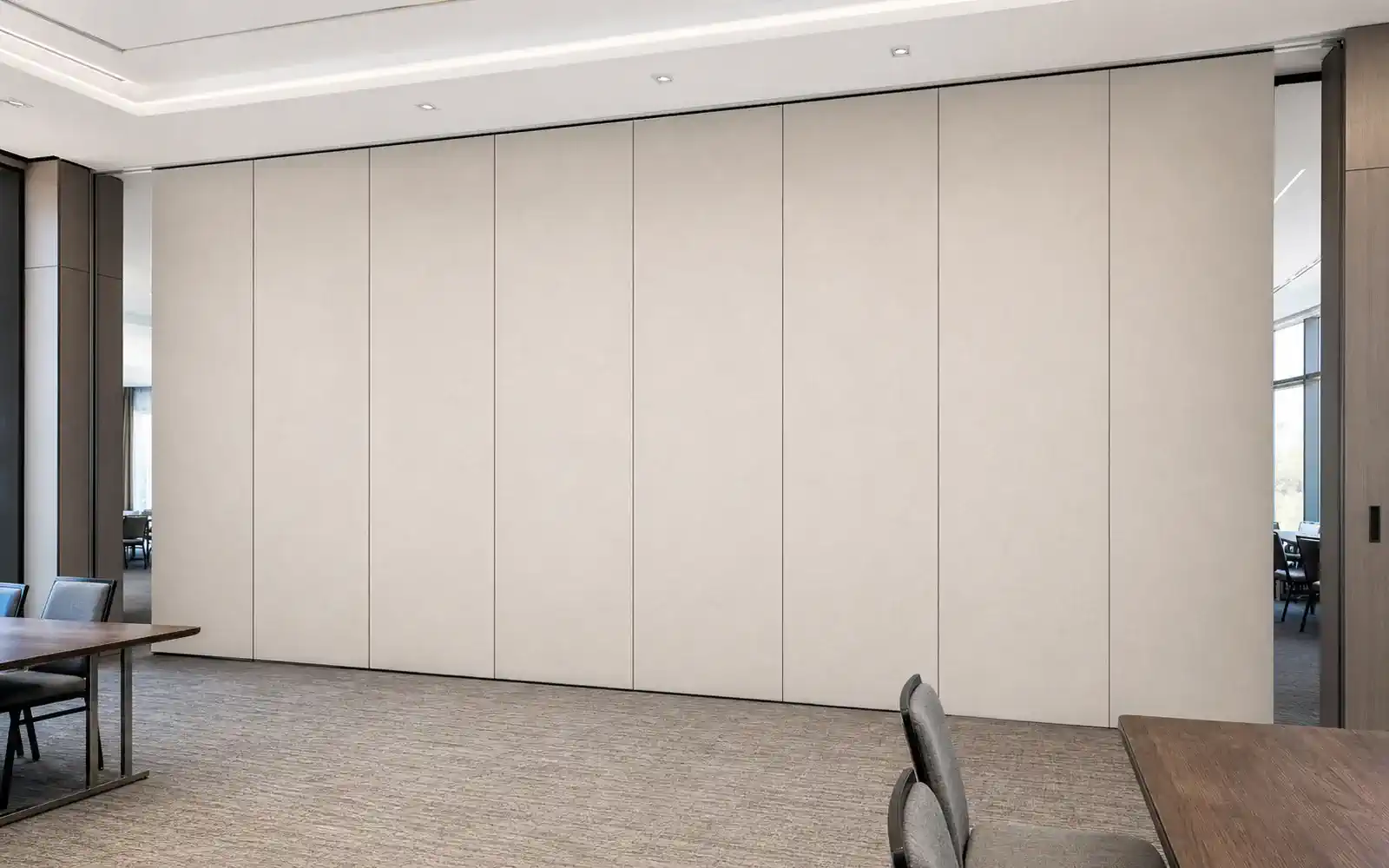
For layout review, the straight, turning and stacking routes should be examined together. Parking style is customized to the customer layout and project requirements, and compact stacking may be possible when the coordinated design permits it. None of this should be assumed from a generic drawing.
Finish coordination also belongs here. Confirmed finish options include laminate, melamine, fabric, leather, glass and other approved surfaces. The tender should state which finish is priced and how it interfaces with adjacent materials. If the finish is described only as ‘to match’, flag it.
Common Mistakes When Flagging Unpriced Interface Scope
One common mistake is flagging too late, after totals have been compared. Another is flagging without a written question, which leaves the answer open to interpretation. A third is treating a clarification response as proof of performance rather than a commercial statement.
Keep the flag specific. Name the interface, the drawing reference and the missing line item. Ask for a written position. This makes the tender evaluation defensible and helps the project team avoid surprise variations later.
Frequently Asked Questions
What is unpriced interface scope in a movable partition tender?
It is work required for the partition system to function that appears in no priced line item. It is not necessarily excluded on purpose; it is often assumed to sit with another trade.

Does a movable partition need a floor track?
EBUNGE movable partition panels are top-hung and move without a continuous floor running track or floor hardware along the partition line. The exact route, junction arrangement, continuous overhead path and parking position must be confirmed from the coordinated project drawings.
Can I compare tender returns before resolving interface scope?
You can compare them, but the comparison may be misleading. A lower total may exclude interface work that another return includes. Flag unpriced scope first, then compare adjusted totals on a like-for-like basis.
How should acoustic terms be treated in a tender return?
Confirm acoustic requirements with the project team and do not accept a single number as proof of real-room performance.
What finish information should be priced in the return?
The return should state which finish is priced. Confirmed finish options include laminate, melamine, fabric, leather, glass and other approved surfaces. If the finish is described only as ‘to match’ or ‘similar’, flag it for written clarification.
When should pass-door requirements be raised?
Pass-door requirements and project documentation can be discussed during tender review. Raise them early so the panel layout, parking position and interface scope are coordinated before award.
Conclusion: Flag Early, Confirm Specifically
Flagging movable partition tender unpriced interface scope is a discipline of asking precise questions before comparing totals. Use the checklist, trace the route, mark the interfaces and request written clarification. This protects the tender process and reduces the risk of variations after award.
To discuss your project layout, finish requirements or pass-door coordination, contact EBUNGE. You can also review the movable partition wall range or see how layouts are coordinated in the projects section. Confirm project-specific support, acoustic and dimensional requirements with your project team before finalising any tender return.
Continue Exploring
More Cost and Planning Guides
- Newer guideMovable Partition Tender Omitted Interface Scope Audit
- Earlier guideInterrogate a Movable Partition Tender’s Site Visit Findings
- Related guideReview a Movable Partition Tender for Unclear Interface Ownership
- Related guideCompare Movable Partition Tender Returns When Bidders Bundle