
html body.single-post main#content.site-main{box-sizing:border-box!important;width:calc(100% – 32px)!important;max-width:900px!important;margin-left:auto!important;margin-right:auto!important;padding-left:0!important;padding-right:0!important}
Quick answer: movable partition tender omitted interface
Review focus: movable partition tender omitted interface.
A movable partition tender omitted interface scope audit is a structured review of what the partition package does and does not include at its boundaries. Most tender disputes do not begin with the panel itself. The suitability of each route and parking arrangement depends on the approved layout, circulation, ceiling interfaces and operating sequence. This article offers an evidence-bounded framework for overseas contractors, architects, interior designers, owners and procurement teams who need to compare submissions without inventing performance or commercial conclusions.
The goal is not to score suppliers on hidden criteria. It is to make visible what each tender assumes, what remains unstated, and which items require project-specific confirmation before award. Use the movable partition wall product context as a starting reference, then verify every interface against the application reference drawings.
Why Interface Scope Disappears from Tenders
Project review term: movable partition tender omitted interface.
Movable partition panels are individually movable, suspended from a top track, cross the opening without a floor track, and park at a planned stacking position. That operating concept is simple. The surrounding interfaces are not. A tender may describe the panels and finishes while leaving the overhead route, support conditions, stacking zone, adjacent finishes and coordination responsibilities to assumption.
When those assumptions differ between the main contractor, the partition supplier and the ceiling contractor, the gap becomes a variation. An audit does not need to resolve every engineering question. It needs to expose where resolution is still required.
The difference between product scope and interface scope
Product scope covers the panels, their finish selection and the movement concept. Interface scope covers everything the partition touches or depends on: the overhead route, the opening geometry, the parking area, adjacent surfaces and the sequence of other trades. A tender can be complete on product scope and still omit interface scope.
Start with the Movement Route, Not the Panel
Coordination scope: movable partition tender omitted interface.
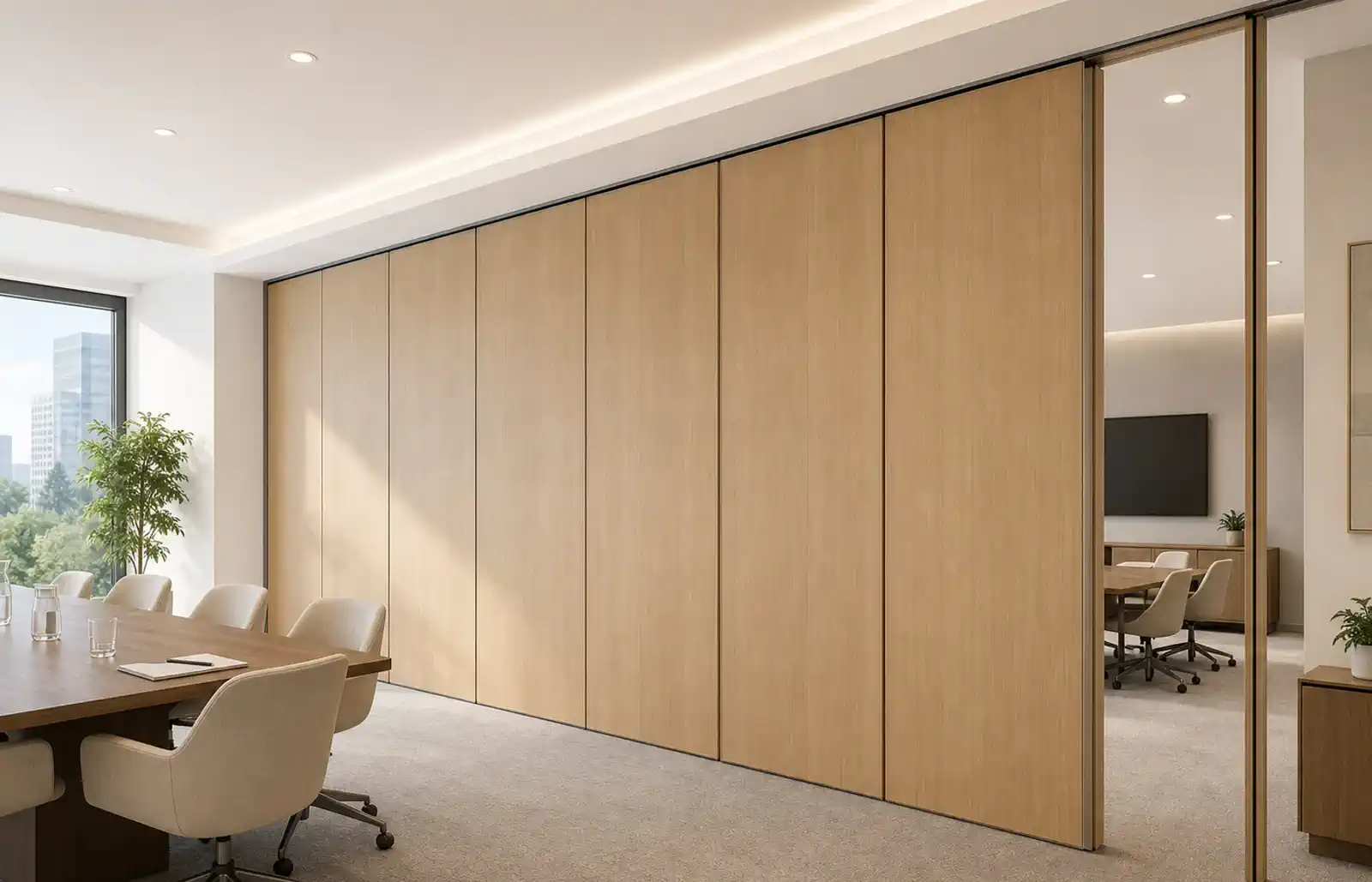
Straight, turning and stacking routes are reviewed from the layout. Before comparing prices or finishes, confirm that each tender responds to the same route. A route that turns or stacks in a confined area raises different coordination questions than a straight run across a wide opening.
The exact route, junction arrangement, continuous overhead path and parking position must be confirmed from the coordinated project drawings. Every proposed movement path requires a continuous connected overhead route and project-specific support review. If a tender does not show or describe that route, mark it as an open item rather than filling the gap with an assumption.
Questions to ask about the route
- Does the tender show the full path from closed position to parking position?
- Are turning points or changes of direction identified?
- Is the parking location coordinated with adjacent doors, services or finishes?
- Does the route conflict with ceiling features, lighting or structural elements?
- Has the structural support condition been reviewed by the responsible party?
Build an Interface Responsibility Matrix
Checklist focus: movable partition tender omitted interface.
An interface responsibility matrix is one of the most useful tools in a tender audit. It lists each boundary condition and records who designs, supplies, installs and verifies it. The matrix does not need to be complex. It needs to be complete enough that no boundary is left to silence.
| Interface item | Typical open question | Evidence needed before award |
|---|---|---|
| Overhead route and support | Who confirms the supporting structure and continuous route? | Project-specific structural review and coordinated drawings |
| Opening and adjacent walls | Who is responsible for closing gaps and finishing edges? | Dimensioned details and finish schedule |
| Parking zone | Is the stacking position clear of other trades and services? | Layout drawing with parking area marked |
| Pass door | Is a pass-door required, and who coordinates its interface? | Confirmed pass-door requirement and documentation |
| Finishes | Which approved surface is specified, and who confirms compatibility? | Confirmed finish selection and sample approval process |
Use the matrix during tender clarification, not after award. It converts vague assumptions into questions that each party can answer in writing.
Audit the Specification Language
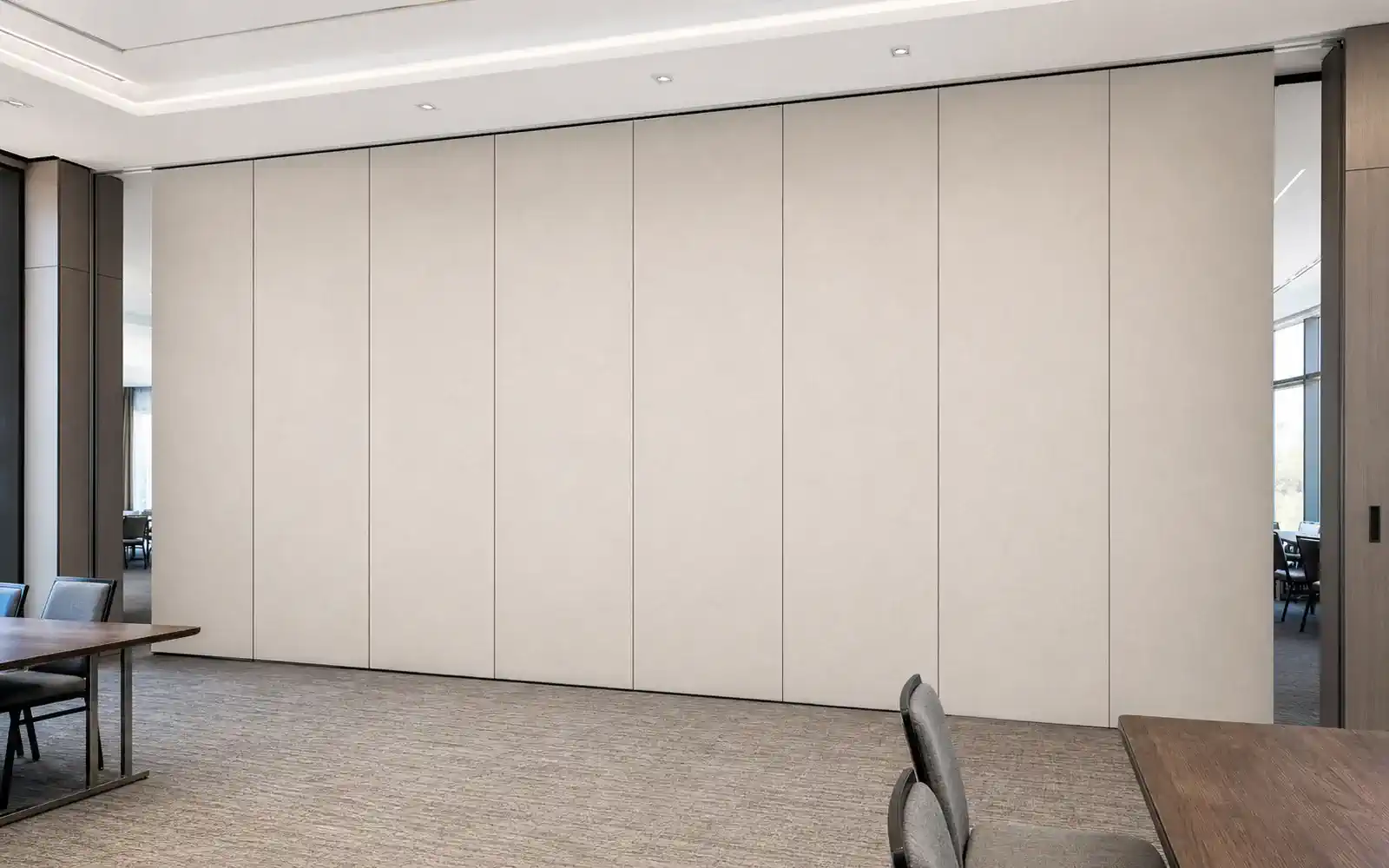
Specification wording often hides omissions. Phrases such as “complete system” or “all necessary items” may sound comprehensive but leave responsibility undefined. A movable partition tender omitted interface scope audit should flag language that cannot be verified against drawings or a scope schedule.
Confirmed finish options include laminate, melamine, fabric, leather, glass and other approved surfaces. The tender should state which finish is included and how approval will be handled.
Acoustic concepts without invented numbers
If acoustic separation matters for the project, ask how the requirement will be defined, documented and verified by the responsible acoustic specialist. Do not accept a generic claim as evidence.
Check Documentation and Pass-Door Requirements
Pass-door requirements and project documentation can be discussed with the supplier during tender review. The exact overhead route and support arrangement must be confirmed by the responsible project team from coordinated drawings. If the layout requires one, the tender should acknowledge it rather than leave it to a later variation.
Documentation should also clarify what drawings, schedules and approvals are expected from each party. Missing documentation is not proof of missing capability, but it is a legitimate clarification item.
Evidence note
Do not infer hidden acoustic, fire, durability, load, maintenance, certification or commercial performance from a visible shape, finish, photograph or drawing. Comparative, absolute and causal statements require corresponding evidence; otherwise state the exact project-specific confirmation boundary.
Run a Tender Clarification Sequence
- Collect all tender submissions and separate product scope from interface scope.
- Overlay each submission against the same layout, route and parking drawing.
- Mark every unstated boundary condition as an open item.
- Issue a written clarification request for each open item.
- Compare responses for consistency, not for persuasive language.
- Record confirmed items, assumptions and remaining risks in the tender evaluation.
This sequence keeps the audit factual. It also gives owners and contractors a defensible record of what was known at award.
Coordinate Across Trades Before Award
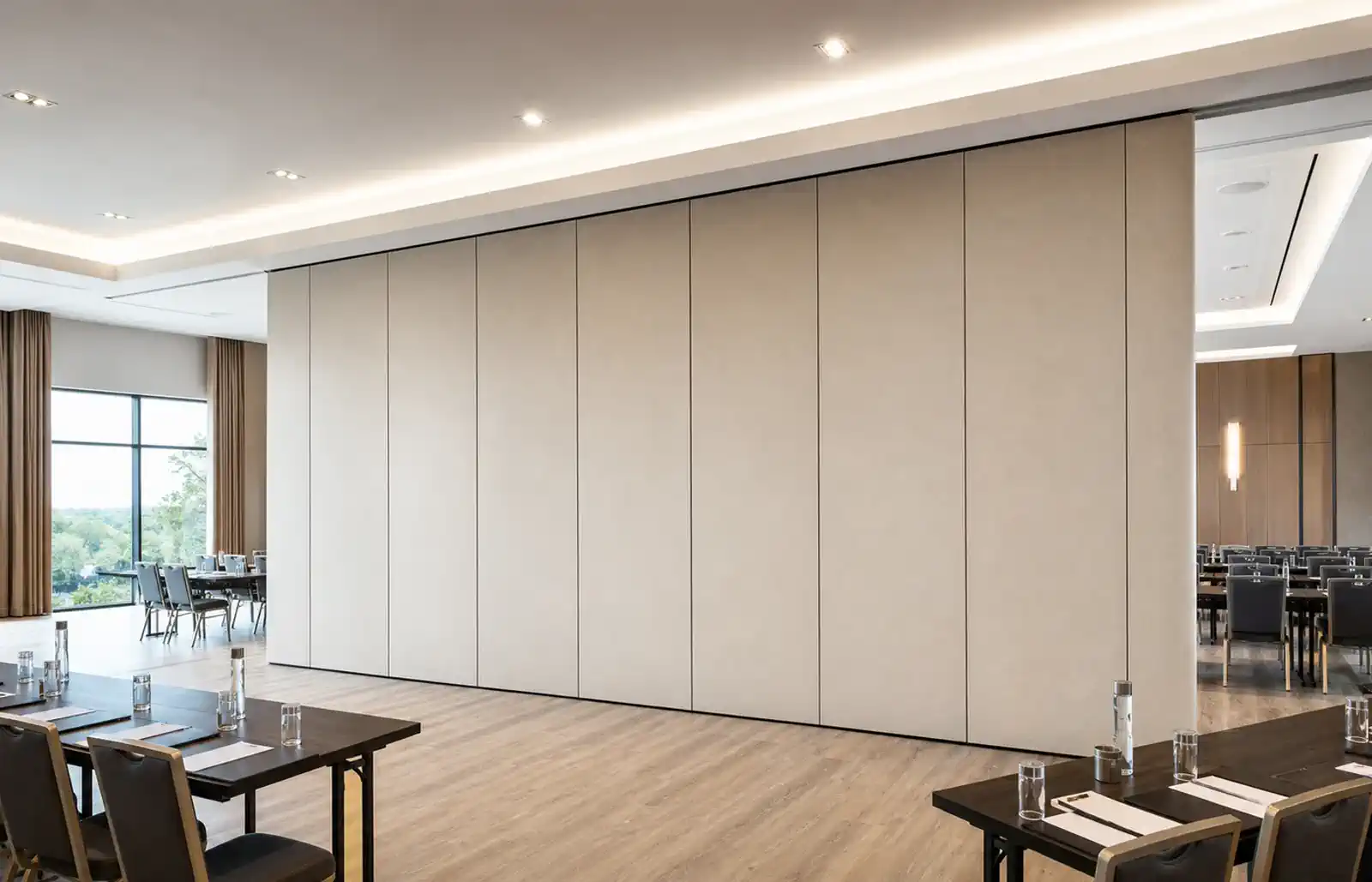
Interface scope is rarely owned by one party. Procurement and Tender Review coordination should include a short cross-trade review before award, even if the partition package is small.
For project examples and application context, review the project references and confirm which conditions match your own drawings. Named venues or room types are examples only; movable partitions can be considered wherever flexible spatial division, combination or reconfiguration is required.
Frequently Asked Questions
What is a movable partition tender omitted interface scope audit?
It is a structured review of the boundaries between the movable partition package and adjacent building elements. It identifies what each tender assumes, what remains unstated, and which items require project-specific confirmation before award.
Does a movable partition need a floor track?
EBUNGE movable partition panels are top-hung and move without a continuous floor running track or floor hardware along the partition line.
Which finishes should be confirmed in the tender?
Confirmed finish options include laminate, melamine, fabric, leather, glass and other approved surfaces. The tender should state the selected finish and the approval process without implying unverified performance.
Can acoustic performance be compared from the tender alone?
No. Acoustic requirements should be defined and verified by the responsible acoustic specialist using project-specific evidence.
What should be done if the parking position is unclear?
Mark it as an open item. Parking style is customized to the customer layout and project requirements, and compact stacking may be possible when the coordinated design permits it. The route and stacking zone should be shown on the layout.
When should pass-door requirements be raised?
Pass-door requirements and project documentation can be discussed during tender clarification. Raising them early avoids treating an additional opening as a later variation.
Conclusion and Next Step
A movable partition tender omitted interface scope audit is not about distrust. It is about making assumptions visible while they can still be resolved. Review the movement route, the interface matrix, the specification language and the documentation expectations. Confirm project-specific support, acoustic and dimensional requirements with the responsible parties before award.
If your team is preparing a tender or comparing submissions, contact EBUNGE to discuss pass-door requirements, project documentation and the layout information needed for a coordinated review.
Continue Exploring
More Cost and Planning Guides
- Newer guideReview Movable Partition Wall Tender Addenda for Scope Creep
- Earlier guideMovable Partition Tender Unpriced Interface Scope
- Related guideBenchmark a Movable Partition Tender Against Prior Award Data
- Related guideRead a Movable Partition Tender Pricing Schedule for Hidden