
Why Panel Stacking Configuration Matters for Healthcare Training Rooms
For project teams, healthcare training room partition manual operation single paired panel should be reviewed against the opening, ceiling interface, operating sequence and approved finish requirements. When planning a healthcare training room partition, one of the first decisions is how the movable wall panels will park when the space is opened. Panel handling and the operating sequence must be confirmed for the selected layout and project conditions. This comparison helps contractors, architects, and facility owners evaluate options based on project-specific needs rather than generic assumptions.
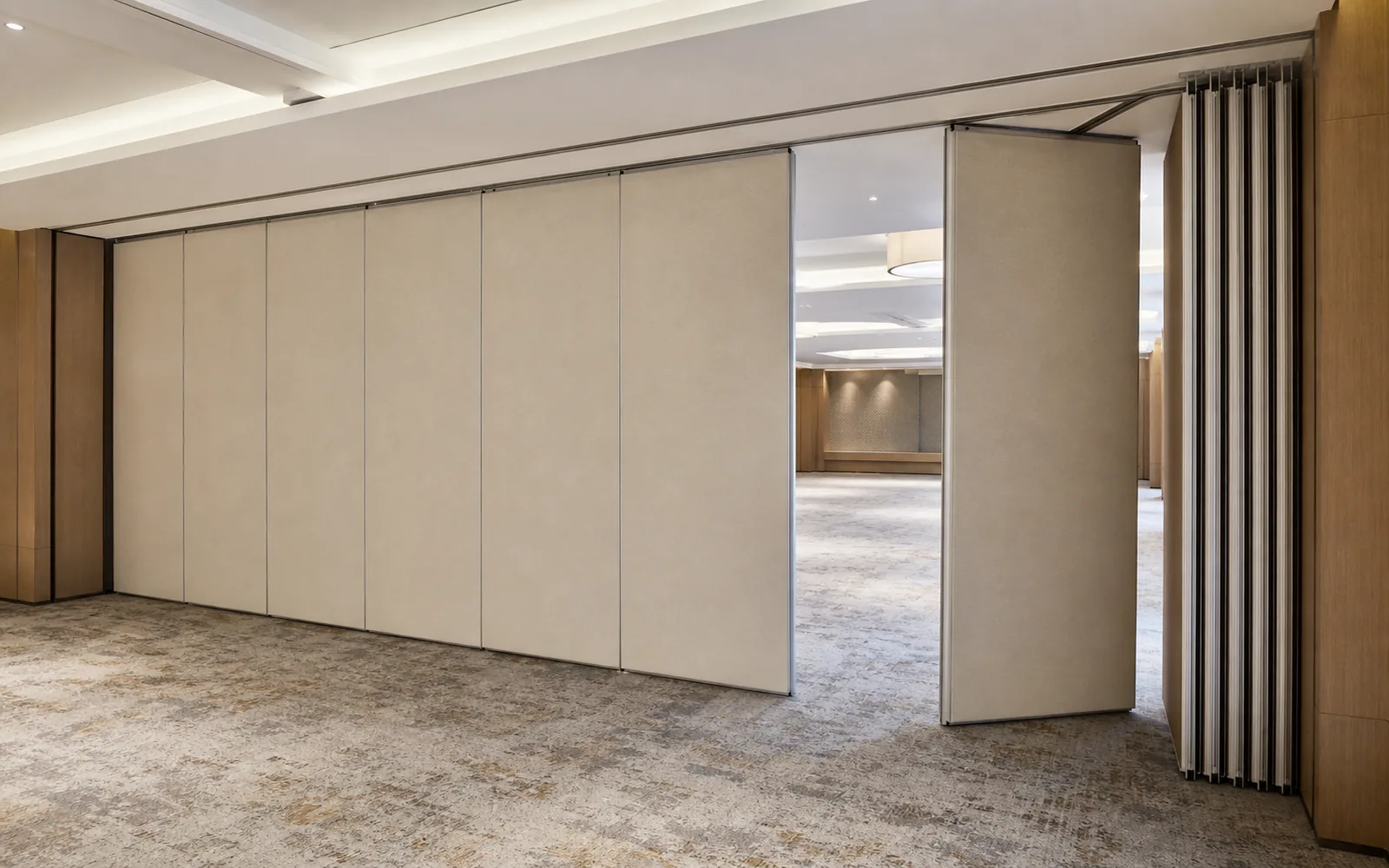
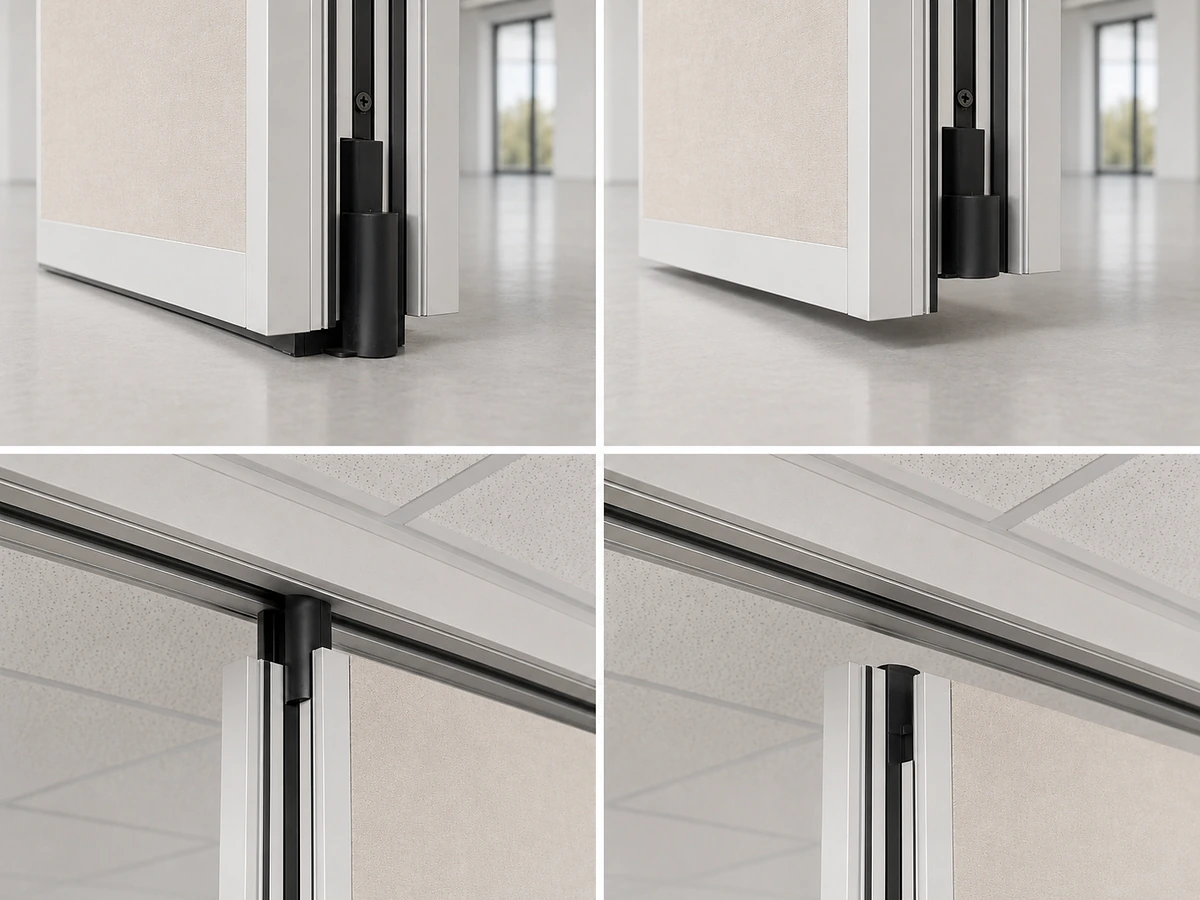
EBUNGE movable partitions are top-hung and move without a floor track, which means the entire operation depends on the overhead support and the planned stacking configuration. Understanding how single and paired stacking differ in manual handling, layout impact, and coordination requirements is essential for a successful installation.
Understanding Single vs Paired Panel Stacking

Single Panel Stacking
In single panel stacking, each panel parks individually along the stacking area. The suitability of each route and parking arrangement depends on the approved layout, circulation, ceiling interfaces and operating sequence. Manual operation involves moving each panel separately, which can be straightforward but may require more walking distance for the operator.
Paired Panel Stacking
Paired panel stacking involves connecting two panels together so they move as a unit. This reduces the number of individual movements, potentially speeding up the opening process. However, paired panels are heavier and require more space for turning and parking, as the combined length is longer. The exact route, junction arrangement, continuous overhead path and parking position must be confirmed from the coordinated project drawings.
The choice between these configurations depends on the available stacking space, the desired opening width, and the manual effort acceptable to the staff. Each option has trade-offs that must be evaluated against the specific room layout.
Share the opening dimensions, room layout and intended operating sequence for review.
Manual Operation: What to Compare
Manual operation of a movable partition involves moving panels along the overhead track. Key factors to compare between single and paired stacking include:
- Number of movements: Single stacking requires moving each panel individually, while paired stacking moves two at a time.
- Physical effort: Paired panels are heavier, so the operator must exert more force to start and stop the movement.
- The exact overhead route and support arrangement must be confirmed by the responsible project team from coordinated drawings.
- Time to open/close: Paired stacking may reduce the number of trips, but the heavier weight could slow each movement.
These factors are not absolute; they depend on the panel size, weight, and the specific track layout. Project teams should discuss manual operation expectations with the manufacturer to understand the practical implications for their staff.
Layout Considerations for Stacking Routes
Every movable partition requires a continuous overhead track route that connects the closed position to the stacking area. The route may include straight sections, turning sections, and stacking sections. For healthcare training rooms, the layout must accommodate these routes without interfering with lighting, HVAC, or ceiling-mounted equipment.
Straight Routes
Both single and paired stacking can work on straight routes, but the stacking area length differs. Single stacking needs a length equal to the sum of all panel widths, while paired stacking needs a length equal to the sum of paired unit widths.
Turning Routes
Stacking Routes
The stacking route is where panels park. For single stacking, the route is a straight line with panels packed tightly. EBUNGE parking is customized to the project layout, so the stacking route is reviewed during the design phase.
Project Documentation and Coordination
Comparing single vs paired panel stacking is not a theoretical exercise; it requires project-specific documentation. The following documents are typically needed:
- Floor plans showing the room dimensions and the desired opening width.
- Ceiling plans indicating the available space for the overhead track and stacking area.
- Reflected ceiling plans to identify conflicts with lights, sprinklers, and ductwork.
- Architectural sections showing the ceiling height and any bulkheads.
These documents allow the manufacturer to review the proposed stacking configuration and provide guidance on feasibility. Without accurate drawings, it is impossible to determine whether single or paired stacking will work in a given space.
Acoustic and Finish Considerations
However, these ratings are not a simple decibel count; they are derived from laboratory tests and may not reflect real-world performance.
Review the ceiling interface, panel route and stacking position together.
Finish options for EBUNGE partitions include laminate, melamine, fabric, leather, glass, and other approved surfaces. The choice of finish affects aesthetics, durability, and maintenance. However, the compatibility of a finish with cleaning agents should be confirmed with the manufacturer.
Pass-Door Integration
Healthcare training rooms often require a pass-door within the partition for everyday access without opening the entire wall. When comparing single vs paired stacking, consider how the pass-door is positioned and whether it can be incorporated into a paired unit or must be a separate panel.
Pass-door requirements should be discussed early in the design process to ensure the track and stacking layout accommodate the door’s swing and hardware.
Frequently Asked Questions
What is the main difference between single and paired panel stacking?
Single panel stacking stores each panel individually, while paired panel stacking connects two panels to move as one unit. The main difference is in the number of movements and the required stacking space.
Does paired panel stacking require more ceiling space?
Paired panel stacking may require a longer turning radius and a stacking area that accommodates the combined length of the two panels. The exact space depends on the layout and must be reviewed with the manufacturer.
Can a healthcare training room partition be manually operated by one person?
Manual operation depends on panel weight and size. Paired panels are heavier and may require more effort. The number of operators is not specified by EBUNGE; it should be confirmed based on the specific panel configuration and user capabilities.
How do I know if single or paired stacking is right for my project?
The decision is based on the available stacking space, the desired opening width, and the manual operation preferences.
Are there acoustic differences between single and paired stacking?
Conclusion and Next Steps
Choosing between single and paired panel stacking for a healthcare training room partition requires a careful comparison of manual operation, layout constraints, and project-specific coordination. Both configurations have advantages and trade-offs that must be evaluated against the room’s intended use and the available space.
To make an informed decision, gather your floor plans, ceiling details, and pass-door requirements, and discuss them with a qualified partition supplier. EBUNGE offers movable partitions that are top-hung and floor-track-free, with customized parking solutions.
Explore our movable partition products or see how we have supported other flexible spaces. For direct assistance, contact us to discuss your healthcare training room partition needs.
Continue Exploring
More Operable Wall System Guides
- Earlier guideWhy Healthcare Training Room Partition Stacking Pockets Need Clearance for Wall-Mounted Crash Cart Storage
- Related guideHow to Plan Healthcare Training Room Partition Stacking Around Ceiling-Mounted IV Pump Hooks
- Related guideHow to Coordinate Sports Hall Partition Manual Operation with Ceiling-Mounted Climbing Rope Winch Zones
- Related guideHow to Compare Community Hall Partition Stacking Options for Wall-Mounted Tumbling Mat Racks