For project teams, hotel banquet partition finishes abrasion mobile light dolly should be reviewed against the opening, ceiling interface, operating sequence and approved finish requirements. When planning a hotel ballroom or banquet hall, the interaction between hotel banquet partition finishes and abrasion from a mobile light dolly is often overlooked until the final walkthrough. Ceiling-mounted light rigging dollies are common in flexible event spaces, and their movement can create wear on partition surfaces if not carefully mapped. This article provides a commercial investigation framework for overseas contractors, architects, and hotel owners to evaluate finish durability and coordinate project-specific requirements with EBUNGE.
Understanding Ceiling-Mounted Mobile Light Rigging Dollies
Ceiling-mounted mobile light rigging dollies are used to position lighting and rigging equipment over event spaces. They typically run on overhead rails or tracks, allowing technicians to move heavy equipment without floor obstructions. In a hotel banquet hall, these dollies may travel across the entire ceiling area, including directly in front of movable partition panels.
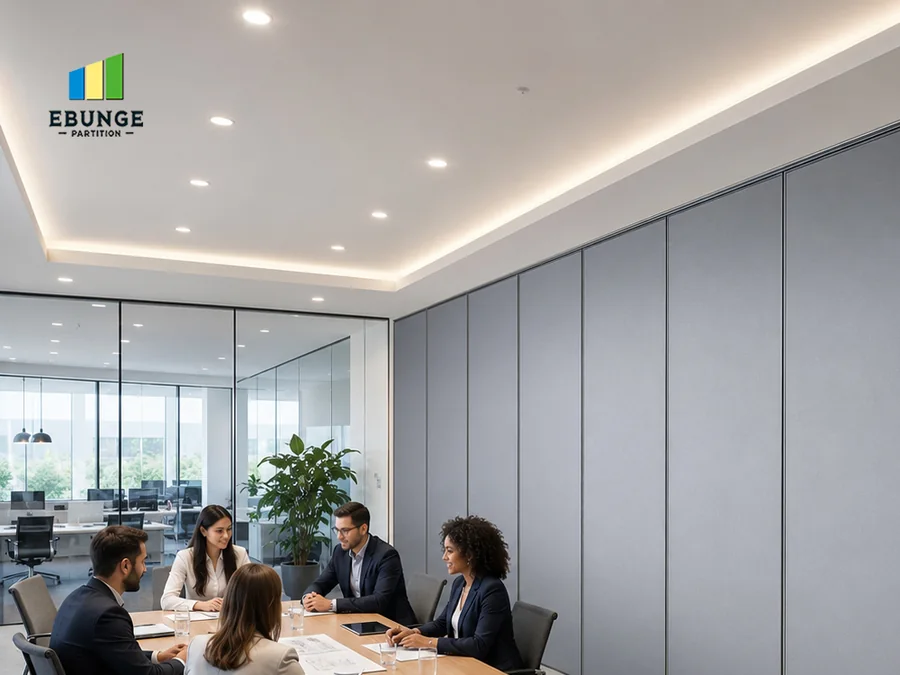
The key concern is that the dolly’s path may pass close to partition surfaces, especially when panels are stacked or when the dolly is used to service lighting above a divided room. Even if the dolly does not touch the partition during normal operation, accidental contact or swinging loads can cause abrasion. The suitability of each route and parking arrangement depends on the approved layout, circulation, ceiling interfaces and operating sequence.
Why Abrasion Mapping Matters for Partition Finishes
Abrasion mapping is the process of identifying all potential contact points between moving equipment and partition surfaces. For hotel banquet partitions, this involves analyzing the dolly’s travel path, the reach of its rigging, and the proximity of stacked panels. Cost and maintenance requirements depend on the selected configuration, finish and project conditions and require project-specific confirmation.
EBUNGE movable partitions are top-hung and move without a continuous floor running track, which means the ceiling area is critical for both panel movement and dolly operation. The overhead track for the partition and the dolly track may coexist in the same ceiling void, increasing the likelihood of interaction.
Identifying High-Risk Zones
Share the opening dimensions, room layout and intended operating sequence for review.
High-risk zones include areas where the dolly passes directly in front of a partition panel, where the dolly’s load swings during movement, and where panels are parked in a stacking position. In these zones, the finish should be selected for higher abrasion resistance or protected with additional measures.
Mapping the Dolly’s Movement Envelope
Panel handling and the operating sequence must be confirmed for the selected layout and project conditions. Also consider the height of the partition and the dolly’s lowest point. If the dolly is used to hang lighting from a truss, the truss may extend below the partition top, increasing the risk of contact.
EBUNGE Partition Finishes: Options and Considerations
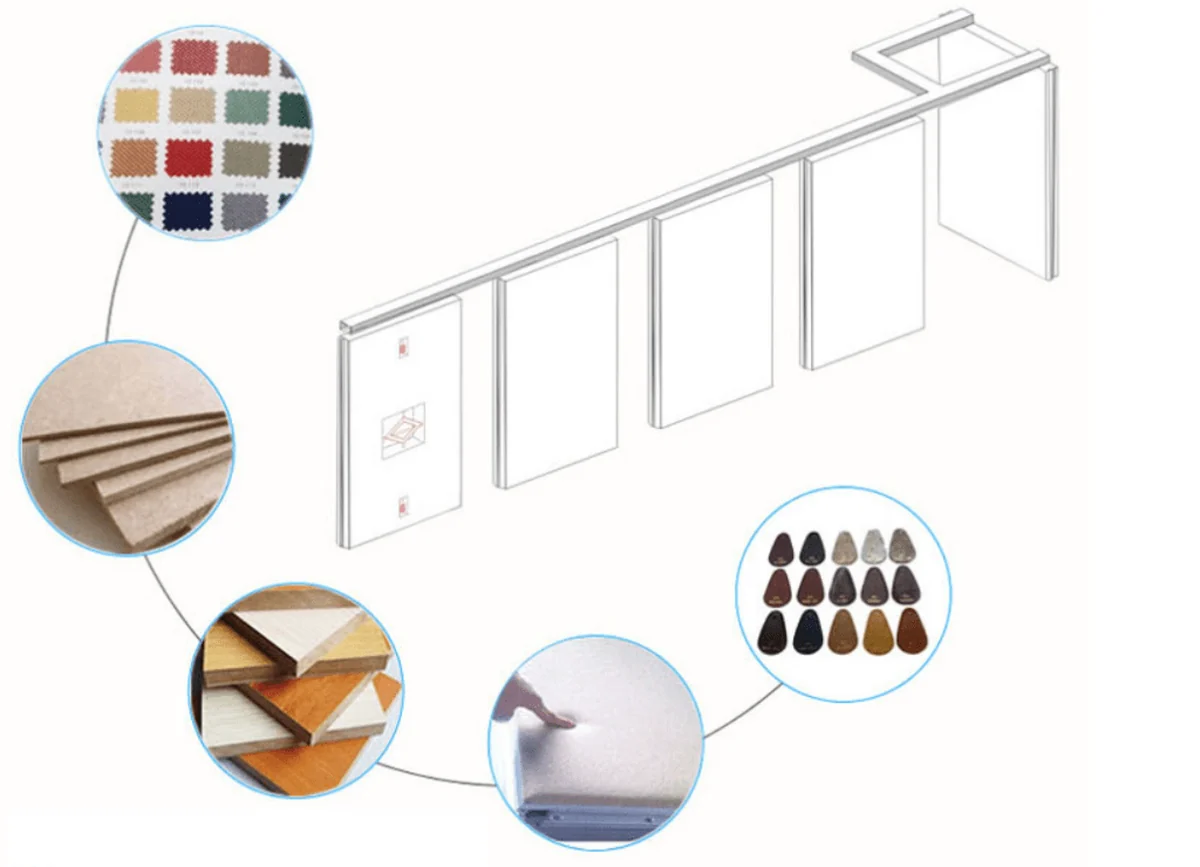
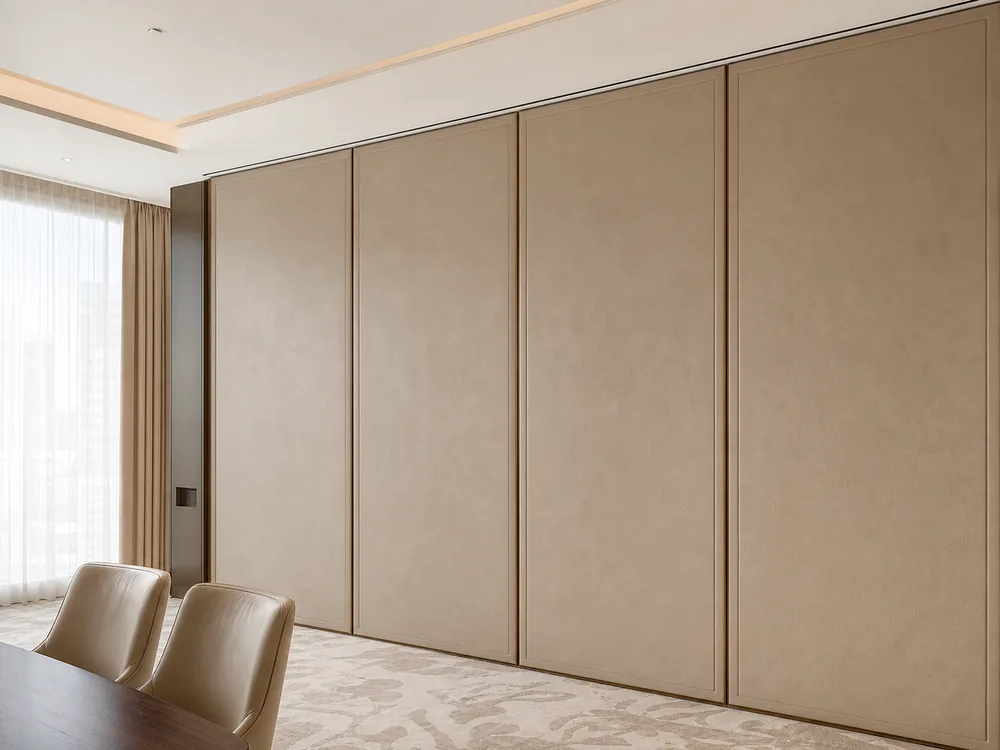
EBUNGE offers a range of finishes for movable partitions, including laminate, melamine, fabric, leather, glass, and other approved surfaces. Each finish has different characteristics in terms of appearance, cleanability, and resistance to abrasion. However, EBUNGE does not publish specific abrasion test values, so you must rely on your own testing or supplier data.
Laminate and Melamine
Laminate and melamine are popular for their durability and ease of cleaning. They are generally resistant to scuffs and scratches, but they can chip if struck with a hard object. In high-risk zones, a high-pressure laminate may be more suitable than a low-pressure melamine.
Fabric and Leather
Fabric and leather finishes offer a premium look but are more susceptible to abrasion and staining. They may be suitable for areas with low contact risk, but in high-traffic zones, they may require protective coatings or frequent replacement.
Glass and Other Surfaces
Glass panels are elegant but can scratch or crack if impacted. Other approved surfaces may include wood veneer, metal, or acrylic, each with its own maintenance requirements.
The Role of Project Documentation in Abrasion Mapping
EBUNGE emphasizes that project documentation is essential for reviewing straight, turning, and stacking routes. EBUNGE can then review the proposed routes and advise on potential conflicts.
Required Information for EBUNGE Review
To get meaningful feedback, you should prepare the following:
- Architectural ceiling plans showing the dolly track and partition track locations.
- Section drawings indicating the vertical clearance between the dolly and the partition top.
- Details of the dolly’s movement envelope, including any swinging or extending components.
- Proposed stacking positions for the partition panels.
- Finish specifications for each panel, especially those in high-risk zones.
How EBUNGE Uses This Information
EBUNGE can review the layout to ensure that the partition’s movement routes are clear and that stacking positions do not interfere with the dolly. Visible references can support layout discussion but do not verify hidden construction or performance.
Acoustic Considerations and Finish Impact
They depend on the entire partition assembly, including the core, seals, and installation quality.
For example, a fabric finish may absorb sound, but it may also affect the seal at the panel edges.
Coordination with Other Trades
Review the ceiling interface, panel route and stacking position together.
Abrasion mapping is not just a design exercise; it requires coordination with the lighting designer, mechanical engineer, and partition installer. The lighting designer must know the partition’s stacking position to avoid placing dolly tracks in conflict. The exact overhead route and support arrangement must be confirmed by the responsible project team from coordinated drawings.
Early Coordination Meetings
Schedule a coordination meeting early in the design phase. Invite all stakeholders, including the EBUNGE representative, to review the ceiling plan and discuss potential conflicts. This proactive approach can save time and money later.
On-Site Verification
During installation, verify that the dolly’s actual movement does not come into contact with the partition. Use a laser or physical clearance gauge to measure the gap. If contact is possible, consider adding a protective bumper or adjusting the dolly’s path.
Case Study Approach: Applying Abrasion Mapping in Practice
While we cannot reference specific projects, we can outline a typical process. Suppose a hotel ballroom is divided by EBUNGE partitions, and a ceiling-mounted light dolly is used to position fixtures. The design team would:
- Obtain the dolly’s specifications and movement envelope.
- Overlay the dolly’s path on the ceiling plan with the partition’s stacking positions.
- Identify any areas where the dolly or its load could come within 300 mm of the partition surface.
- Select finishes for those panels that are more resistant to abrasion, or add a protective film.
- Document the findings and share with EBUNGE for review.
Frequently Asked Questions
What is abrasion mapping for partition finishes?
Abrasion mapping is a systematic process of identifying all potential contact points between moving equipment, such as ceiling-mounted light dollies, and partition surfaces. It helps in selecting appropriate finishes and implementing protective measures.
Which EBUNGE finishes are most resistant to abrasion?
EBUNGE offers laminate, melamine, fabric, leather, glass, and other approved surfaces. Generally, laminate and melamine are more resistant to scuffs, but EBUNGE does not publish specific abrasion ratings. You should test finishes under your expected conditions.
Can EBUNGE partitions be used in rooms with ceiling-mounted light dollies?
Yes, EBUNGE partitions can be used in such spaces, but the layout must be reviewed to ensure that the partition’s movement routes and stacking positions do not conflict with the dolly’s path. Provide detailed drawings to EBUNGE for review.
Do I need to provide special documentation for abrasion mapping?
Yes, you should provide ceiling plans, section details, dolly specifications, and proposed stacking positions. EBUNGE can then review the routes and advise on potential issues.
How does the finish affect acoustic performance?
What should I do if the dolly comes too close to the partition?
If the dolly comes too close, you may need to adjust the dolly’s path, add a protective barrier, or select a more abrasion-resistant finish. EBUNGE can help review the layout to find a solution.
Conclusion
Hotel banquet partition finishes are not just about aesthetics; they must withstand the operational realities of a flexible event space. Abrasion mapping for ceiling-mounted mobile light rigging dollies is a critical step in ensuring that your partitions remain functional and attractive over time.
Contact EBUNGE today to discuss your project-specific requirements. Our team can review your layout, advise on finish options, and help you plan for successful coordination. Contact us to start the conversation.
Continue Exploring
More Materials and Finishes Guides
- Newer guideCoordinating Auditorium Partition Finishes with Instrument Racks
- Earlier guideComparing University Training Room Partition Finishes for Marker Abrasion vs Tackboard Pinning
- Related guideComparing Healthcare Training Room Partition Finishes for Wall-Mounted Whiteboard vs Tackable Zones
- Related guideWhy Sports Hall Partition Finishes Need Abrasion Mapping for Wall-Mounted Hurdle Storage Racks