
html body.single-post main#content.site-main{box-sizing:border-box!important;width:calc(100% – 32px)!important;max-width:900px!important;margin-left:auto!important;margin-right:auto!important;padding-left:0!important;padding-right:0!important}
Quick answer: movable partition wall tender addenda
Review focus: movable partition wall tender addenda.
A movable partition wall tender addenda scope creep review helps project teams compare what the original tender asked for with what later instructions actually require. Addenda often arrive as small clarifications, yet they can quietly expand the scope. For overseas contractors, architects, interior designers, owners and renovation teams, the goal is not to reject every change. The suitability of each route and parking arrangement depends on the approved layout, circulation, ceiling interfaces and operating sequence.
This guide uses maintained EBUNGE product facts and visible evidence limits. It does not assume hidden performance, engineering outcomes or commercial results. Every project still needs its own support, acoustic and dimensional confirmation.
Why Addenda Create Scope Creep in Partition Procurement
Project review term: movable partition wall tender addenda.
Scope creep rarely appears as one dramatic instruction. It usually arrives through repeated clarifications: a revised room layout, a new finish direction, a changed stacking position or an added pass-door request. Each item may look minor, but together they can alter the coordination burden.
Movable partition panels are individually movable, suspended from a top track, cross the opening without a floor track and park at a planned stacking position. That maintained description matters because addenda often touch the movement route, the parking zone or the interface with adjacent construction.
Common addendum triggers
- Room boundaries change after the tender layout was issued.
- A straight, turning or stacking route is redrawn without updating the partition scope.
- Finish expectations move from one approved surface to another.
- Pass-door requirements are added or repositioned.
- Project documentation is requested in a different format or sequence.
None of these automatically means extra cost or delay. They do mean the review team must trace each change back to the tender baseline and confirm what evidence supports it.
Build a Tender Baseline Before Reading Any Addendum
Coordination scope: movable partition wall tender addenda.
You cannot judge scope creep without a baseline. Before opening the latest addendum, assemble the original tender drawings, specification, finish schedule and any agreed clarifications. Mark the date and revision of every document.
Then create a simple comparison record. For each addendum item, note the original requirement, the proposed change and the drawing or document that supports it. If a change has no supporting drawing, treat it as an open question rather than an approved instruction.
Baseline evidence note
Maintained EBUNGE facts cover top-hung movement, clear-floor operation, customized parking and broad finish options. They do not confirm project-specific support, acoustic performance, dimensions or installation outcomes. Those require separate project review.
Review the Movement Route and Stacking Position
Checklist focus: movable partition wall tender addenda.
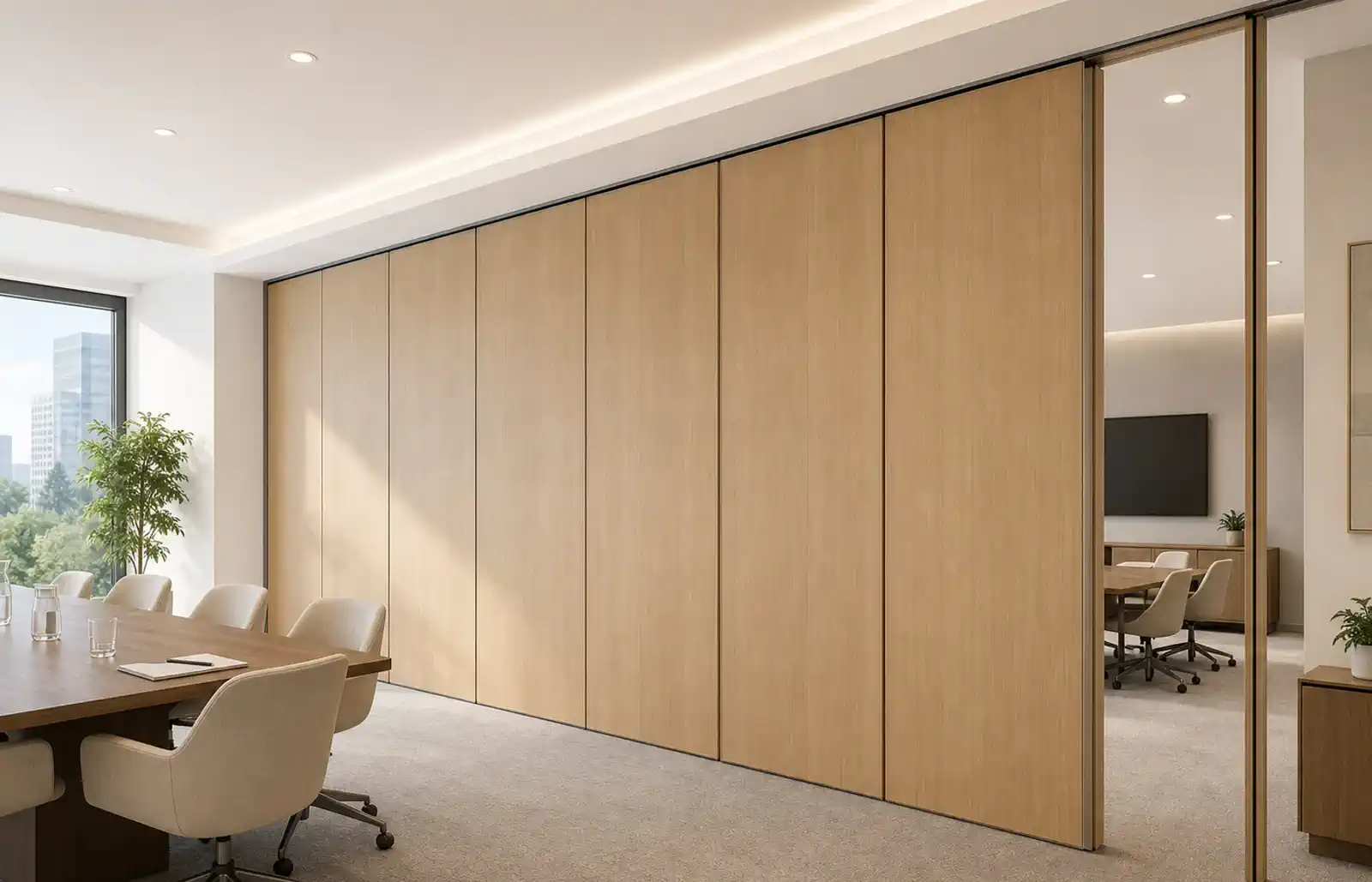
The movement route is one of the most common places where addenda expand scope. A partition may be shown crossing an opening, turning a corner and parking in a planned stacking position. If an addendum changes any part of that path, the review must check whether the overhead route remains continuous and supported.
The exact route, junction arrangement, continuous overhead path and parking position must be confirmed from the coordinated project drawings. Every proposed movement path requires a continuous connected overhead route and project-specific support review. This is a coordination boundary, not a performance claim.
Route review questions
- Does the addendum change the opening width or the turning point?
- Does the parking position still fit the coordinated layout?
- Are adjacent services, ceilings or structural elements affected?
- Has the support condition been reviewed for the revised route?
- Is the revised route shown consistently across all drawings?
If any answer is unclear, record it as a clarification request. Do not let a drawing note become an implied approval.
Check Finish and Pass-Door Changes Carefully
Review focus: movable partition wall tender addenda.
Confirmed finish options include laminate, melamine, fabric, leather, glass and other approved surfaces. An addendum that changes a finish may affect appearance, cleaning expectations and coordination with other trades.
Pass-door requirements can also expand scope. A pass-door may be discussed as part of the partition configuration, but its position, size and interface must be confirmed against the project drawings. Treat every pass-door request as a design coordination item.
Finish and pass-door checklist
- Is the proposed finish within the approved options?
- Does the finish change affect adjacent materials or junctions?
- Is the pass-door location shown on the latest layout?
- Does the pass-door conflict with the stacking position?
- Has the project documentation been updated to match?
Separate Acoustic Concepts From Acoustic Claims
A tender addendum may mention acoustic expectations, but that does not confirm a tested result for the project.
Seals and acoustic concepts can be explained generically, yet project-specific acoustic requirements must be confirmed separately. Do not infer performance from a finish, a drawing or a generic product description.
Acoustic review boundary
Ask whether the addendum introduces a new acoustic requirement, a new room use or a new adjacent space. If so, route it to the appropriate project specialist. The partition supplier can discuss documentation and coordination, but the project team must confirm the final acoustic criteria.
Use a Scope Creep Decision Table
A compact decision table keeps the review consistent across disciplines. It also helps procurement teams explain why an item is approved, queried or rejected.
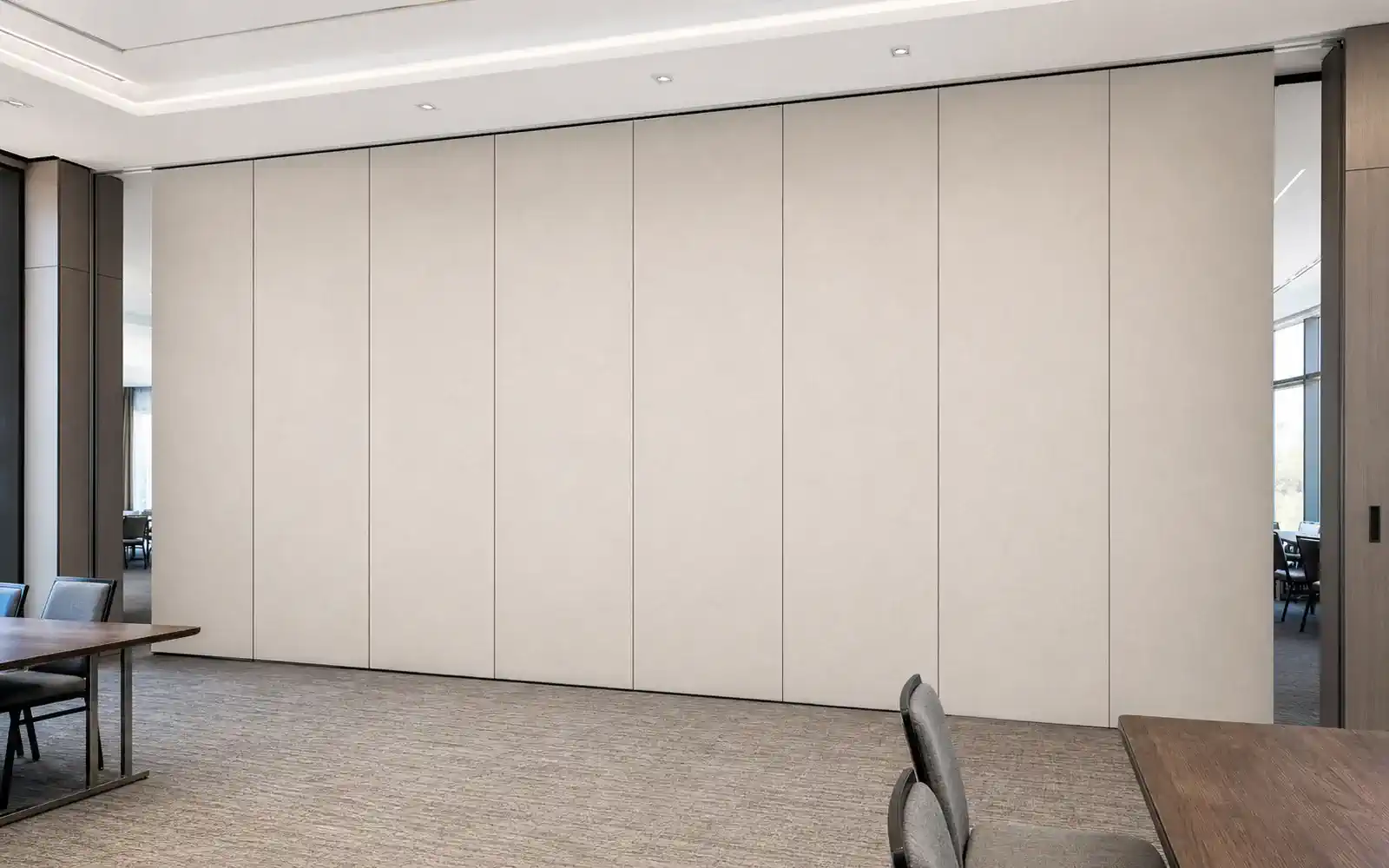
| Addendum item | Review question | Action |
|---|---|---|
| Route change | Is the overhead route continuous and supported? | Query until drawings confirm |
| Stacking change | Does the parking position fit the coordinated layout? | Confirm with layout review |
| Finish change | Is the finish within approved options? | Check schedule and junctions |
| Pass-door addition | Is position and interface documented? | Request updated drawing |
| Acoustic wording | Is a project-specific requirement introduced? | Route to specialist review |
Use the table as a working record, not as a substitute for project-specific confirmation. It helps the team see where scope is growing and where evidence is missing.
Coordinate Documentation and Approval Flow
Scope creep often grows when addenda are reviewed in isolation. Bring the contractor, architect, interior designer, owner representative and supplier into one document flow. Each party should know which addendum items they can approve and which require further evidence.
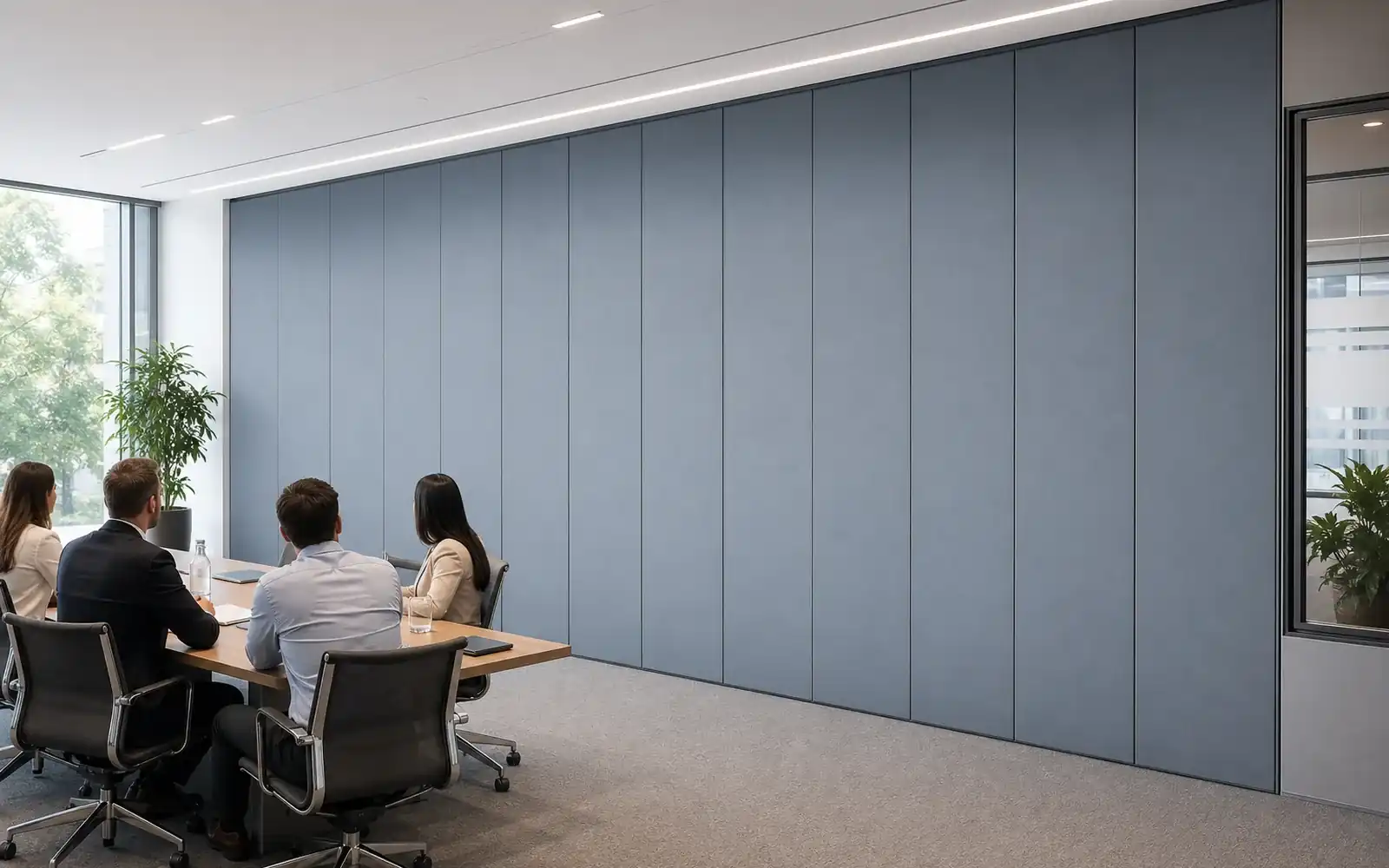
Project documentation can be discussed with EBUNGE, including the information needed to review a layout. The movable partition wall product page provides maintained public context, while project references show how flexible-space applications are presented. Neither replaces the drawings and specifications for your specific project.
Approval flow steps
- Log the addendum and assign a review owner.
- Compare it with the tender baseline.
- Mark items that need drawing or engineering confirmation.
- Issue clarification requests before pricing or procurement.
- Record the final decision and update the tender register.
Frequently Asked Questions
What is movable partition wall tender addenda scope creep review?
It is the process of comparing tender addenda against the original scope to identify changes that expand coordination, documentation or procurement requirements. It should rely on project drawings and confirmed evidence, not assumptions.
Does every addendum mean extra cost?
No. Some addenda clarify or correct information. The review should identify which items change the scope and which simply confirm existing requirements. Pricing and commercial outcomes require separate project evaluation.
Can a finish change affect acoustic performance?
Acoustic requirements need project-specific confirmation.
What should I check if the stacking position changes?
Check the coordinated layout, the movement route and the support condition. The parking style is customized to the customer layout and project requirements, so a revised position needs drawing review.
Can pass-door requirements be added later?
Pass-door requirements can be discussed, but they must be confirmed against the project documentation. A late addition should be reviewed for position, interface and effect on the stacking route.
Who should confirm project-specific support and dimensions?
The partition supplier can provide product context and documentation for that review.
Conclusion: Keep the Review Evidence-Bounded
A disciplined movable partition wall tender addenda scope creep review protects the project from silent expansion. Keep the tender baseline visible, trace every route and finish change, and separate generic product facts from project-specific confirmation. When an addendum lacks supporting drawings, query it rather than approve it.
For coordination on layout review, finish options, pass-door requirements and project documentation, contact EBUNGE. Share your drawings and addendum items so the team can discuss the next review step within the confirmed product boundaries.
Continue Exploring
More Cost and Planning Guides
- Newer guideCompare Movable Partition Tender Returns When Bidders Bundle
- Earlier guideMovable Partition Tender Omitted Interface Scope Audit
- Related guideReview a Movable Partition Tender for Unclear Interface Ownership
- Related guideMovable Partition Tender Unpriced Interface Scope