
html body.single-post main#content.site-main{box-sizing:border-box!important;width:calc(100% – 32px)!important;max-width:900px!important;margin-left:auto!important;margin-right:auto!important;padding-left:0!important;padding-right:0!important}
Quick project answer
Review focus: movable partition tender.
Movable partition tender bid shopping signals are rarely announced. They appear as small changes in scope, repeated requests for the same clarification, or a comparison that quietly shifts from like-for-like to lowest number. For overseas contractors, architects, interior designers, owners and renovation teams, the goal is not to accuse anyone. It is to keep the tender round transparent, documented and tied to the same project requirements.
This guide offers an evidence-bounded review framework. It uses maintained EBUNGE product facts, visible document evidence and project-specific drawing review. It does not infer hidden performance, cost outcomes or engineering conclusions from a drawing, finish sample or photograph.
What Bid Shopping Looks Like in a Movable Partition Tender
Project review term: movable partition tender.
Bid shopping generally means using one bidder’s pricing or scope to pressure another, or reopening commercial terms after bids are received. In movable partition work, the signal is often a scope change disguised as a clarification. The tender may ask all bidders to match a number without confirming the same panel arrangement, finish schedule, parking position or documentation scope.
Because movable partitions are configured around a project layout, a simple price comparison can hide real differences. The exact route, junction arrangement, continuous overhead path and parking position must be confirmed from the coordinated project drawings. Those are not cosmetic differences. They change what must be coordinated, reviewed and confirmed.
Signals That Deserve a Closer Look
- Bidders are asked to revise price before the scope question is answered in writing.
- One bidder’s drawing is circulated to others as a benchmark without a documented scope baseline.
- Clarification responses change the movement route, parking location or finish schedule after the bid deadline.
- The comparison sheet shows totals but not the included layout, finish or documentation assumptions.
- Questions shift from technical coordination to commercial pressure without a written addendum.
Build a Like-for-Like Baseline Before Comparing Numbers
Coordination scope: movable partition tender.
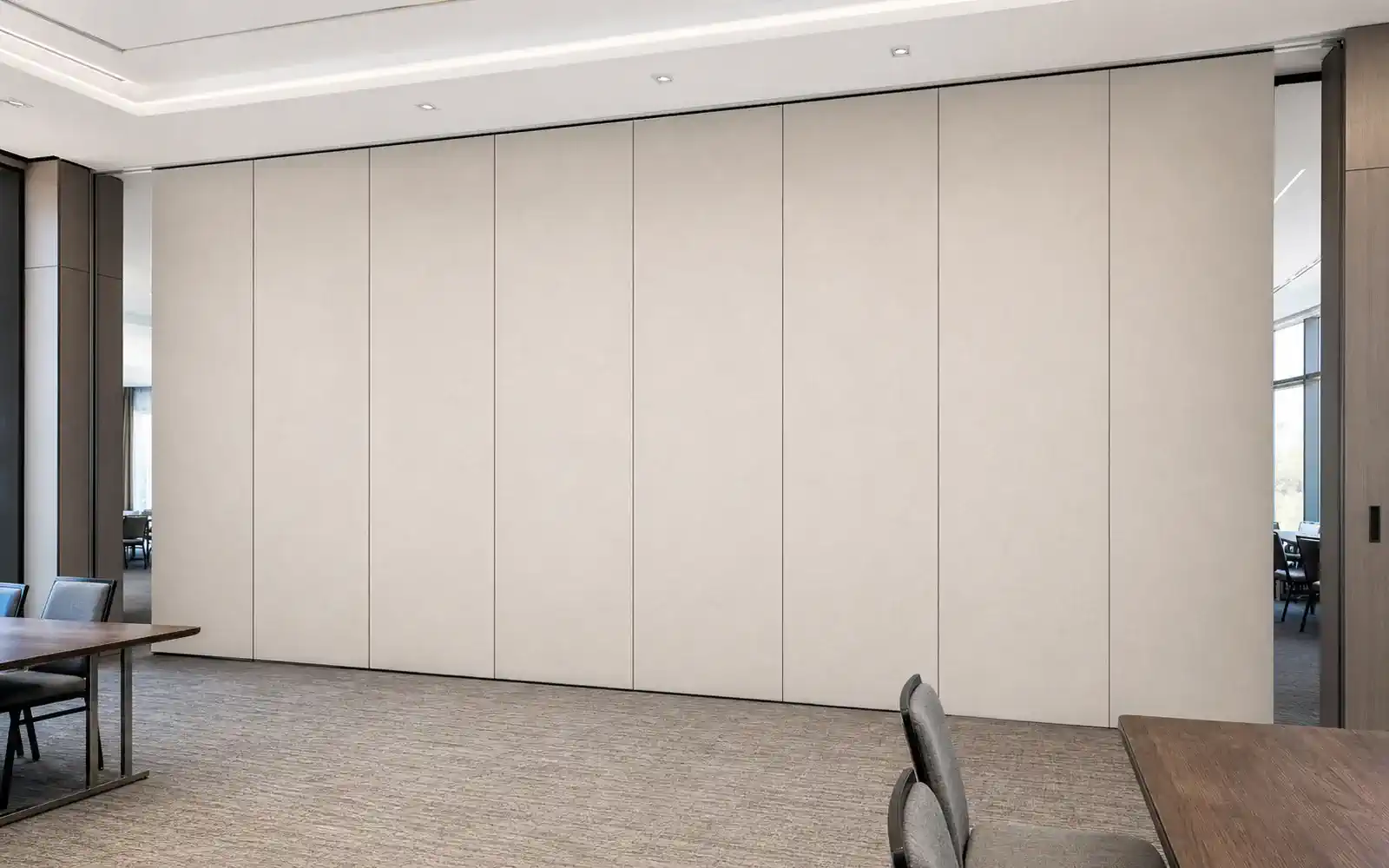
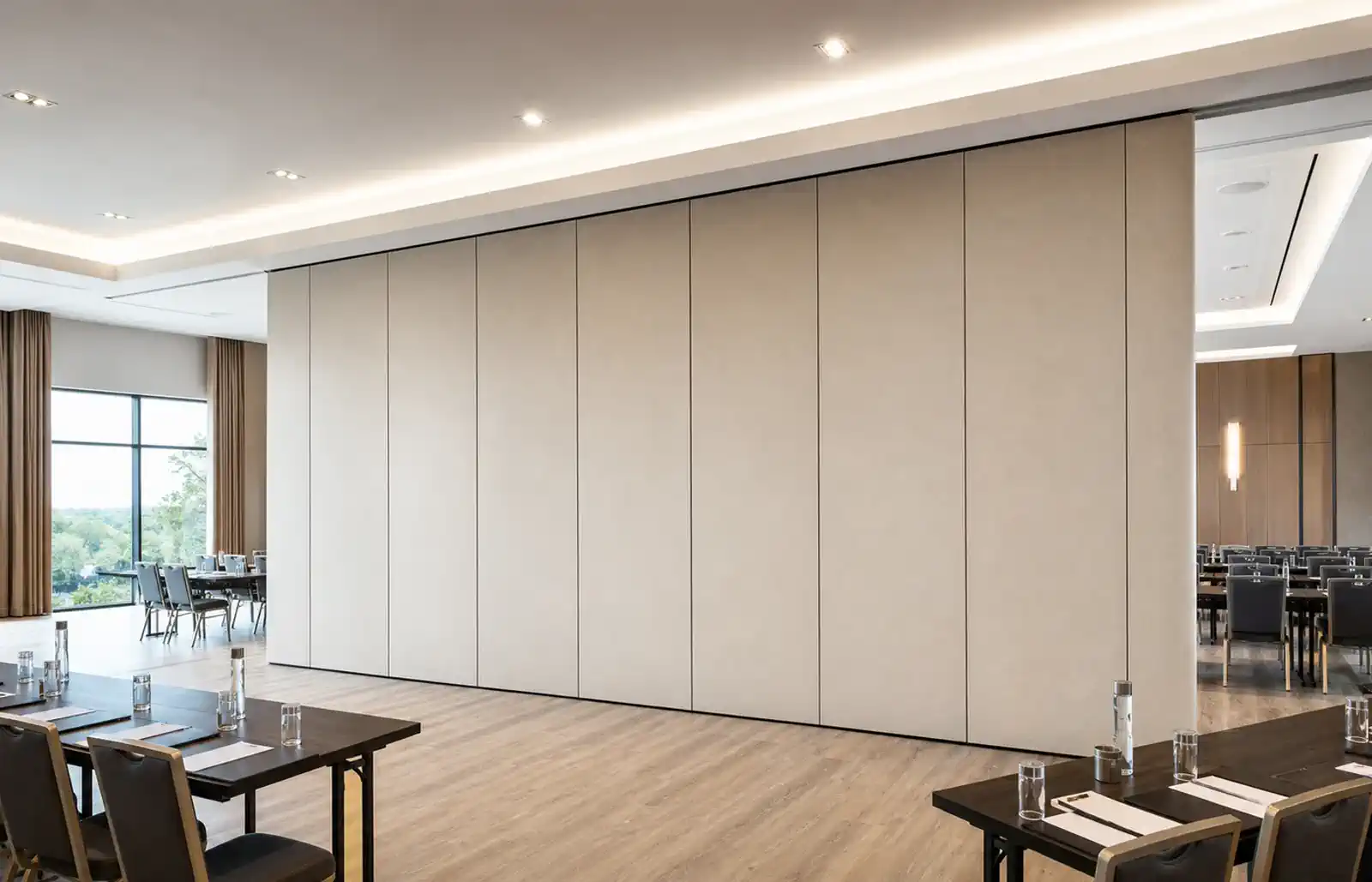
A fair tender round starts with a shared baseline. For movable partitions, that baseline should describe the opening, the intended movement path and the planned parking position. EBUNGE movable wall panels are individually movable, suspended from a top track, cross the opening without a floor track and park at a planned stacking position. Straight, turning and stacking routes are reviewed from the layout.
If the baseline does not state those items, each bidder may price a different solution. The result can look competitive while comparing unlike scopes. Before any price review, confirm that every bidder is responding to the same written requirements.
Minimum Scope Items to Confirm in Writing
- The opening dimensions and the intended flexible-space use.
- The movement route, including any turning or stacking requirement shown on the layout.
- The parking position and how it relates to adjacent rooms, corridors or fixed elements.
- The finish direction from approved options such as laminate, melamine, fabric, leather, glass and other approved surfaces.
- Whether a pass-door is required and how it should be documented.
- The project documentation expected from each bidder.

Use an Evidence Note to Separate Facts From Assumptions
Checklist focus: movable partition tender.
An evidence note is a short written record of what is known, what is assumed and what still needs project-specific confirmation. It protects the tender round from quiet scope drift. It also gives reviewers a consistent place to check claims.
Visible references can support layout discussion but do not verify hidden construction or performance. Those items require matching project-specific evidence and confirmation.
The suitability of each route and parking arrangement depends on the approved layout, circulation, ceiling interfaces and operating sequence. Seals and acoustic concepts can be discussed generically, but the actual requirement depends on the opening, the surrounding construction and the project documentation.
Review the Movement Route and Parking Plan Together
Review focus: movable partition tender.
Bid shopping often exploits unclear movement routes. The same applies to parking. Parking style is customized to the customer layout and project requirements and may support compact stacking when the coordinated design permits it.
Review the route and parking plan together. Every proposed movement path requires a continuous connected overhead route and project-specific support review. If a bidder’s proposal does not show that continuity, the comparison is incomplete.
Questions to Ask Before Accepting a Revised Price
- Did the movement route change, and is the new route shown on the layout?
- Did the parking position change, and does it still fit the intended room use?
- Did the finish schedule change from the approved options?
- Did the documentation scope change, including pass-door requirements?
- Is the revision supported by a written addendum rather than a verbal request?
Keep Clarifications Symmetrical Across Bidders
If one bidder receives a clarification, the same written clarification should reach every bidder who is still in the round.
Procurement and tender review coordination should also separate technical questions from commercial negotiation. Technical questions belong in the written record. Commercial discussions should follow the same documented scope, not replace it.
A Compact Comparison Table for Tender Review
| Review item | What to verify | Evidence needed |
|---|---|---|
| Opening and layout | Same dimensions and intended use for all bidders | Project drawings and written scope |
| Movement route | Straight, turning and stacking routes match the layout | Marked route on coordinated drawings |
| Parking position | Planned stacking position is consistent | Layout confirmation |
| Finish direction | Same approved finish category | Finish schedule and samples where applicable |
| Pass-door | Requirement is stated or excluded in writing | Written clarification or addendum |
| Documentation | Same deliverables expected from each bidder | Tender document checklist |
Document the Decision, Not Just the Number
A tender decision should record why a bid was selected. That record can include the confirmed layout, the movement and parking assumptions, the finish direction and the documentation scope. It should also note any item that still requires project-specific support, acoustic or dimensional confirmation.
It simply keeps the comparison honest. When a revised price appears, the reviewer can check whether the scope changed. When a bidder asks for an exception, the reviewer can decide whether it applies to everyone.
For product context, review the movable partition wall page. For project examples and application thinking, see the projects section. When the tender round needs a documented clarification, contact the team to discuss pass-door requirements and project documentation.
Frequently Asked Questions
What is bid shopping in a movable partition tender?
It is the practice of using one bidder’s price or scope to pressure another, or reopening commercial terms after bids are received. In movable partition work, it often appears as a scope change described as a clarification.
Which documents help detect bid shopping signals?
Useful documents include the written scope, coordinated layout drawings, the finish schedule, clarification responses and any addenda. A comparison sheet that shows only totals is not enough to confirm a like-for-like review.
How should movement routes and parking be compared?
Compare them against the same layout. Straight, turning and stacking routes are reviewed from the layout, and parking style is customized to the customer layout and project requirements. A route that is not shown cannot be assumed.
Can a finish sample prove acoustic performance?
No.
What should a reviewer do when a price is revised?
Ask what changed in the scope. Check the opening, movement route, parking position, finish direction, pass-door requirement and documentation deliverables. Record the answer in writing before accepting the revision.
Does EBUNGE promise soundproofing or a specific rating?
No. Generic acoustic concepts can be discussed, but no rating or performance result should be promised without matching evidence.
Conclusion: Keep the Tender Round Evidence-Led
Detecting movable partition tender bid shopping signals is mostly about discipline. Keep one written baseline, share clarifications symmetrically, compare movement and parking on the same layout, and record the reason for each decision. Confirm project-specific support, acoustic and dimensional requirements before finalizing any scope.
If your team needs to discuss pass-door requirements, finish direction or project documentation for an upcoming tender round, contact EBUNGE and keep the conversation tied to the drawings and written scope.
Continue Exploring
More Cost and Planning Guides
- Newer guideSpot Bidder Assumptions That Shift Partition Interface Risk
- Earlier guideSpot Scope Gaps in a Movable Partition Tender Before Pricing
- Related guideCheck a Movable Partition Tender for Missing Interface Scope
- Related guideMovable Partition Tender Interface Risk Weighting