
When planning a restaurant layout that needs to flex between private dining, open seating, and event modes, the choice of restaurant partition finishes grease resistance becomes a central coordination topic. Grease, food splatter, and frequent wipe-downs are part of daily operations, so the surface you specify must be practical for your team to maintain. However, no finish can be judged in isolation. The performance of any surface depends on the specific cleaning agents, frequency of contact, and the way the partition is integrated into your ceiling and floor plan.
This article provides a comparison framework for the confirmed finish options available on EBUNGE movable partition walls: laminate, melamine, fabric, leather, glass, and other approved surfaces. We will explain what each finish offers in general terms, how to evaluate cleanability and grease resistance without relying on unsupported claims, and what project-specific information you need to gather before making a final decision.
Why Finish Selection Matters in Restaurant Environments
The suitability of each route and parking arrangement depends on the approved layout, circulation, ceiling interfaces and operating sequence. Cooking vapors, airborne oil, and manual contact with food can leave residues on vertical surfaces. A partition that looks elegant on day one may become dull or difficult to clean if the finish is not matched to the actual usage pattern.
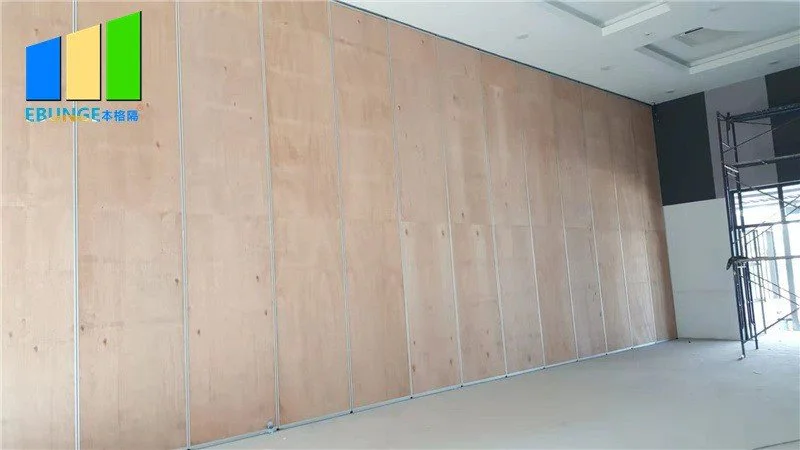
But finish selection is not just about aesthetics. It affects how your staff will maintain the space, how often you need to schedule deep cleaning, and how the partition integrates with your overall hygiene plan. Because EBUNGE movable partitions are top-hung and move without a floor track, the panels themselves are the primary surface you will be cleaning. There is no floor channel to trap debris, which simplifies daily floor care, but the vertical surfaces still require a deliberate cleaning protocol.
The Role of the Layout in Cleaning Access
Before you even compare finishes, you need to know how the partition will move and where it will park. EBUNGE panels are individually movable and suspended from a top track. They cross the opening without a floor track and park at a planned stacking position. Straight, turning, and stacking routes are reviewed from your layout. This means that the cleaning team must be able to access both faces of every panel, including when the partition is stacked. If the stacking area is tight, you may need to plan for cleaning access from the front only, which could influence your finish choice.
Confirmed Finish Options: A General Comparison
Share the opening dimensions, room layout and intended operating sequence for review.
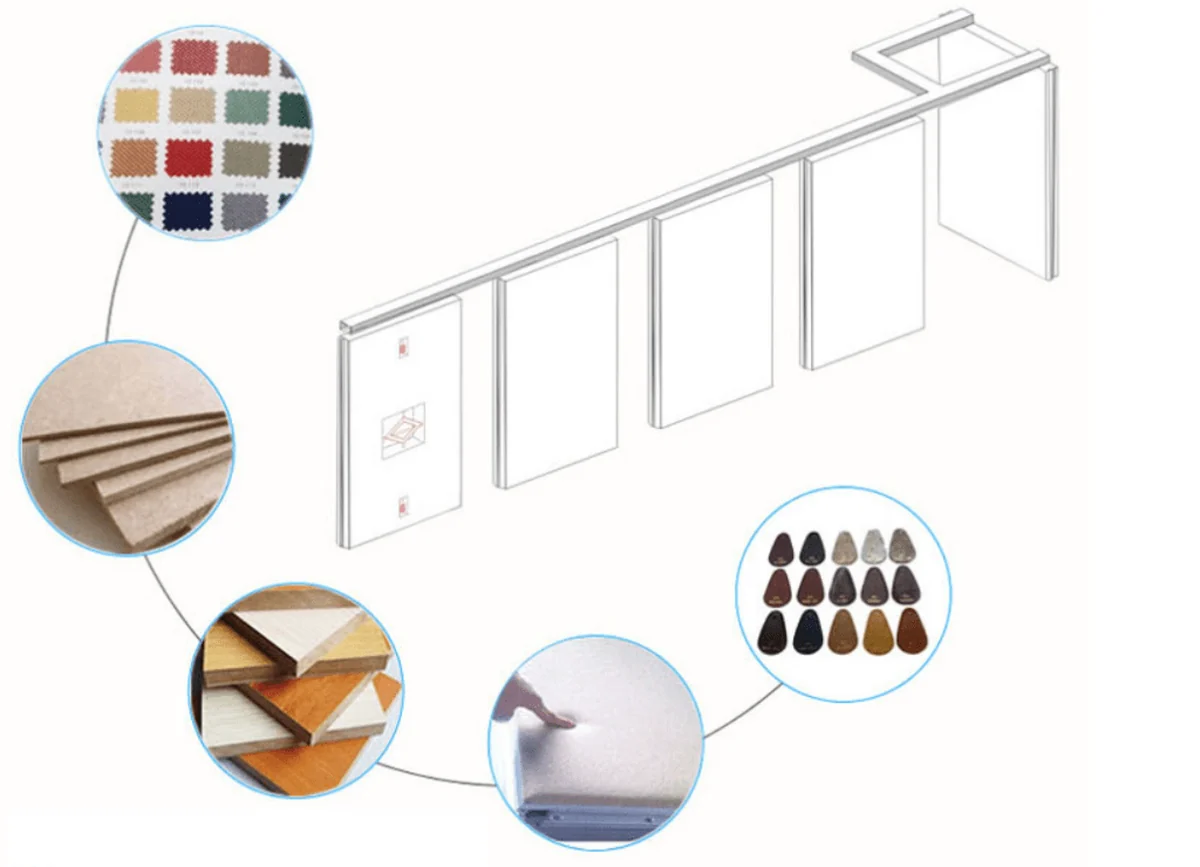
EBUNGE offers laminate, melamine, fabric, leather, glass, and other approved surfaces. Each category has different characteristics when it comes to grease resistance and cleanability. The table below is a general guide, not a performance guarantee.
| Finish Type | General Cleanability | Grease Resistance (Conceptual) | Typical Use Cases |
|---|---|---|---|
| Laminate | Smooth, non-porous surface; easy to wipe with mild detergent | Resists staining if cleaned promptly; avoid abrasive cleaners | High-traffic dining areas, family restaurants |
| Melamine | Similar to laminate but may have a matte texture | Matte finishes may show smudges; require regular cleaning | Casual dining, staff areas |
| Fabric | Requires vacuuming and spot cleaning; not ideal for heavy grease | Grease can soak into fibers; may need professional cleaning | Acoustic enhancement in low-grease zones like waiting areas |
| Leather | Wipeable with damp cloth; needs conditioning | Resists grease but can stain if not sealed properly | Upscale private dining rooms |
| Glass | Non-porous, easy to clean with glass cleaner | Excellent resistance; may show fingerprints | Modern aesthetics, visible partitions |
Laminate and Melamine: The Workhorses
They do not absorb grease easily, and most food service cleaning agents will not damage them if used as directed. However, the edge details and any seams can become collection points for grease if not properly sealed. When you review your partition drawings, ask how the finish is applied to the edges and how joints between panels are designed.
Fabric and Leather: Aesthetic with Caveats
Leather is more wipeable than fabric but still requires care. If you are considering these finishes, you must discuss the specific cleaning protocol with your supplier and ensure that your staff is trained to handle spills immediately.
Glass: Sleek but Demanding
Glass partitions look clean and modern, and they are very easy to sanitize. However, they show every fingerprint and smudge, which means they need frequent polishing in a busy restaurant. Glass is also heavier, which may affect the track and stacking design.
How to Evaluate Grease Resistance Without Hidden Performance Claims
You will often see marketing claims about a finish being “grease-proof” or “easy to clean.” But these terms are not standardized. A finish that resists grease in a laboratory test may behave differently in your kitchen’s real conditions. The only way to know is to test the finish with the actual cleaning agents you plan to use, on a sample that matches the production method.
Ask your supplier for a sample panel and perform a simple test: apply a small amount of cooking oil, let it sit for a few hours, then clean it with your standard degreaser. Observe whether any residue remains. This is a practical evaluation that does not rely on unverified performance data.
The Importance of Cleaning Protocols

No finish is self-cleaning. Your staff must follow a consistent cleaning schedule. For fabric or leather, you may need a weekly deep clean. Document these protocols and include them in your staff training.
Project-Specific Coordination: What You Must Confirm
Finish selection is not a standalone decision. Here are the key items to review with your project team:
Layout and Movement Paths
Every proposed movement path must be supported by a continuous overhead track. The exact route, junction arrangement, continuous overhead path and parking position must be confirmed from the coordinated project drawings. Your layout drawing must show the straight, turning, and stacking routes. If you plan to park the partition in a tight alcove, confirm that the finish can be cleaned in that position.
Acoustic Considerations
Review the ceiling interface, panel route and stacking position together.
These are laboratory measurements that indicate how much sound is reduced when the partition is installed correctly. They do not directly translate to a specific decibel reduction in your space.
Pass Doors and Hardware
If your restaurant partition includes a pass door, the finish around the door frame and the hardware must be compatible. Door handles and hinges will be touched frequently, so they should be easy to clean and resistant to corrosion. Discuss the finish of the hardware as well as the panel surface.
Documentation and Drawings: Your Best Tools
Before you finalize any finish, request the project documentation that shows the partition layout, track routes, and stacking details. EBUNGE’s technical documents page provides a starting point, but your specific project will require custom drawings. Review these drawings with your architect and interior designer to ensure that the finish is applied correctly and that there are no hidden gaps where grease could accumulate.
Working with Your Supplier
Your supplier should be able to discuss the finish options and their general maintenance requirements. Visible references can support layout discussion but do not verify hidden construction or performance. This collaborative approach will help you choose a finish that is both beautiful and practical.
Frequently Asked Questions
What is the best finish for a restaurant partition that will be exposed to grease?
Laminate and glass are generally easy to clean and resist grease, but you must test them with your cleaning agents. Fabric and leather are less suitable for high-grease areas. The right choice depends on your specific layout, cleaning protocol, and aesthetic goals.
Can I use fabric finishes in a commercial kitchen area?
Fabric is not recommended where grease splatter is likely. It can absorb oils and become difficult to clean.
How do I test a finish for grease resistance?
Request a sample panel from your supplier. Apply a small amount of cooking oil or grease to the surface, let it sit for a few hours, then clean it with your standard degreaser. Observe any staining or residue. Repeat the test with different cleaning agents to find the most effective one.
Do EBUNGE movable partitions require a floor track?
No. EBUNGE panels are top-hung and move without a continuous floor track or floor hardware along the partition line. This simplifies floor cleaning and reduces trip hazards. However, the overhead track must be continuous and properly supported.
What project information do I need to provide to get a finish recommendation?
You should provide your layout drawing, including the partition movement paths and stacking positions. Also share your cleaning protocols, the types of food served, and any health regulations that apply. This information helps your supplier recommend finishes that are suitable for your operation.
How does the finish affect acoustic performance?
The overall system design, including the panel construction and seals, determines the STC/Rw rating.
Conclusion: Make an Informed Choice for Your Restaurant
Choosing the right restaurant partition finishes grease resistance is a matter of balancing aesthetics, cleanability, and project-specific constraints. EBUNGE movable partitions offer a range of finishes, but the final decision must be based on your unique environment. Test samples, review your layout, and work closely with your project team to ensure that the partition you install will serve your restaurant well for years to come.
Ready to discuss your project? Contact us to talk through your layout and finish requirements. We can help you review the options and provide the documentation you need to make an informed decision. Visit our movable partition wall page for more product information, or explore our project portfolio to see how other businesses have used flexible partitions.
Continue Exploring
More Materials and Finishes Guides
- Newer guideWhy Sports Hall Partition Finishes Need Abrasion Mapping for Mobile Goal Post Dollies
- Earlier guideHow to Compare Community Hall Partition Finishes for Wall-Mounted Climbing Hold Storage Racks
- Related guideComparing Healthcare Training Room Partition Finishes for Wall-Mounted Whiteboard vs Tackable Zones
- Related guideWhy Sports Hall Partition Finishes Need Abrasion Mapping for Wall-Mounted Hurdle Storage Racks