
When a school auditorium is designed to divide into smaller rooms, the school auditorium partition seal drawings speaker cluster become a critical coordination point. These drawings show how the movable partition seals against the ceiling and walls, especially where a ceiling-mounted speaker cluster is located. Cost and maintenance requirements depend on the selected configuration, finish and project conditions and require project-specific confirmation.
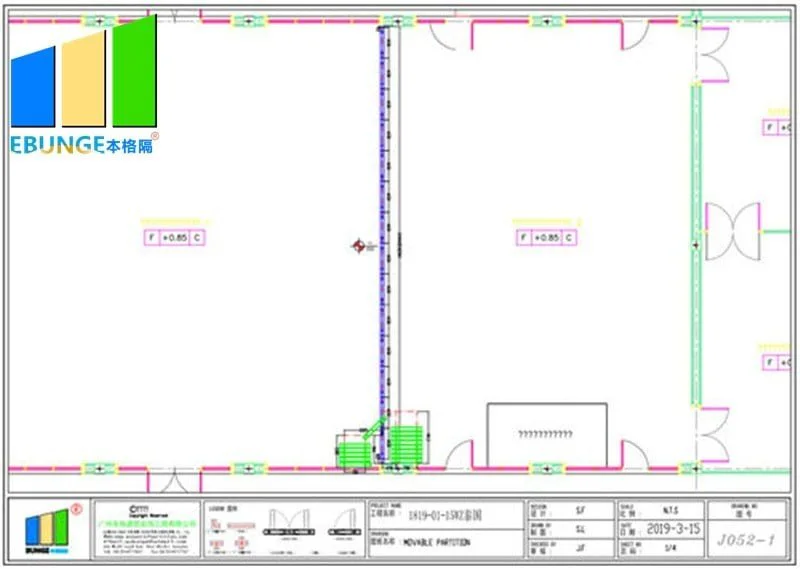
EBUNGE movable wall panels are individually movable, top-hung from an overhead track, and cross the opening without a floor track. They park at a planned stacking position. The suitability of each route and parking arrangement depends on the approved layout, circulation, ceiling interfaces and operating sequence. Visible references can support layout discussion but do not verify hidden construction or performance.
Why Speaker Cluster Zones Demand Special Attention in Partition Drawings
Ceiling-mounted speaker clusters are common in school auditoriums. They are heavy, require precise placement, and often need to serve both the full room and the divided spaces. When a movable partition is installed, the area around the speaker cluster becomes a potential sound leakage path. The partition seals at the ceiling, but if the speaker cluster interrupts the ceiling line, the seal must be detailed carefully.
Drawings for these zones typically show:
- The exact location of the speaker cluster relative to the partition line.
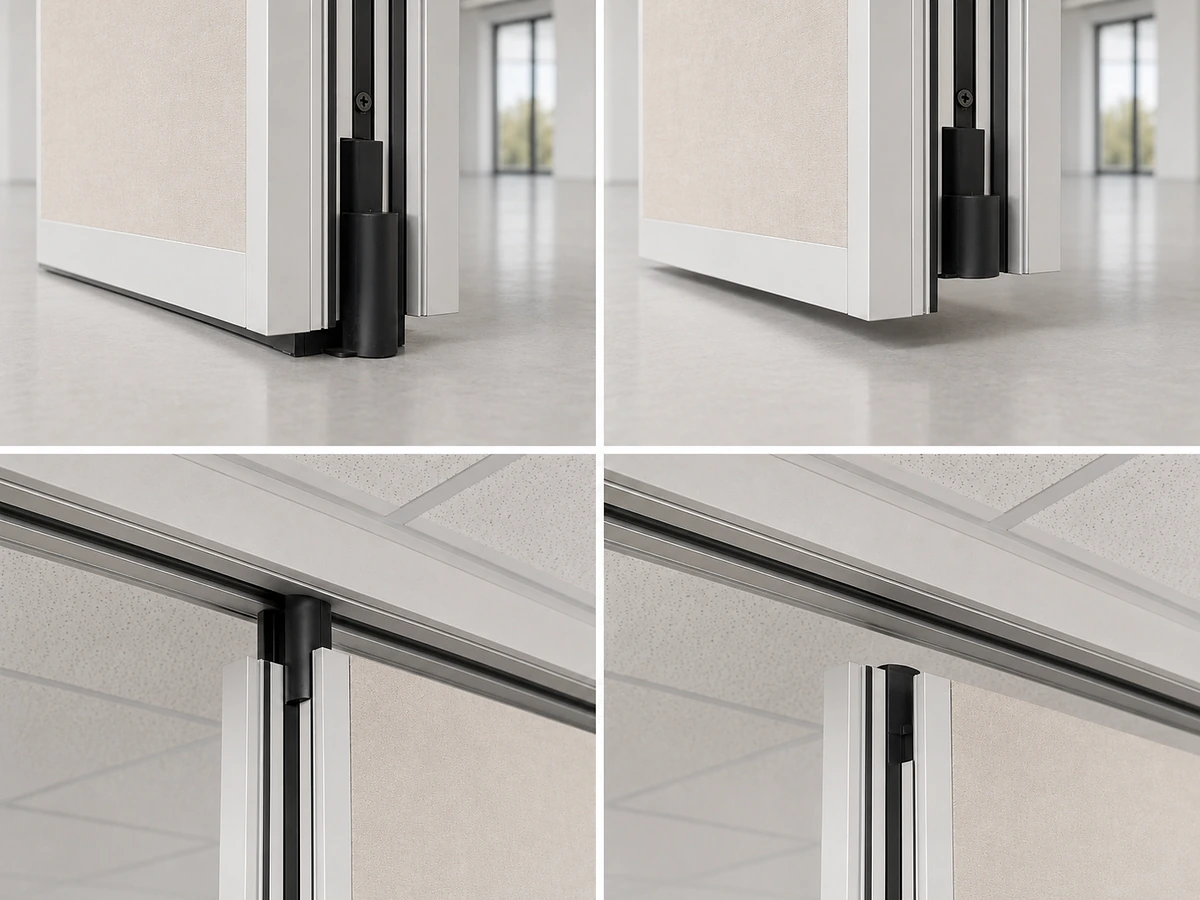
- How the top track and seal interface with the ceiling and any suspended elements.
- Whether the partition passes in front of, behind, or around the speaker cluster.
- Access requirements for maintenance or adjustment of the speaker.
These details are not generic.
What the EBUNGE Operable Wall System Offers for Such Zones
The EBUNGE operable wall system is designed for flexibility. Panels are individually movable and top-hung, meaning they do not require a floor track. This is advantageous in auditoriums where a clean floor is desired. The panels can be parked at a planned stacking position, which can be customized to the layout.
Share the opening dimensions, room layout and intended operating sequence for review.
For speaker cluster zones, the system’s flexibility allows the partition to be routed around the cluster if needed. However, this requires a continuous overhead track and careful planning of the stacking route. Straight, turning, and stacking routes are reviewed from the layout to ensure the panels can move without obstruction.
The drawings must show how the partition seals at the ceiling, walls, and any penetrations.
Key Drawings That Specify Partition Seals at Speaker Clusters
Several types of drawings are involved in specifying partition seals at speaker cluster zones. Each serves a different purpose and must be reviewed by the project team.
Architectural Reflected Ceiling Plans
These plans show the ceiling layout, including the location of the speaker cluster, lighting, and HVAC diffusers. They also show the partition line. By overlaying these, you can see if the speaker cluster falls within the partition zone. This is the first step in identifying potential conflicts.
Partition Elevation and Section Drawings
Elevations show the partition from the side, indicating the height and how it meets the ceiling. Sections cut through the partition and ceiling, revealing the seal details. At a speaker cluster, the section might show how the top seal accommodates the cluster’s housing or how a filler piece is used.
Track and Stacking Layout Drawings
These drawings show the overhead track route, including curves and stacking areas. They are essential to confirm that the partition can move around the speaker cluster without interference. The stacking position must be planned so that panels do not block the speaker when parked.
Seal and Gasket Details
Detailed drawings of the seals at the perimeter are crucial. They show the type of seal, its location, and how it compresses against the ceiling or wall. At a speaker cluster, the seal may need to be interrupted or custom-fabricated.
How to Coordinate with the Project Team
Coordination is key to a successful installation. Here are steps to ensure the drawings are complete and accurate.
Early Involvement of the Partition Supplier
Involve the partition supplier early in the design phase. They can provide input on track routing, stacking, and seal details. The supplier should review the layout and provide preliminary drawings for coordination.
Review of Acoustic Requirements
These ratings are not a direct count of decibels but are single-number ratings derived from laboratory measurements. They indicate the sound insulation of a partition. However, field performance can differ due to flanking paths, such as gaps around the speaker cluster.
Do not assume that a high STC rating guarantees soundproofing. The actual performance depends on installation quality and sealing.
Clash Detection and 3D Modeling
Use 3D modeling to detect clashes between the partition, track, and speaker cluster. This is especially important in tight ceiling spaces. The model can show if the track can be routed around the cluster or if the cluster needs to be relocated. This saves time and money during construction.
Finish and Aesthetic Considerations at Speaker Zones
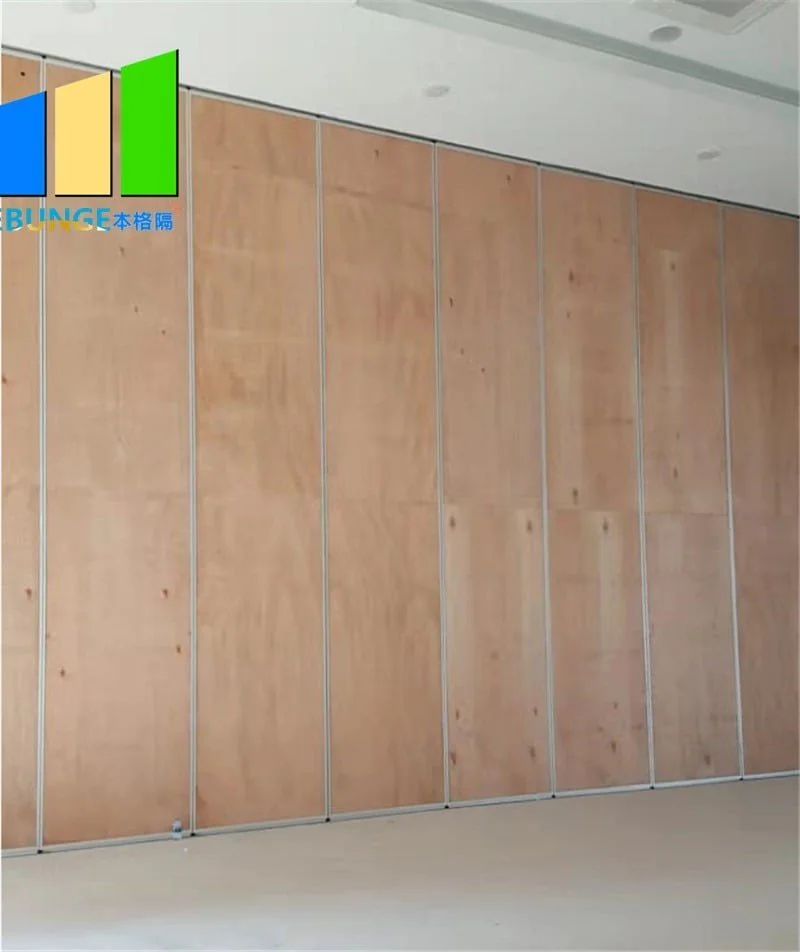
The finish of the partition panels can affect how the speaker cluster is integrated. EBUNGE offers a range of finishes, including laminate, melamine, fabric, leather, glass, and other approved surfaces.
At the speaker cluster zone, the finish might need to be coordinated with the speaker grille or housing.
Pass-Door Requirements and Documentation
Review the ceiling interface, panel route and stacking position together.
In some auditorium partitions, a pass-door is required for access when the partition is closed. If the pass-door is located near the speaker cluster, the drawings must show the door swing and how it interacts with the cluster.
Project documentation should include all relevant drawings, specifications, and submittals. This documentation is essential for procurement and for future maintenance. Discuss your pass-door requirements and documentation needs with the supplier to ensure they are addressed.
Common Pitfalls and How to Avoid Them
Several common mistakes can occur when dealing with partition seals at speaker cluster zones. Being aware of them helps you avoid them.
Assuming the Partition Can Be Routed Anywhere
Movable partitions require a continuous overhead track. You cannot simply route the partition around an obstacle without a track. The track must be planned to accommodate turns and stacking. If the speaker cluster is in the way, the track might need to be elevated or the cluster relocated.
Overlooking the Stacking Position
The stacking position must be carefully planned. The stacking area should be clear of any ceiling-mounted devices.
Ignoring the Seal at the Top of the Partition
At a speaker cluster, the seal might be compromised if the cluster is not properly integrated. Ensure the drawings show a continuous seal or a well-detailed transition.
Frequently Asked Questions
What is the role of the ceiling-mounted speaker cluster in partition seal drawings?
The speaker cluster creates a potential gap in the ceiling seal. Drawings must show how the partition seals around or integrates with the cluster to minimize sound leakage.
Can EBUNGE partitions be routed around a speaker cluster?
EBUNGE partitions are top-hung and can follow a track that turns and stacks. However, the route must be planned with a continuous overhead track.
What information do I need to provide for a project-specific drawing review?
The supplier will review these to propose track routing, stacking, and seal details.
How are acoustic ratings like STC or Rw used in these drawings?
STC and Rw are single-number ratings that describe sound insulation. They are not direct decibel counts. The drawings must show how to achieve the required rating by sealing all gaps, including those around the speaker cluster.
What finish options are available for partitions near speaker clusters?
EBUNGE offers laminate, melamine, fabric, leather, glass, and other approved surfaces.
Do I need a pass-door in the partition near the speaker cluster?
Pass-doors can be provided if needed. The drawings must show the door location, swing, and seals. Discuss your pass-door requirements with the supplier to ensure they are incorporated.
Conclusion: Confirm Every Detail with Project-Specific Documentation
School auditorium partition seals at ceiling-mounted speaker cluster zones require careful drawing review and coordination. The EBUNGE operable wall system offers flexibility with top-hung panels and no floor track, but each project has unique requirements.
Do not rely on assumptions. Review the track layout, stacking positions, and seal details. Ensure that the speaker cluster is properly integrated into the ceiling seal.
For your next project, contact EBUNGE to discuss your specific needs. Our team can review your layout and provide guidance on the operable wall system. We can also help you prepare the necessary project documentation. Visit our projects page to see examples of our work, and learn more about the operable wall system.
Remember, the success of your partition installation depends on the quality of the drawings and the collaboration between all parties. Start the conversation early and ensure every detail is confirmed.
Continue Exploring
More Acoustic Partition Guides
- Newer guideWhy University Auditorium Partition Seals Need Detailing at Floor-Mounted Stage Lift Edges
- Earlier guideHow to Coordinate Office Meeting Suite Partition Seals with Wall-Mounted Video Bar Swing Paths
- Related guideHow to Coordinate Hotel Banquet Partition Seals with Ceiling-Mounted Rigging Point Access Panels
- Related guideWhat Pre-Installation Checks Matter for University Lecture Hall Partition Seals at Floor-Mounted Lectern Wells