
html body.single-post main#content.site-main{box-sizing:border-box!important;width:calc(100% – 32px)!important;max-width:900px!important;margin-left:auto!important;margin-right:auto!important;padding-left:0!important;padding-right:0!important}
Quick project answer
Review focus: movable partition tender.
Movable partition tender clarification deadline checks are the final structured review a project team performs before questions close and the bid is locked. At this stage, assumptions become contractual. The goal is not to add more promises but to confirm that the drawings, specification and clarification log describe the same top-hung, floor-track-free system and that every open item has a named owner. This guide sets out what to verify, what evidence to request and what to leave for project-specific confirmation.
Why the Clarification Window Matters More Than the Bid Price
Project review term: movable partition tender.
Clarification is the last point at which a contractor, architect or owner can correct a mismatch without a variation. A tender that reads clearly but contradicts the layout will create site friction later. The review should therefore focus on consistency: do the panel routes, stacking position and finish schedule match the architectural set?
EBUNGE movable partition panels are individually movable, suspended from a top track, cross the opening without a floor track and park at a planned stacking position. If a tender document implies a different operating principle, that is a clarification item, not a detail to resolve after award.
Check One: Layout and Movement Routes
Coordination scope: movable partition tender.
Straight, turning and stacking routes should be reviewed from the layout, not from a generic product description. Mark each route on the drawing and confirm it is continuous and connected overhead. A gap in the route is a design question, not a product limitation.
What to mark on the layout
- The full travel path of each panel group from closed to parked position.
- Any turn, junction or change of direction.
- The planned stacking position and the space reserved for it.
- Adjacent services, structure or finishes that the route passes.
The exact route, junction arrangement, continuous overhead path and parking position must be confirmed from the coordinated project drawings. Do not accept a written assurance that the system will manage it.
Check Two: Support and Overhead Conditions
Checklist focus: movable partition tender.

Because the system is top-hung, the overhead condition is a primary coordination item. The tender should identify who confirms the supporting structure and who reviews the continuous overhead route. This is a project-specific engineering question and cannot be answered from a catalogue image.
Evidence note: a visible track line in a photograph does not confirm load capacity, fixing method or structural suitability. Those require project-specific review by the responsible structural party.
Ask whether the tender includes a coordination hold point for support confirmation before fabrication. If it does not, add one to the clarification log.
Check Three: Finish Schedule and Sample Approval
Confirmed finish options include laminate, melamine, fabric, leather, glass and other approved surfaces. The tender should state the finish family, the approval route and the sample reference. Avoid treating a finish name as evidence of acoustic, fire or durability performance.
| Tender item | What to confirm | Evidence boundary |
|---|---|---|
| Finish family | Named option and sample reference | Appearance only; not performance |
| Sample approval | Who approves and by when | Project-specific |
| Substitution | Whether alternatives are allowed | Requires written approval |
If the specification uses a finish to imply a performance outcome, separate the two in the clarification response.
Check Four: Acoustic and Seal Concepts
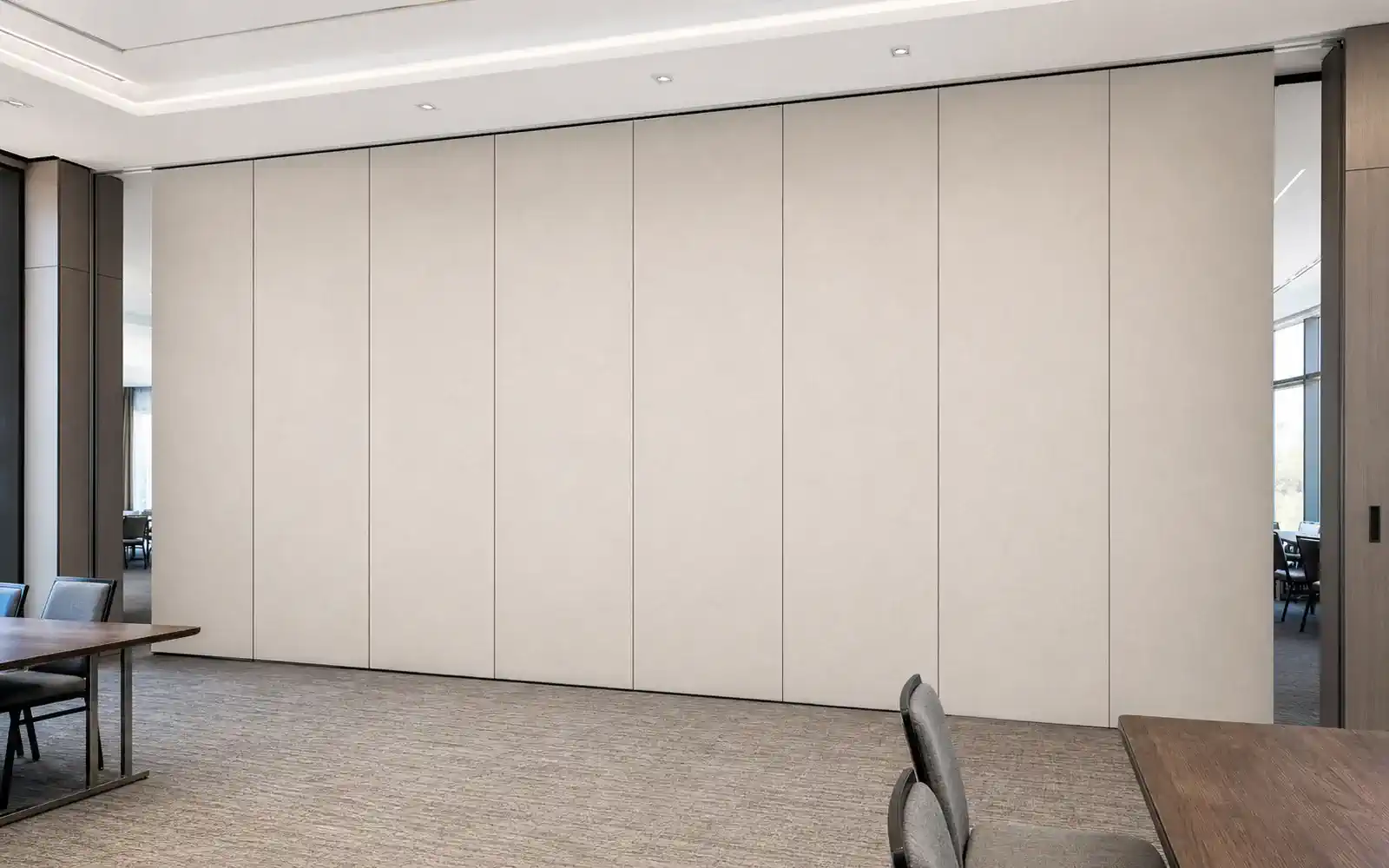
The suitability of each route and parking arrangement depends on the approved layout, circulation, ceiling interfaces and operating sequence.
Ask what project-specific acoustic requirement applies and whether the tender documents a review path. If the answer is a generic rating without context, record it as an open item.
Check Five: Pass Doors and Access Requirements
Pass-door requirements and project documentation can be discussed with the supplier. The tender should state whether a pass door is required, where it sits in the panel group and how it interacts with the stacking position.
- Confirm whether a pass door is needed for daily circulation.
- Confirm its position in the closed and parked states.
- Confirm the approval route for the door detail.
- Record any unresolved item in the clarification log.
Do not assume a pass door is included unless the tender says so.
Check Six: Documentation, Responsibilities and the Clarification Log
Before the deadline closes, the team should be able to point to a single clarification log with owners and dates. The log should separate confirmed product facts from project-specific items still requiring review.
- Drawing set and revision number.
- Route and stacking confirmation.
- Support coordination hold point.
- Finish and sample approval.
- Pass-door decision.
- Acoustic requirement review path.
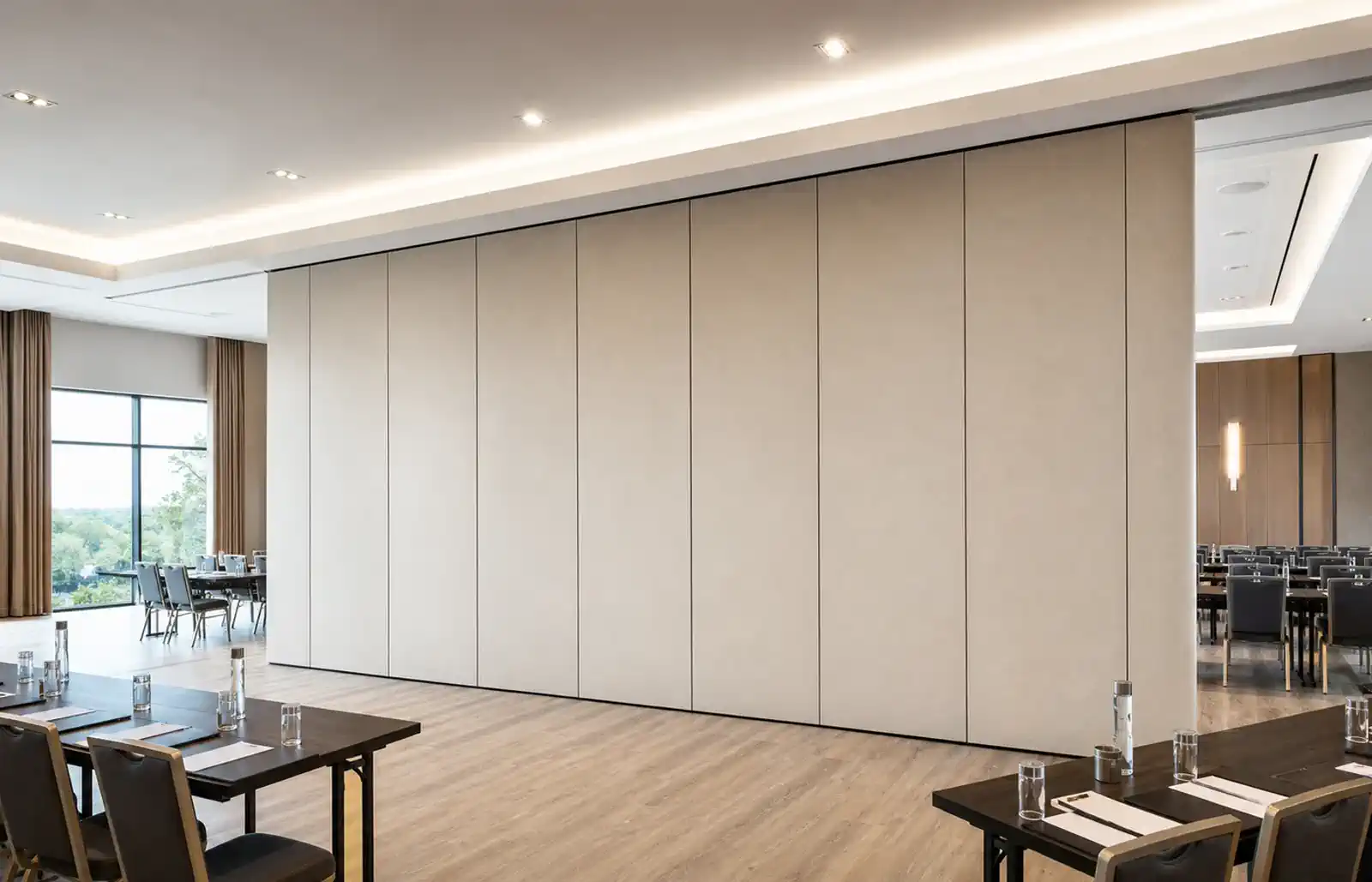
For product context, see the movable partition wall page. For examples of how layouts are reviewed, see projects. If a clarification item remains open, contact the team before the deadline rather than after.
FAQ: Movable Partition Tender Clarification Deadline Checks
What is the first thing to check before the clarification deadline?
Confirm that the layout, routes and stacking position are consistent with a top-hung, floor-track-free system. Any mismatch is a clarification item.
Can a tender confirm acoustic performance from a finish name?
No. Finish names describe appearance. Acoustic requirements need project-specific review and should not be inferred from a finish or a photograph.
Does every movable partition need a pass door?
No. Pass-door requirements depend on circulation and layout. They can be discussed and documented, but should not be assumed.
What if the route crosses an untracked gap?
That requires a revised route or a project-specific support review. Do not accept a general assurance that the system will manage it.
How should STC or Rw be treated in a tender?
Confirm the project-specific requirement and review path.
Who confirms the supporting structure?
The tender should identify this as a coordination hold point before fabrication.
Conclusion and Next Step
Movable partition tender clarification deadline checks are a discipline of consistency. Confirm the routes, the overhead support path, the finish schedule, the pass-door decision and the documentation log. Keep performance claims bounded to what the project evidence supports. If an item cannot be confirmed from the drawings, record it and ask before the window closes.
To discuss project documentation, pass-door requirements or layout review, contact EBUNGE and confirm the project-specific support, acoustic and dimensional requirements with the responsible parties.
Continue Exploring
More Cost and Planning Guides
- Earlier guideSpot Bidder Assumptions That Shift Partition Interface Risk
- Related guideDetect Bid Shopping Signals in Movable Partition Tender Rounds
- Related guideSpot Scope Gaps in a Movable Partition Tender Before Pricing
- Related guideCheck a Movable Partition Tender for Missing Interface Scope